About Eleutherodactylus cochranae Grant, 1932
Size
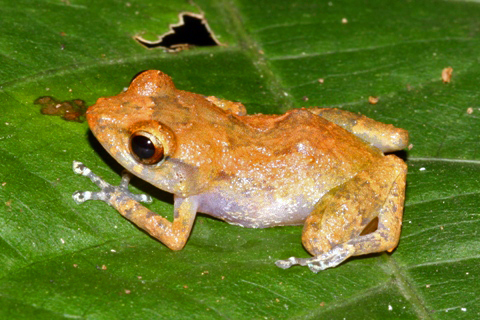
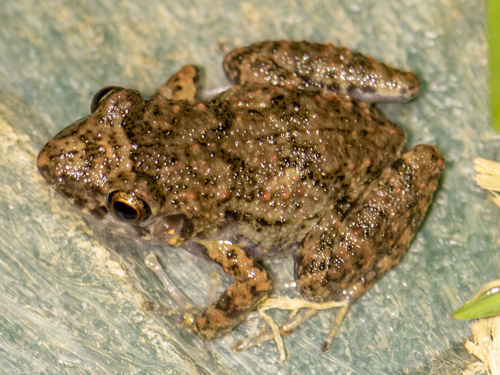
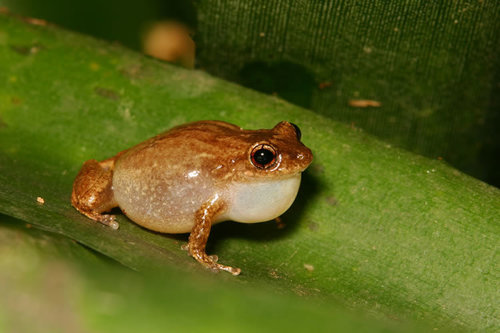
The whistling coqui (Eleutherodactylus cochranae Grant, 1932) typically measures 0.6 to 0.7 inches in length, while females can grow up to 0.9 inches long.
Base Body Coloration
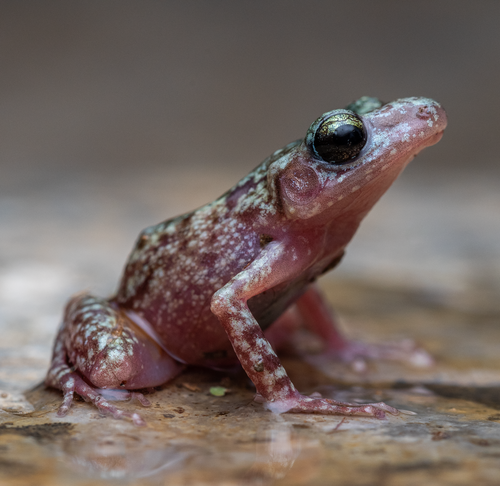
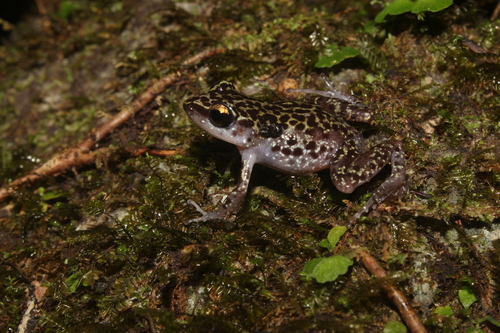
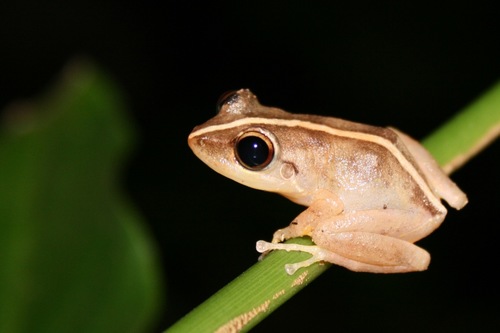
Its base coloration ranges from gray and tan to gray-brown. The dorsal surface has a unique pattern of fine lines shaped like two reverse parentheses {)(}.
Ventral Coloration
Ventral coloration is white, gray, or creamy yellow.
Limb and Snout Markings
Legs are brown with small toe pads, and a thin dark line runs along the midline of the snout. The throat and thighs are marked by distinctive small, speckled brown spots.
Daytime Shelter
During the day, the whistling coqui usually sleeps in shelter provided by tree-dwelling bromeliads—where it also lays its eggs—and piles of coconut husks.
Geographic Distribution
This species is found across most of Puerto Rico and its associated islands, excluding Mona and Monito; it also occurs on St. John, St. Thomas, and the British Virgin Islands, excluding Anegada.
Puerto Rico Populations
Within Puerto Rico, populations inhabit the southwest flank of the Luquillo Mountains, Guánica dry forest, and humid areas including Utuado, Cayey, and the Caribbean National Forest.
Habitat Type
It occurs in both semiarid wooded areas and humid wooded regions, using trees (especially bromeliads) and leaf litter as daytime shelter to avoid predators. Depending on the location, it can be found up to three feet above the ground in trees.
Mating Calls
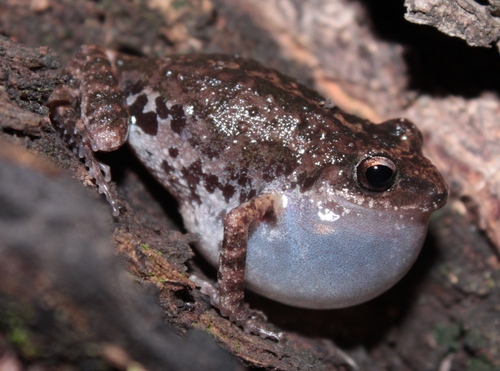
For mating, males produce advertisement calls from positions around three feet up in trees, and calling is most commonly heard before dusk and after dawn.
Developmental Trait
Like most other members of the family Eleutherodactylidae, this species skips the free-living tadpole stage of development.
Reproduction
Eggs are laid in humid locations, and fully formed froglets hatch directly from the eggs.