About Eleutherodactylus antillensis (Reinhardt & Lütken, 1863)
Scientific Name and Distinguishing Markers
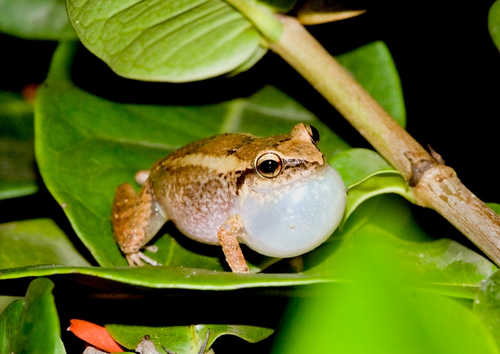
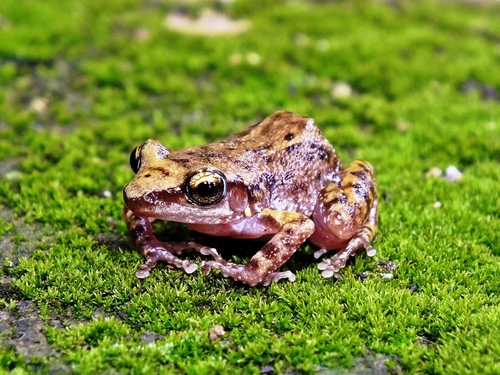
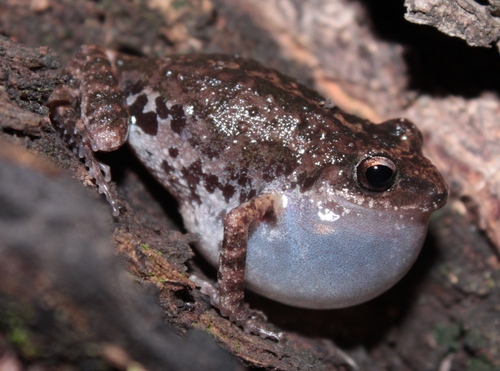
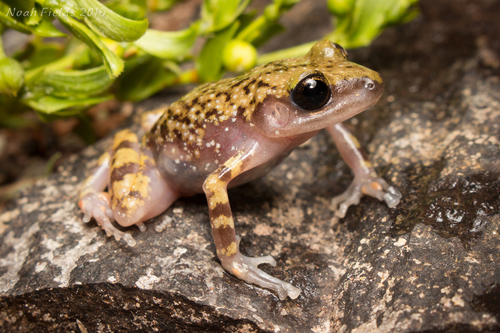
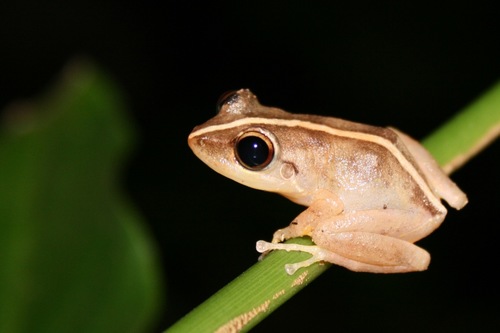
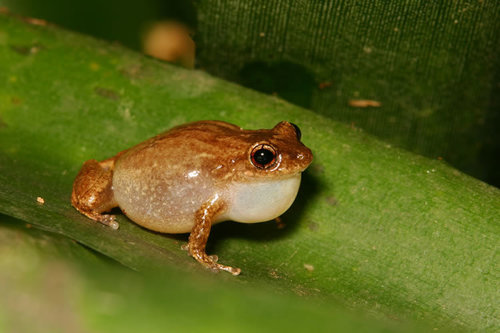
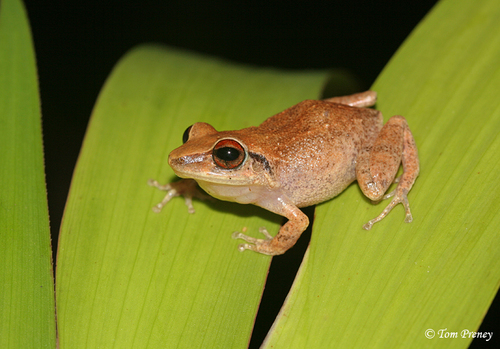
The red-eyed coqui, with the scientific name Eleutherodactylus antillensis (Reinhardt & Lütken, 1863), can be identified by its distinct cinnamon red eyes and black-spotted thighs.
Head and Body Features
It has an angular, broad, flat head, a short body, a black streak on each side of its snout, a short black line above the tympanum (the external auditory membrane), and a light-colored line running along the center of its back.
Upper Body Coloration
The upper body of this frog ranges from pale gray to dull brown.
Limb Characteristics
It has individual non-webbed toes and long digits.
Similarity to Common Coqui
People often mix this species up with the common coqui, because their calls are very similar.
General Habitat Range
Red-eyed coquis live in lowland or intermediate elevation forests, including dry forest, and they are abundant in open, disturbed habitats.
Dry Habitat Preference
Unlike common coquis, red-eyed coquis are typically found in dry habitats.
Aridity Survival Adaptation
They can survive for long periods without rain, as long as they stay hydrated while in their hidden locations.
Panama Distribution
In Panama, this species is found in urban areas, residential gardens, and unoccupied land.
Population Abundance
Although the red-eyed coqui is widely dispersed, it is not as abundant as other species in the Eleutherodactylus genus.
Daytime Shelter Sites
During the day, red-eyed coquis hide under grass roots, loose tree bark, rocks, logs, and trash.
Nighttime Shelter and Predation
At night, they shelter in low bushes and on tree branches, which helps support their predation tactics.