About Eleutherococcus senticosus (Rupr. & Maxim.) Maxim.
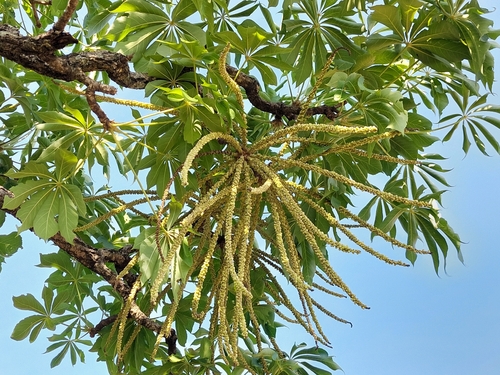
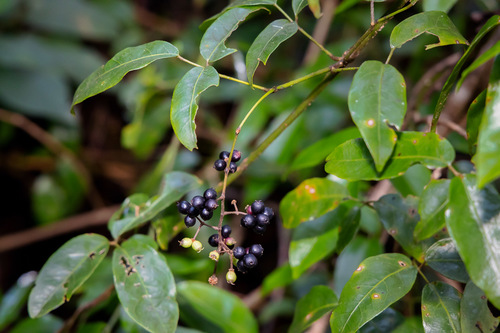
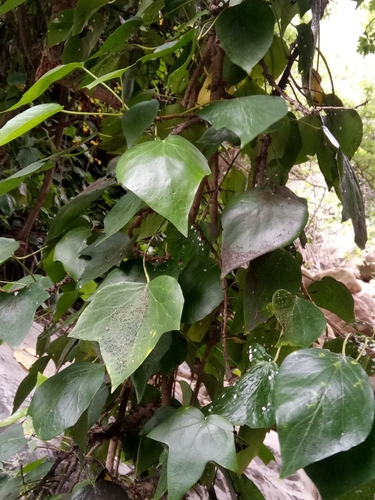
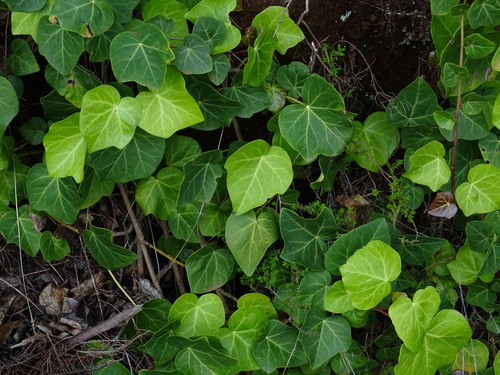
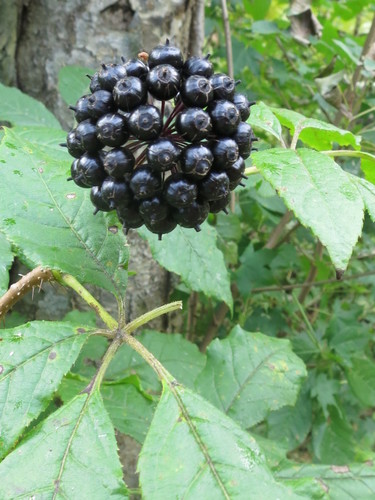
Eleutherococcus senticosus (Rupr. & Maxim.) Maxim. is a species of small, woody deciduous shrub in the family Araliaceae, native to Northeastern Asia. It has many common colloquial names, including devil's bush, Siberian ginseng, taiga root, eleuthero, ciwujia, Devil's shrub, shigoka, touch-me-not, wild pepper, and kan jang. This species has a long history of use in folklore and traditional Chinese medicine. Root extracts of E. senticosus are sold as dietary supplements or cosmetics, most often marketed under the name Siberian ginseng. In the wild, E. senticosus grows in mixed and coniferous mountain forests, where it forms low undergrowth or occurs in groups within thickets and at forest edges. It is sometimes found in oak groves at the base of cliffs, and rarely grows in high forest riparian woodland. Its native range includes East Asia, specifically China, Japan, and Russia. E. senticosus is broadly tolerant of different soil conditions, growing successfully in sandy, loamy, and heavy clay soils with acid, neutral, or alkaline pH, and can even thrive in soils with low nutrient content. It tolerates full sun, dappled shade, and some level of pollution. This slow-growing deciduous shrub reaches a maximum height of 2 metres (6.6 ft). It is hardy to USDA plant hardiness zone 3, and flowers in July across most of its habitats. Its flowers are hermaphroditic and pollinated by insects. Certain groups may experience adverse reactions to E. senticosus, including people with high blood pressure, sleep apnea, narcolepsy, heart disease, mental illness, or a compromised immune system, people who are pregnant or lactating, and people taking the medications digoxin or hexobarbital. High doses of this plant can cause side effects including irritability, confusion, insomnia, or anxiety. Root extracts of E. senticosus, which contain compounds called eleutherosides, are promoted in alternative and traditional medicine for claimed health benefits; the clinical evidence previously cited for these claims has been archived, and all original links to the evidence are now defunct. According to the World Health Organization, only one use of this plant is supported by clinical evidence: use as a prophylactic and restorative tonic to enhance mental and physical capacities in cases of weakness, exhaustion, tiredness, and during convalescence. Preliminary research has assessed E. senticosus for potential use as an antimicrobial or antistress agent.