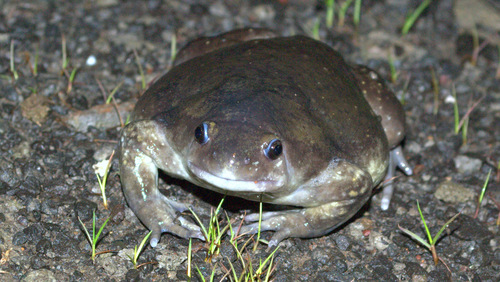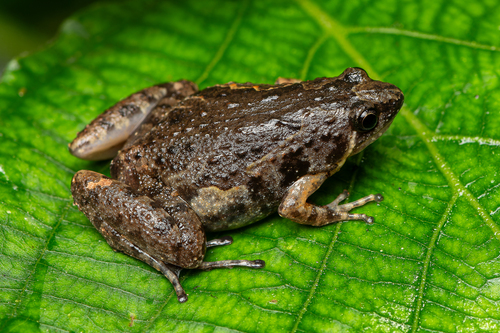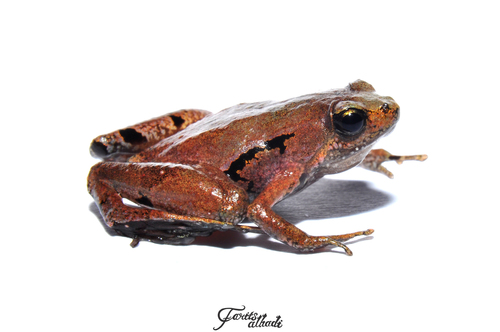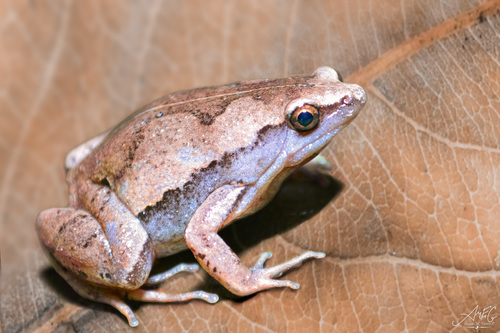
About Elachistocleis bicolor (Guérin-Méneville, 1838)
Activity and microhabitat
Elachistocleis bicolor has a nocturnal, semi-fossorial lifestyle. When aestivating, individuals can be found inside ant and termite nests.
Size
Males of this species reach a snout–vent length of 23–32 mm (0.91–1.26 in), while females grow to 27–36 mm (1.1–1.4 in).
Color pattern etymology
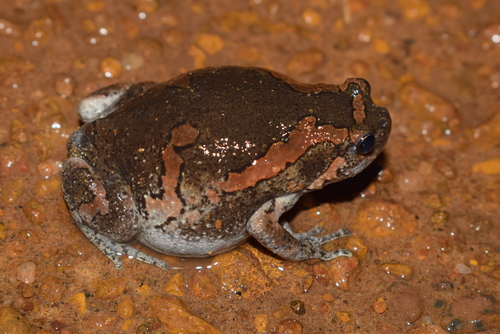
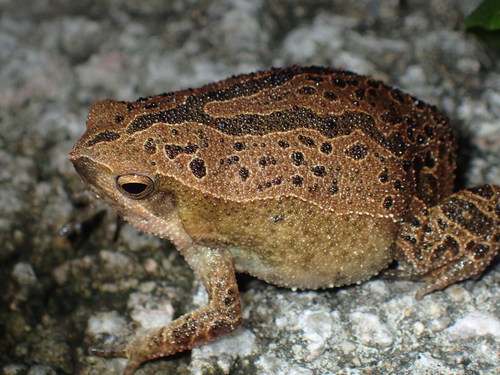
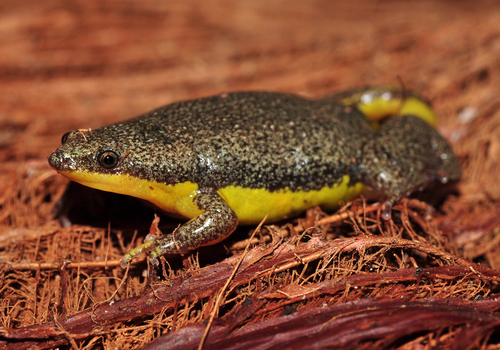
The species' name refers to its distinctive color pattern, which consists of a brownish back and yellowish dorsum.
Core diet components
Elachistocleis bicolor feeds primarily on ants and termites, with other insects making only minor contributions to its diet.
Seasonal diet variation
A study conducted in Uruguay found that termites are a more important food source during the species' inactive season, while ants (particularly Pheidole and Solenopsis) are more important during the active season.
Habitat range
Elachistocleis bicolor is an abundant species that inhabits seasonally flooded grasslands, as well as dry and moist forests. It can also persist in rural gardens and urban areas.
Reproduction timing
Reproduction for this species occurs during the wet season, in pools that contain standing water.
Fecundity
The species' fecundity is approximately 620 eggs, and egg count is positively correlated with female body size.
Egg characteristics
The eggs of Elachistocleis bicolor float on the surface of the water.