About Echinochloa crus-galli (L.) P.Beauv.
Echinochloa crus-galli (L.) P.Beauv. is a species of wild grass native to tropical Asia, which was formerly classified as a type of panicum grass. It has a number of common names: cockspur, cockspur grass, barnyard millet, water grass, common barnyard grass, and simply barnyard grass, though the name barnyard grass can also refer to any species in the genus Echinochloa.
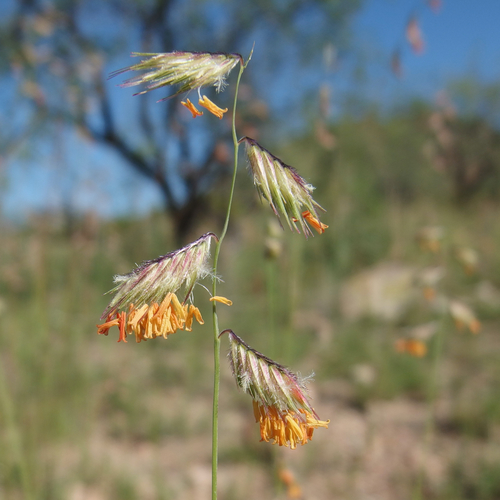
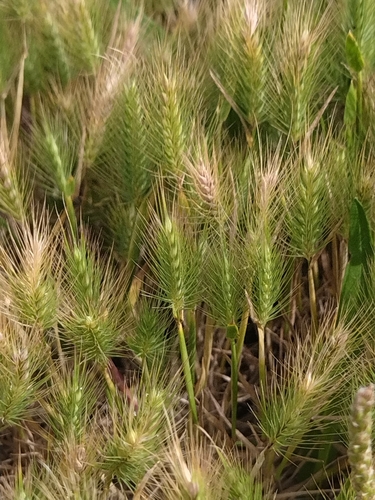
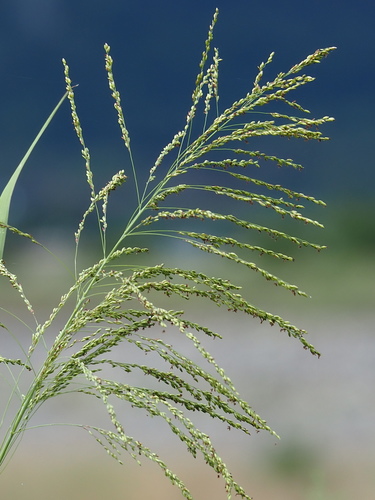
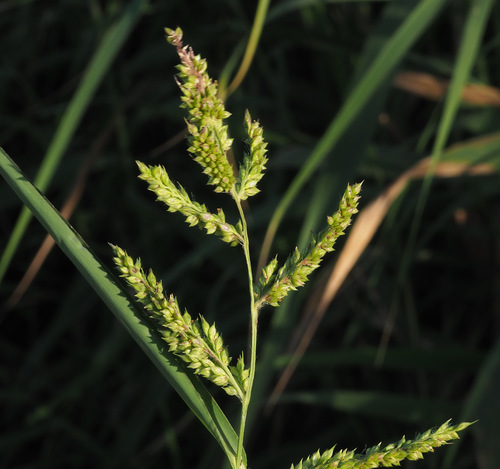
This plant can reach up to 1.5 m (4 ft 11 in) in height. It has long, flat leaves that are often purplish at the base. Most stems grow upright, but some stems spread out along the ground, and all stems are flattened at the base. Its seed heads are a distinctive feature, often purplish, and hold large millet-like seeds within crowded spikelets.
Echinochloa crus-galli is considered one of the world's worst weeds. It lowers crop yields, and can cause forage crops to fail by removing up to 80% of available soil nitrogen. It also acts as a host for several mosaic virus diseases, and heavy infestations can interfere with mechanical harvesting. A single individual plant can produce up to 40,000 seeds per year. Seeds are dispersed by water, birds, insects, farm machinery, and animal feet, but contamination of crop seed is likely the most common dispersal method for this species.
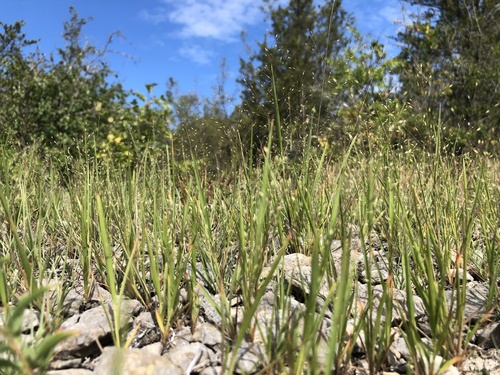
Common habitats for barnyard grass include fields, roadsides, ditches, railway lines, and disturbed areas such as gravel pits and dumps. It is also found growing on riverbanks and the shores of lakes and ponds. It occurs widely across Europe, tropical Asia, and Africa, and is present in all agricultural regions. It is classified as an invasive species in North America, where it grows throughout the continental United States and in southern Canada, ranging from British Columbia east to Newfoundland. It was first recorded in the Great Lakes region in 1843.
This species grows across a broad range of forest life zones, from boreal moist to wet, through tropical and very dry to moist forest zones. It is adapted to almost all types of wet locations, and is very commonly found as a weed in paddy fields, roadsides, cultivated areas, and fallow fields. It grows on a variety of wet sites including ditches, low areas of fertile croplands, and wet wastelands, and it often grows directly in water. It can survive in cool regions, but it is better adapted to areas with an average annual temperature between 14–16 °C (57–61 °F), and it is not limited by soil pH.