About Dipodomys spectabilis Merriam, 1890
Size
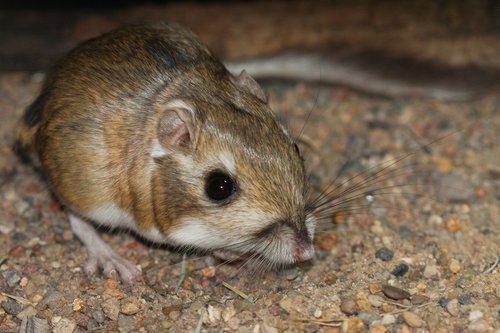
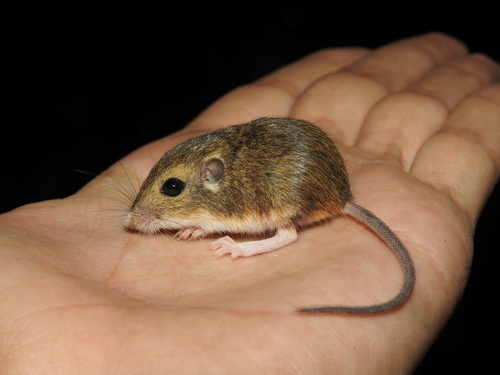
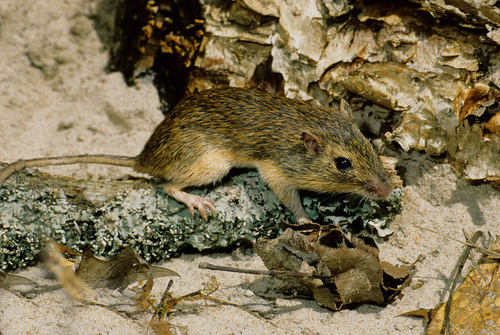
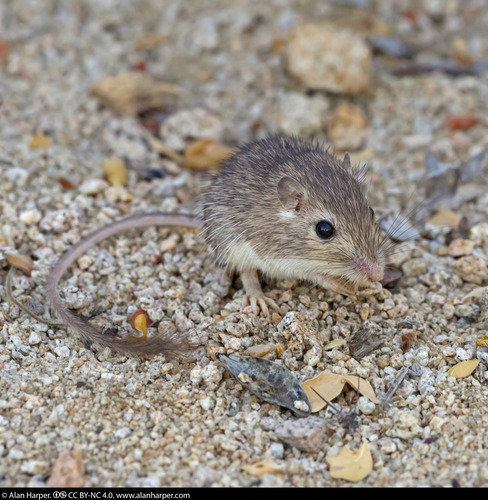
The banner-tailed kangaroo rat (Dipodomys spectabilis Merriam, 1890) reaches an adult length of roughly 34 cm (13 in).
Pelage Coloration
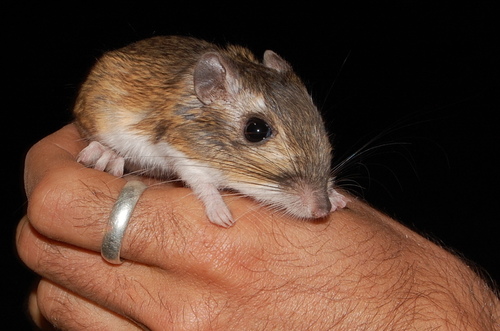
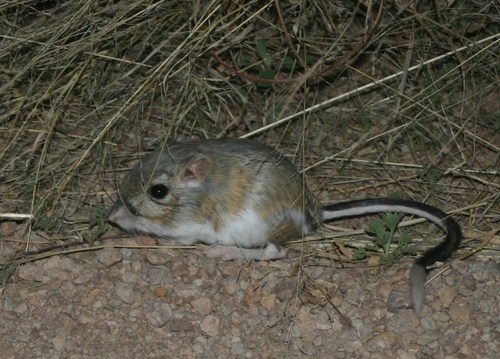
Its back and upper sides are ochre-buff, mixed with some black-tipped hairs, while its underparts are solid white.
Tail Characteristics
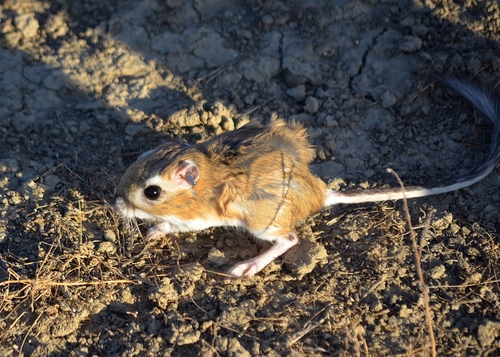
This species’ most distinctive feature is its bushy tail, which has a black band and a white tip, and is often waved in a banner-like motion.
Locomotion Adaptations
Like other kangaroo rats, its hind legs are far longer than its forelegs, and it moves around by hopping.
Overall Distribution
This species is native to arid regions of the southwestern United States and Mexico, where it occurs in two separate isolated populations.
Northern Population Range
The larger northern population ranges across arid western Texas, most of Arizona, northern New Mexico (United States), and the Mexican states of Sonora, Chihuahua, and Zacatecas.
Southern Population Range
The smaller southern population is found primarily in the Mexican states of Aguascalientes and San Luis Potosí.
Habitat Preferences
The banner-tailed kangaroo rat lives in desert grassland containing scattered, low scrubby bushes.
Shrub Cover Tolerance
It cannot persist in areas where shrub cover increases to more than 20%.