About Diplacus mohavensis (Lemmon) G.L.Nesom
Growth Form
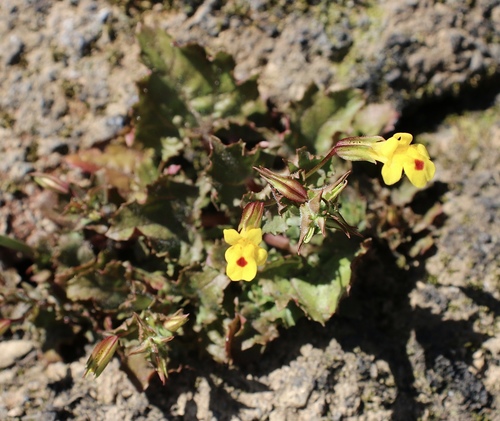
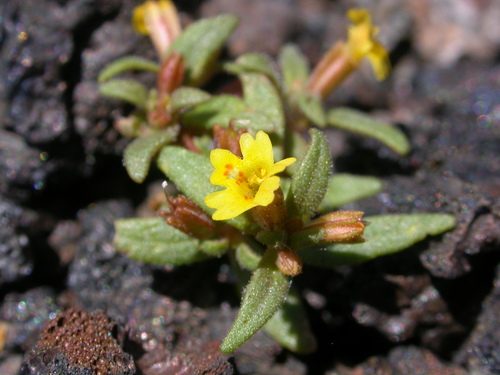
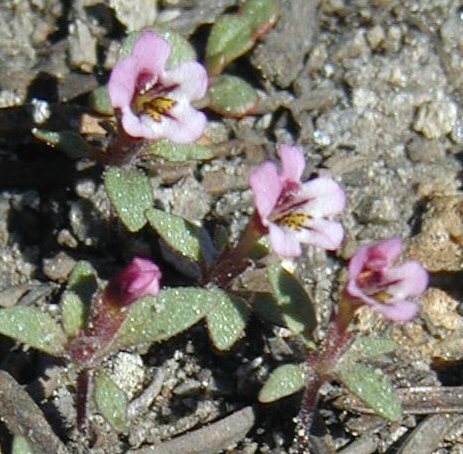
Diplacus mohavensis is a small, hairy annual herb that grows at ground level, or can grow erect to a maximum height of about 10 centimeters.
Leaf Arrangement and Shape
Its oppositely arranged leaves are narrow oval in shape, and reach less than 3 centimeters in length.
Herbage Coloration
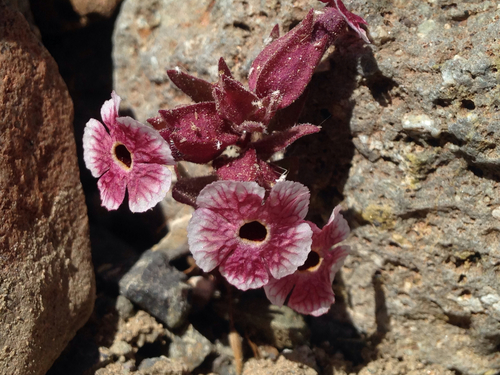
Its leafy herbage is typically colored reddish green to red-purple.
Flower Calyx Structure
The tiny flower has a tubular base, which is enclosed by a hairy, ribbed calyx made of red sepals with pointed lobes.
Corolla Structure
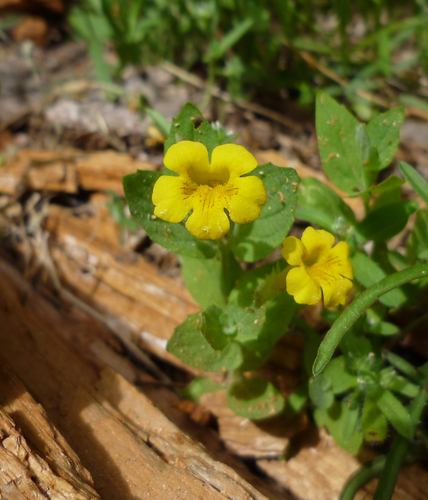
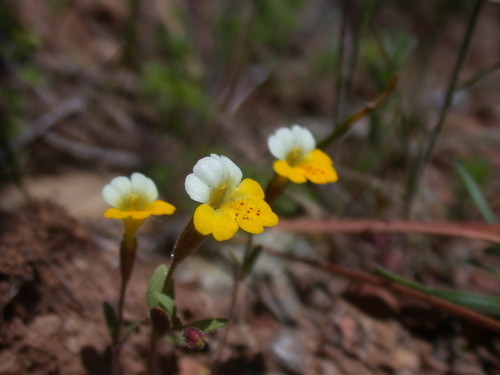
The flower has a flat face with five rounded, equal lobes.
Flower Coloration
The bases of the corolla lobes are pink with dark veins, and their edges are white.
Bloom Period
This species blooms between April and June.
Species Endemic Range
This plant is endemic to San Bernardino County, California, and is only found in the Mojave Desert.
Local Distribution and Habitat
It has been recorded at several locations in and around Barstow, where it often grows in gravelly, sandy habitats such as arroyos.
Range Change History
Its historical range was larger than its current range, and many of its former occurrences have been extirpated.
Population Variation Drivers
Its population size and abundance vary, and this variation is likely dependent on annual rainfall amounts.