About Plantago crassifolia Forssk.
Nomenclature and Taxonomy
Plantago crassifolia, commonly known as thick-leaved plantain, is a perennial herbaceous plant belonging to the Plantaginaceae family.
Native Range and Habitat
Native to the western United States, it thrives in arid and semi-arid regions.
Leaf Morphology
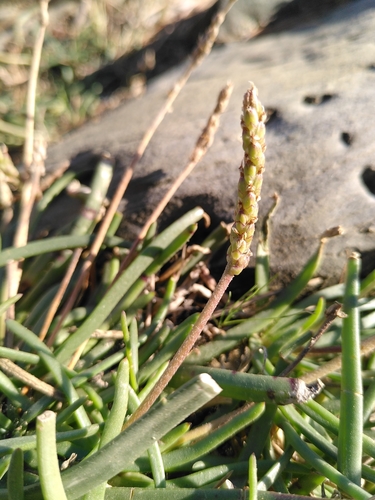
The plant forms a rosette of thick, fleshy leaves that are oval-shaped and can grow up to 10 cm long. These leaves are covered with fine hairs, which help protect them from water loss in dry conditions.
Flower Stalk Characteristics
The flowers of Plantago crassifolia grow on tall spikes that can reach up to 30 cm in height.
Flower Details and Bloom Period
The small, inconspicuous flowers have greenish-white petals and bloom from late spring through summer.
Traditional Medicinal Uses
Thick-leaved plantain has been used for medicinal purposes by Native American tribes for centuries, treating ailments such as wounds, coughs, colds, and digestive issues.
Ecological Role as Wildlife Food
The plant also serves as a food source for wildlife; deer feed on its leaves, while birds consume its seeds.
General Summary
Overall, Plantago crassifolia is an intriguing perennial herb with unique adaptations for arid environments. It provides medicinal benefits and plays important ecological roles within its habitat.