About Dichotomyctere nigroviridis (Marion de Procé, 1822)
Nomenclature
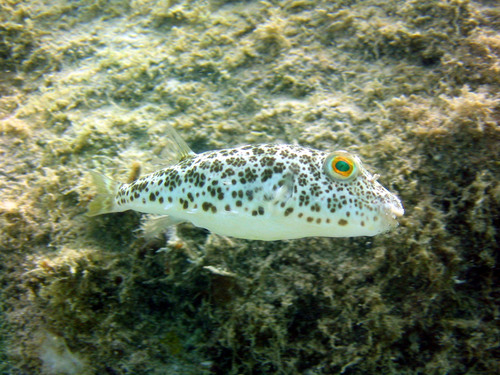
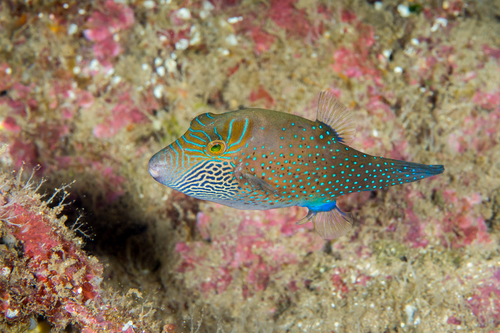
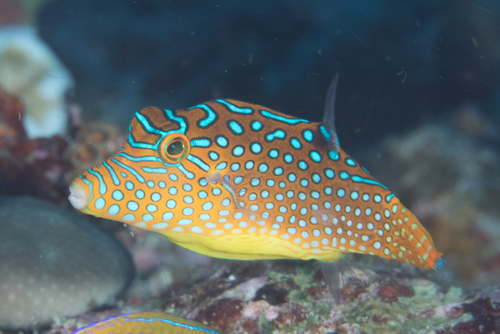
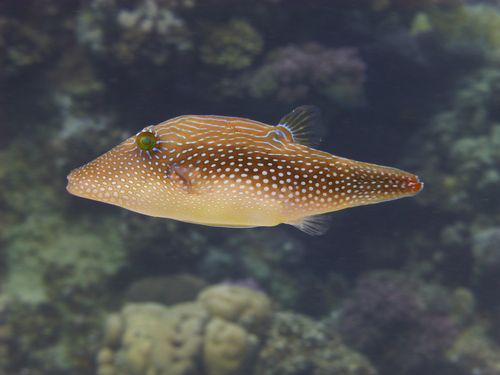
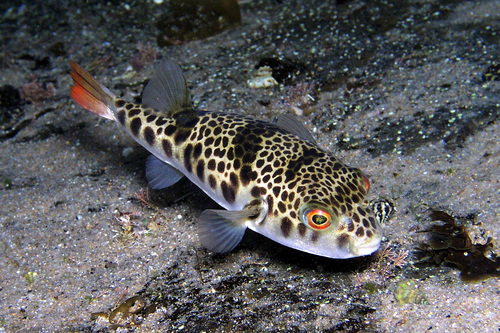
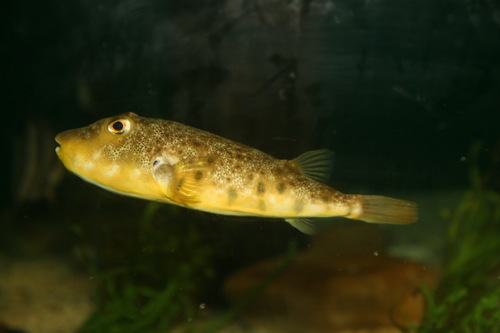
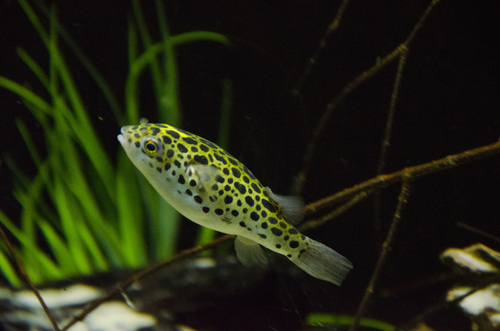
Dichotomyctere nigroviridis (Marion de Procé, 1822), commonly called the green spotted puffer, has the synonym Tetraodon nigroviridis. It is a species of pufferfish native to coastal areas of South and Southeast Asia.
Habitat Salinity Preference
It can live in coastal freshwater, but survives longest in brackish and saltwater habitats.
Habitat by Life Stage
Adult green spotted puffers inhabit freshwater streams, rivers, flood plains, and mangrove forests, while juvenile individuals live in brackish water.
Size
This species typically reaches a maximum length of around 15 centimeters (6 inches), though some individuals have been recorded growing up to 17 centimeters (6.7 inches).
Captive Breeding
In February 2009, D. nigroviridis was successfully bred in captivity at the University of Florida using a modified version of the ovarian lavage technique.
Diet Components
The diet of D. nigroviridis consists primarily of snails, and also includes mollusks, crustaceans, and some plant material. This species may also be lepidophagous, meaning it feeds on the scales of other fish.
Toxicity
The flesh of this pufferfish contains a virulent toxin, so it should not be eaten.