About Dianthus caryophyllus L.
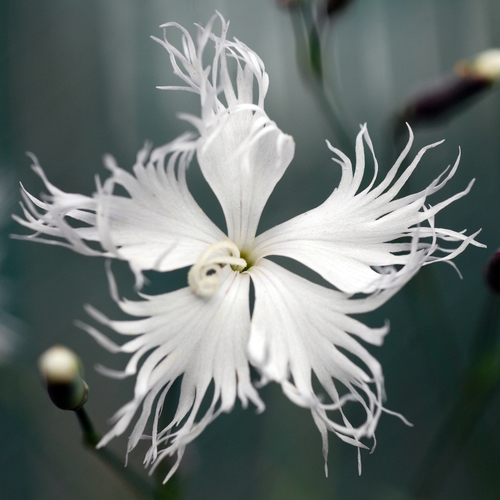
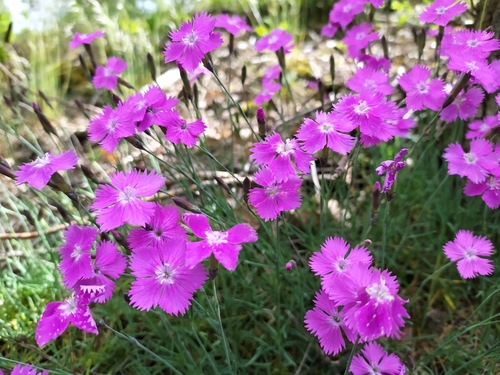
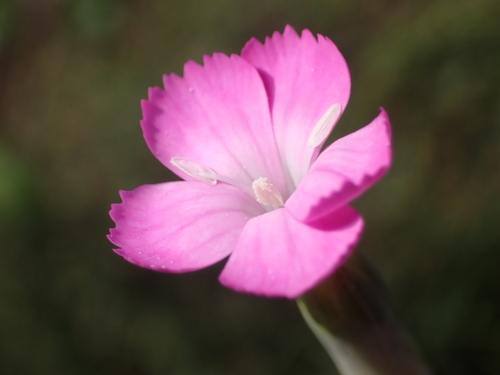
Dianthus caryophyllus, commonly known as carnation, is a herbaceous perennial plant that grows up to 80 cm (32 in) tall. Its leaves are glaucous, ranging from greyish green to blue-green, slender, and can reach up to 15 cm (6 in) in length. Flowers are borne singly or in groups of up to five in a cyme; they measure around 3–5 cm (1¼–2 in) in diameter and have a sweet scent. The original natural flower color is bright pinkish-purple, but cultivars have been developed in a range of other colors, including red, pink, yellow, white, and green. While carnations are sometimes dyed blue for cut bouquets, no known carnation cultivars naturally produce a true blue flower. The fragrant, hermaphrodite flowers have radial symmetry. Four to six egg-shaped, sharp-pointed scale leaves surround the calyx, and are only ¼ as long as the calyx tube. Wild carnation occurs naturally in Mediterranean countries: Portugal, Spain, Italy, Croatia, Albania, Greece, and Turkey. Carnations require full sun and well-drained, neutral to slightly alkaline soil. Numerous cultivars have been selected for garden planting, with common examples including 'Gina Porto', 'Helen', 'Laced Romeo', and 'Red Rocket'. Carnations have medical uses for treating upset stomach and fever. Historically, their fragrance was added to vinegar, beer, wine, sauces, and salads. Crossbreeding D. caryophyllus with D. capitatus produces a hybrid that is resistant to bacterial wilt caused by Paraburkholderia caryophylli. This hybrid has less attractive flowers, so additional breeding and backcrossing are required to improve floral quality. Fragrance-free carnation cultivars are often worn as boutonnières or buttonholes by men.