About Detarium microcarpum Guill. & Perr.
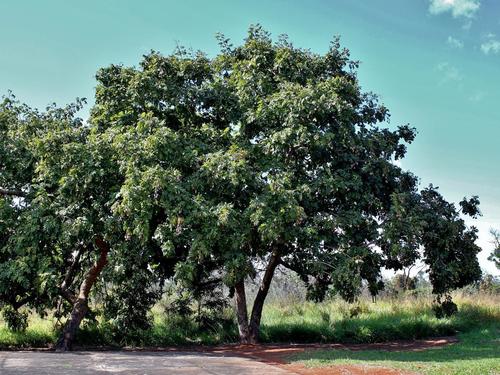
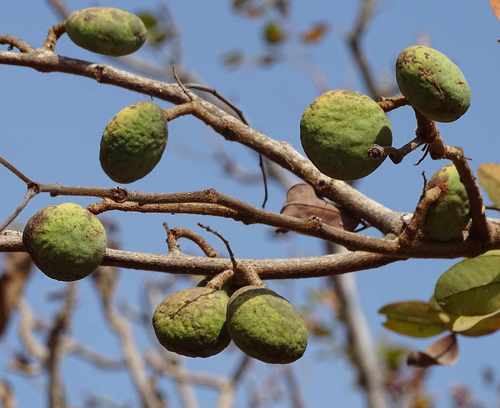
Detarium microcarpum Guill. & Perr. is an African tree in the legume family, Fabaceae. It typically grows as a small tree or shrub reaching up to 15 meters tall, and can grow to 25 meters when growing in moist areas. Trunk shoots grow very vigorously, reaching a height of 1.5 to 2 meters within 1 to 2 years. This is much faster than seedlings, which on average grow to 0.6 meters after 3 years, and may reach 1.5 meters in 4 years. It flowers during the rainy season, which runs from July to September or November, but its main flowering period only lasts up to 8 days. It bears fruit from September to January or May. In November, the tree sheds its leaves, and produces new leaves in March. This species is highly valued by local people for its wide range of uses, and is reported to be one of the most appreciated species in the regions where it grows naturally. Its fruit can be eaten raw or cooked, but most often the pulp of the fruit is processed into flour. Seed flour from this species is a traditional emulsifying, flavouring, and thickening agent, used to make cakes, bread, couscous, baby food, and local beer. The seed kernels are added to egusi soup, or can be cooked and eaten as a vegetable. The leaves are used as a condiment or a vegetable, and this is also true for its flowers. Medicinal properties are found in the roots, stems, bark, leaves, and fruits, and these plant parts are used to treat a range of ailments including tuberculosis, meningitis, and diarrhea. Methanol extracts from the species have shown strong inhibitory effects on HIV-1 and HIV-2 infection. Leaves and roots are also used to treat illnesses in farm animals. Detarium microcarpum has a number of other uses for rural communities. Its leaves are used to thatch roofs. Dried seeds can be made into necklaces, or ground and used as a fragrance that is considered to have an aphrodisiac effect. A mosquito repellent can also be prepared from its roots. Its wood is hard, and resistant to moisture, weathering, and pests, which makes it suitable for construction and carpentry work. It lights easily, so it is considered a high-quality fuel wood and source of charcoal. Nutritionally, the fruit is rich in vitamin C, and per 100 g of fruit contains 3.2 mg vitamin C, 4.8 g protein, and 64.5 g sugar. Among fourteen wild edible fruits tested from Burkina Faso, this species was found to have the highest total phenolic, flavonoid, and antioxidant values. The fruit pulp has high proportions of carbohydrates, at 40–42.0%, and protein, at 29.1–30.9%. The seeds yield 7.5% oil, and the predominant fatty acid in this oil is linoleic acid. Per 100 g of hulled seed flour contains: 3.5–6.5 g water, 3 g crude fibre, 13–15 g crude fat, 13.5–27 g crude protein, 39 g carbohydrate, 500 mg calcium, 500 mg magnesium, and 100 mg iron.