About Desmognathus marmoratus (Moore, 1899)
Scientific Naming and Body Shape
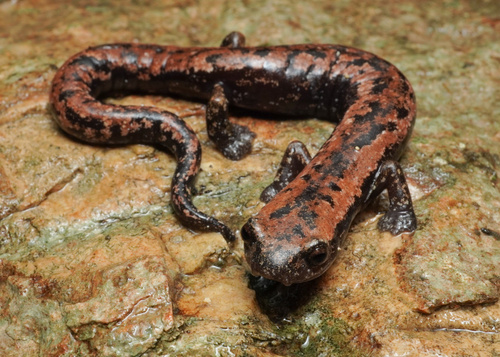
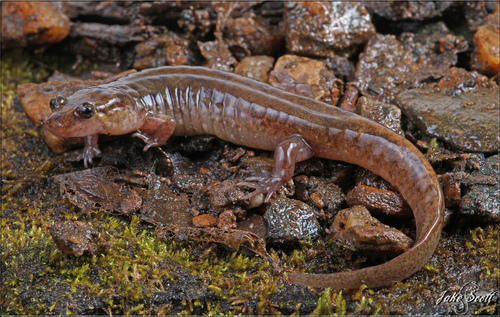
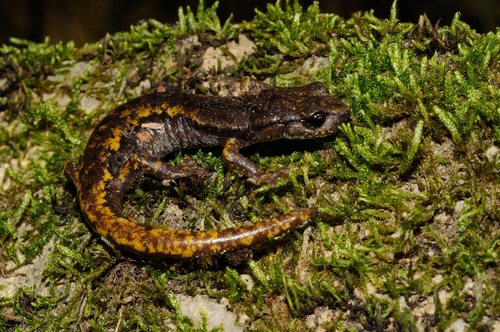
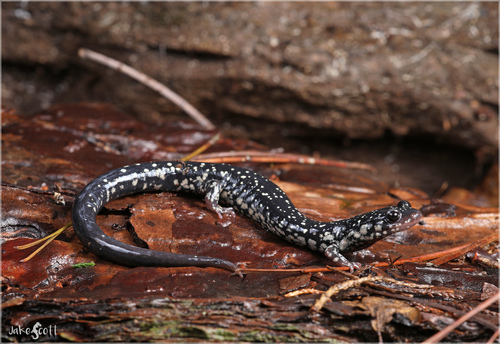
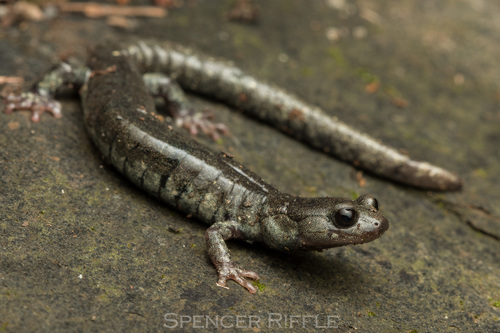
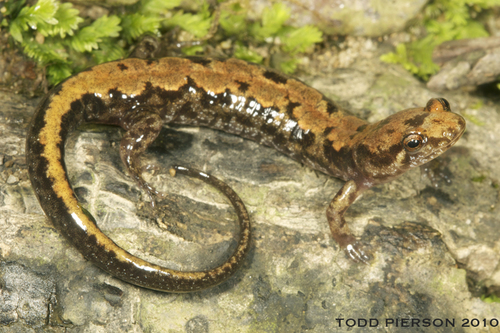
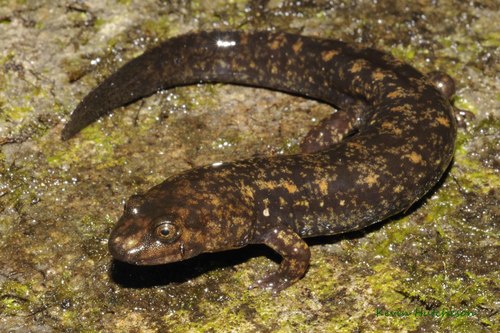
The shovelnose salamander, scientifically named Desmognathus marmoratus (Moore, 1899), is a robust, broad-bodied species with a relatively short tail.
Adult Size
Adult individuals reach a total length between 3.5 and 5 inches, or 9 to 12.5 centimeters.
Etymology of Common Name
It gets its common name from the shape of its snout, which has a more squared-off end than the snouts of other species in its genus.
Dorsal Coloration
The species typically has a dusky brown, grey, or black base color, marked with two longitudinal rows of small pale patches and many additional smaller pale speckles.
Ventral Coloration
Its underside is usually grey in color.
Distribution and Elevation Range
This salamander is distributed across the Appalachian Mountains of the southeastern United States, at elevations ranging from 300 to 1,680 meters (980 to 5,510 feet) above sea level.
Accepted Geographic Range
Provisionally, its range is thought to extend from southern Virginia, through North Carolina, to South Carolina.
Taxonomic Classification of Related Populations
Populations found in Tennessee and Georgia are currently considered to belong to the species Desmognathus aureatus and Desmognathus melanius, though this classification remains debated.
Habitat Preference
It inhabits shallow flowing water, including rapids and riffles, over gravel and rocky substrates, and does not occur in streams that are silted.