About Desmodium viridiflorum (L.) DC.
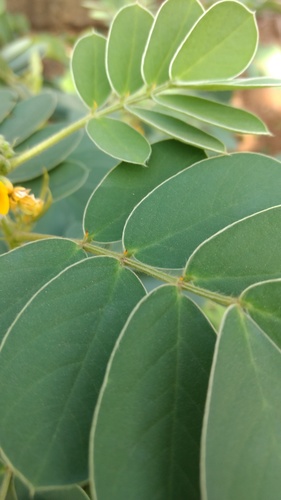
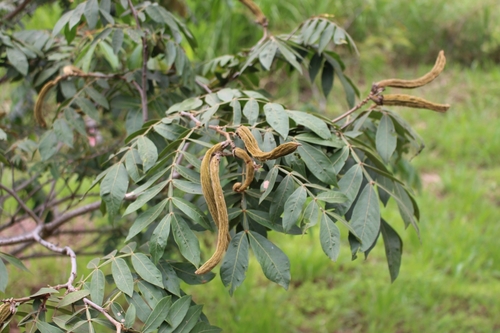
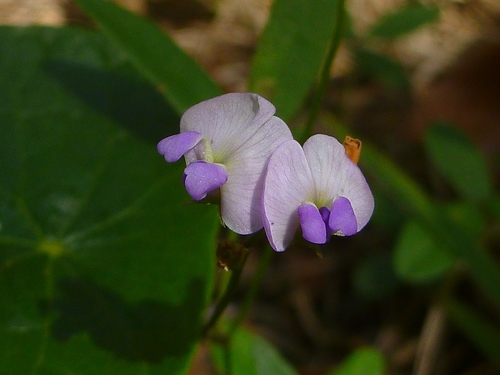
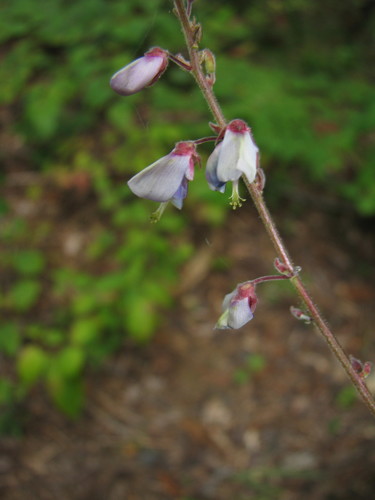
Desmodium viridiflorum (L.) DC. is an erect, perennial herb that grows 0.8 to 2 meters tall. Its stems are sparsely to densely puberulent and uncinulate-pubescent, and occasionally become pilose. Leaves are typically trifoliolate; terminal leaflets are rhombic to deltoid, 3.5–11 cm long, and around two-thirds as wide as they are long. The upper surface of leaflets ranges from glabrate to moderately pilose, while the lower surface is densely velvety-tomentose. Stipules are lance-ovate, acuminate, and 3–7 mm long, and stipels are persistent. Its inflorescence is a terminal panicle that is densely puberulent and uncinulate-pubescent, with pedicels measuring 2.5–8 mm long. The calyx is sparsely to densely short-pubescent. Flowers are papilionaceous, with pinkish to rose-colored petals that are 5–9 mm long and 3.5–5 mm wide; petals are straight or slightly angled at the apex, and bluntly angular to rounded at the base. The fruit is a stipitate loment made up of 1 to several segments. Each segment is moderately to densely uncinulate-pubescent on both surfaces and along the sutures. The fruit's stipe is 2.5–6 mm long, significantly longer than the calyx tube but shorter than the staminal remnants. This species occurs from New Jersey and Delaware south to central peninsular Florida, west to Texas, and inland to western Virginia, North Carolina, northern Tennessee, and Arkansas. It grows in oak and pine woodlands, woodland borders, and disturbed areas. Among legumes, Desmodium viridiflorum has a relatively high nitrogen fixation rate and acetylene reduction rate. It flowers from June through September, and fruits from August to October.