About Desmanthus virgatus (L.) Willd.
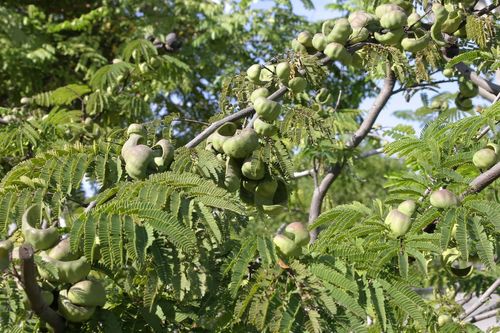
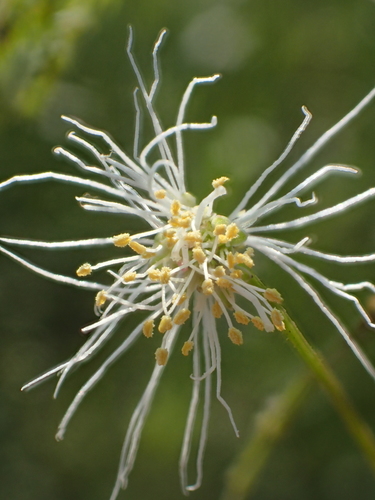
Desmanthus virgatus (L.) Willd. is a woody perennial herb or shrub that can reach heights of 1.5 to 3 meters. During periods of dry conditions, its above-ground herbage dies back to the woody taproot, and it sprouts again once adequate moisture becomes available. A single individual can grow up to 50 stems, developing a quite robust form. Older stems are brown to red, shiny, and hairless. Its leaves are bipinnate, divided into a small number of primary leaflet pairs, with each primary leaflet further subdivided into smaller leaflets that measure up to 7 to 9 millimeters long. The inflorescence is a rounded head holding between 11 and 22 flowers. This plant produces three types of flowers: perfect, male, and sterile. The flowers are white to yellowish. A short stalk can hold up to 11 linear legume pods, which are dark red to blackish and up to 8.5 to 9 centimeters long. Each pod dehisces along both edges to release between 26 and 30 seeds. In tropical areas with sufficient water, the plant produces flowers and fruits year-round; outside the tropics, it reproduces mainly during spring and summer. This species grows in open habitat types, and readily colonizes disturbed areas including roadsides and quarries. It grows in both clay and sandy soils, and is most common at lower altitudes. Its ability to die back to the root crown allows it to withstand drought, frost, fire, and grazing, and it resprouts once harsh conditions improve. However, it cannot tolerate shade and does not thrive under tree canopies. It is native to the southern United States, parts of Mexico, Central America, South America, and the Caribbean, and has been introduced to areas outside its native range both intentionally and accidentally. In the United States, it is considered native to Texas, and also grows in Florida, where its native status is uncertain. It was first reported in Louisiana in 2011, when it was found sprouting in a vacant lot in Shreveport. It is naturalized in several African countries including Senegal, Zambia, and South Africa, as well as Pacific Islands including New Caledonia and Hawaii, and additionally in Indonesia, the Philippines, India, and Australia. It is considered a weed in many regions. Common name prostrate bundleflower, this species is palatable to livestock, non-toxic, and high in protein. It has been observed to help cows gain weight. It works well as a food source for cattle, but is not a promising feed option for pigs. The plant helps control erosion and fixes nitrogen to improve soil quality. It can be cut for fodder or grown in open fields, as it is very tolerant of grazing. Grazing actually stimulates the plant, and more seedlings survive under grazing pressure. Livestock such as sheep help disperse the plant's seeds across rangeland, since the seeds survive passage through animal guts. Several cultivars have been released commercially, including 'Marc' and 'Balli Germplasm'.