About Dendrobates leucomelas Steindachner, 1864
Taxonomic Classification
Dendrobates leucomelas Steindachner, 1864 is one of the largest species in the Dendrobates genus.
Snout-to-Vent Length
Its snout-to-vent length ranges between 3.1 and 5 cm (1.2 and 2.0 in), and average adult size rarely exceeds 4 cm (1.6 in).
Average Weight
The average weight of this species is around 3 g (0.11 oz).
Sexual Dimorphism
Females are typically slightly larger than males, but there are few other visible appearance differences that can be used to distinguish the sexes of the species.
Aposematic Colouration Purpose
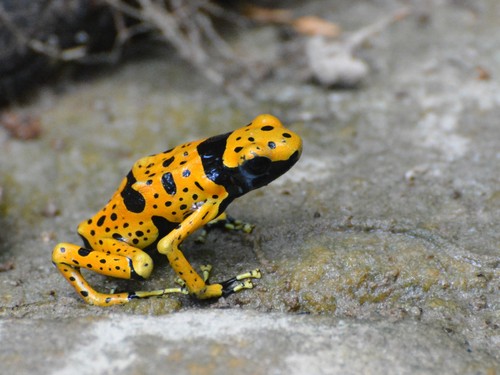
Commonly called the yellow-banded poison dart frog, this species, like most poison dart frogs, evolved aposematic colouration to warn potential predators that it is an unpalatable or toxic prey.
Body Base Colour
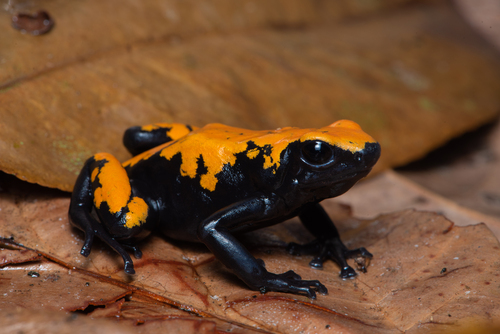
Its base colour is most often bright yellow, with a variable number of broad black stripes and/or spots that cover the entire body. Some natural morphs have an orange base colour.
Body Marking Variations
Natural variations within the species produce a range of marking patterns, from fine spots to thick, unbroken banding.
Toe Pad Structure
The species has glandular adhesive toe pads that help with climbing and positioning.
Tongue Structure
Like other species in its order, it has a short, protrudable, unnotched, sticky tongue that it extends to catch prey.
Native Range
Dendrobates leucomelas is a common poison dart frog native to northern South America, where it occurs most notably in Venezuela. It can also be found in parts of Guyana, Brazil, and the extreme easternmost part of Colombia.
General Habitat
This amphibian usually inhabits very humid tropical rainforest environments close to fresh water.
Microhabitat Locations
It is frequently found on flat rocks, trees, plants especially bromeliads, and leaf litter on the forest floor.
Dry Season Shelter
During the dry season, individual frogs gather in damper spots such as under rocks or fallen tree trunks.
Natural Habitat Temperature
The species' natural tropical habitat does not experience large seasonal temperature changes; temperature variation is tied to elevation and time of day, and temperatures generally range from 26 to 30 °C (79 to 86 °F) or higher.
Captive Temperature Sensitivity
In captive settings, keepers must avoid overheating these frogs, as they are sensitive to higher temperatures.
Humidity Tolerance
While this species prefers high humidity, it tolerates lower humidity levels far better than other species in the Dendrobates genus.
Elevation Range
Individuals can also be found in seasonally drier forest islands within its natural range, and at elevations from sea level up to 800 metres (2,600 ft) above mean sea level.
Toxin Secretion
Like all members of the Dendrobatidae family, D. leucomelas secretes alkaloid toxins through its skin.
Toxin Source
The frogs obtain these toxins by eating certain arthropod prey.
Toxin Source Research
It is not yet confirmed exactly which arthropods contribute toxicity to each genus of Dendrobatidae, though a local variant of Melyrid beetle is thought to be a toxin source for the golden poison frog Phyllobates terribilis.
Dendrobatid Toxin Variation
Dendrobatid toxins differ between species, and some are extremely potent neurotoxins.
Toxin Effects
The alkaloid toxins secreted through the skin interfere with nerve impulses, which can cause heart failure or fibrillation.