About Daphne bholua Buch.-Ham. ex D.Don
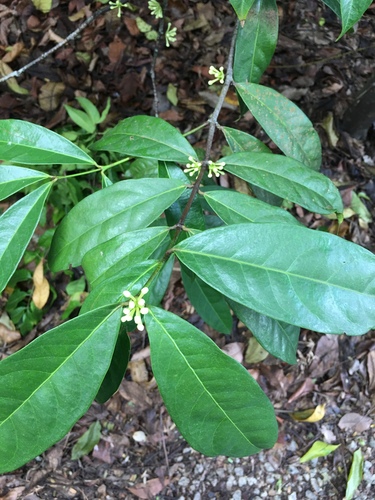
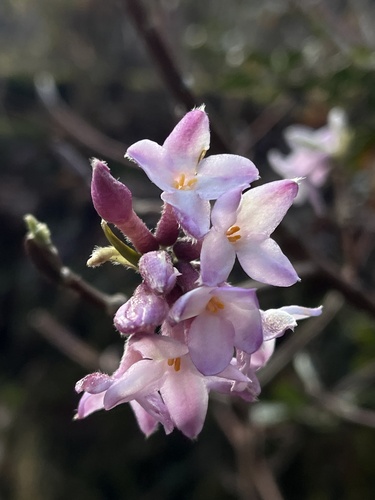
Daphne bholua Buch.-Ham. ex D.Don, commonly called the Nepalese paper plant, is a flowering shrub species in the Daphne genus of the Thymelaeaceae family. It grows at altitudes between 1,700 and 3,500 meters (5,577 to 11,483 feet) across the Himalayas and adjacent mountain ranges, ranging from Nepal to southern China. At lower altitudes, it grows as an evergreen in thickets and along forest margins. At higher altitudes, it is deciduous and typically grows in pastures and grassy glades. It usually reaches a height of around 2.5 meters (8 feet 2 inches), though some individual plants can grow to 4 meters (13 feet) or taller. This species has leathery leaves and deep pink flowers with a strong fragrance. A number of named cultivars have been developed and are cultivated as garden plants in Europe and North America. D. bholua has a broad distribution across the Himalayas and adjoining mountain ranges, extending from Nepal through Bhutan, Bangladesh, Myanmar and Vietnam into Sichuan and north-west Yunnan. In Nepal, this plant has the local common name baruwa; in Tibet, it is called chu chu. D. bholua is one of several Daphne species used for traditional paper-making in Nepal, which gives it the alternative common English name "paper daphne". Its inner bark also produces fiber that is used to make rope. While all parts of the plant are reported to be poisonous, the bark and roots are used in traditional Nepalese medicine to treat fevers.