About Pimelea alpina F.Muell. ex Meisn.
Nomenclature and Common Name
Pimelea alpina F.Muell. ex Meisn. is commonly known as alpine rice-flower.
Growth Form and Height
It grows as an erect, prostrate, or spreading shrub or undershrub, and typically reaches a height of 15 to 30 cm (5.9 to 11.8 inches).
Stem Characteristics
Its stems are glabrous.
Leaf Arrangement and Shape
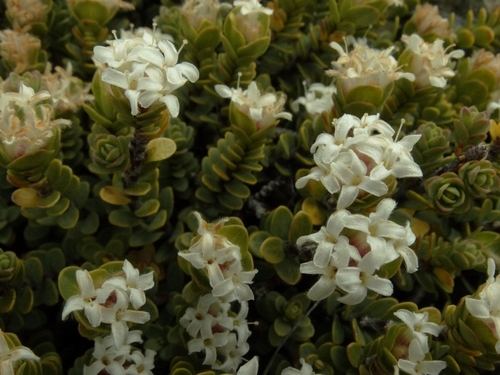
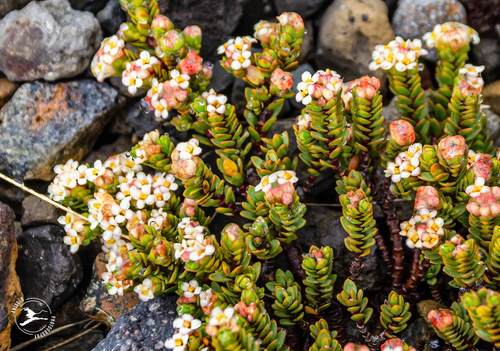
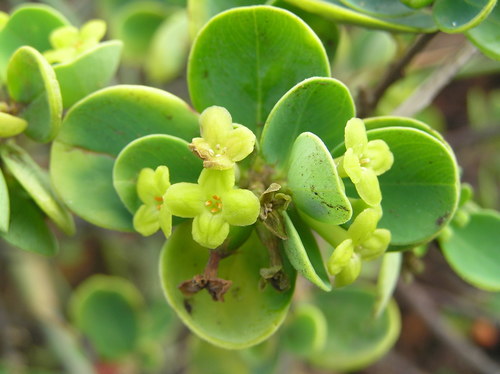
The leaves are arranged in opposite pairs, mostly crowded at the ends of branches, and are narrowly elliptic in shape.
Leaf Dimensions
Each leaf measures 3 to 13 mm (0.12 to 0.51 inches) long and 1 to 5 mm (0.039 to 0.197 inches) wide.
Flower Head Arrangement and Peduncle
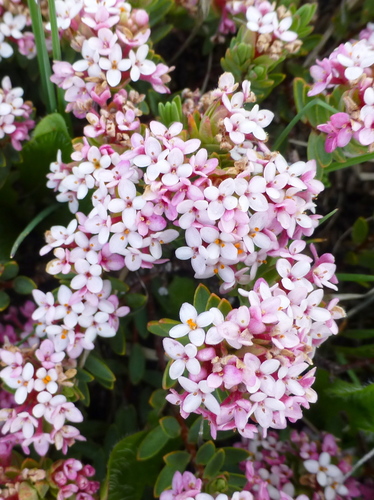
The flowers are arranged in heads containing 5 to 18 individual flowers, borne on a peduncle that can grow up to 2.5 mm (0.098 inches) long.
Flower Head Bracts
Four elliptic to egg-shaped bracts, each 5 to 7 mm (0.20 to 0.28 inches) long, are present at the base of the flower head.
Flower Color
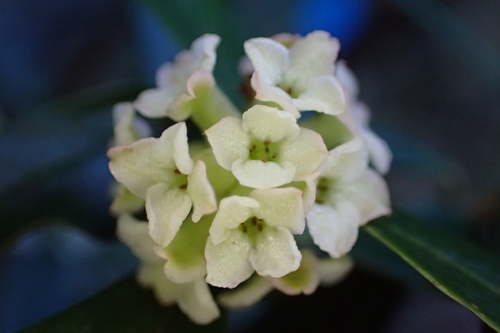
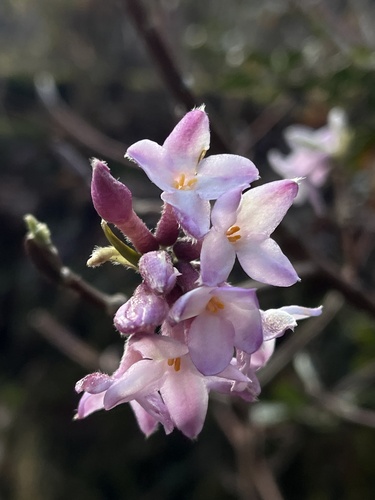
The flowers are most commonly pinkish red, and very rarely white.
Floral Cup and Sepal Dimensions
The floral cup is 3.5 to 6.0 mm (0.14 to 0.24 inches) long, and the sepals are about 2 mm (0.079 inches) long.
Stamen Characteristics
The stamens are shorter than the sepals.
Flowering Period
Flowering takes place from July to March.
Fruit Characteristics
The fruit is 3 to 4 mm (0.12 to 0.16 inches) long, green in color, and is enclosed within the remains of the floral cup.
Habitat
This species grows in woodland, heath, or grassland in alpine and sub-alpine areas.
Distribution and Altitude
It occurs at altitudes between 1,500 and 2,000 m (4,900 and 6,600 ft) in the Snowy Mountains of New South Wales and the eastern highlands of Victoria.