About Cynanthus doubledayi (Bourcier, 1847)
Taxonomic Naming and Literature Status
The turquoise-crowned hummingbird, with the scientific name Cynanthus doubledayi (Bourcier, 1847), is not described separately from the broad-billed hummingbird in the Cornell Lab of Ornithology's Birds of the World.
Male Morphology (French Description)
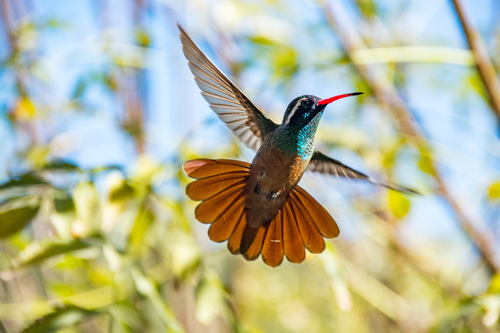
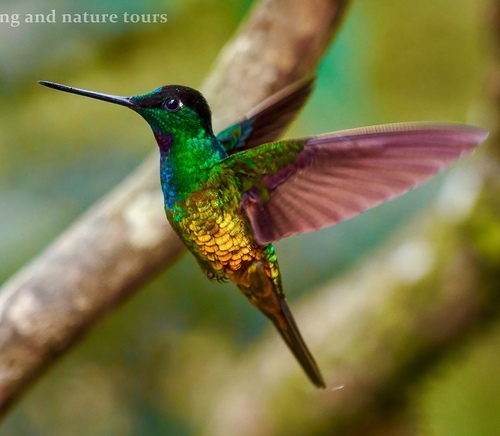
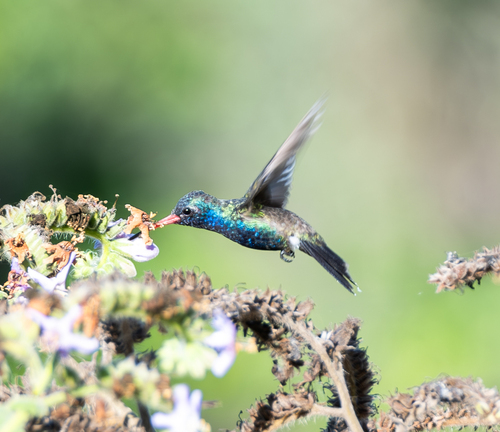
Below is a Google translation of the original French description of this species: "Male adult: straight beak, dilated at its base, white, and black at its extremity; round head; green cap, very brilliant with azure reflections; neck, scapular, back, caudal coverts glossy dark green; throat, front and sides of the neck, lower belly covered with shiny bright blue scaly feathers, abdomen less blue and green on the sides; downy anal region white; slightly curved grey-black wings; cordate [notched] tail with wide and rounded rectrices, black-blue, the 4 middle ones ashy at their ends; bare black legs."
Male Weight
The Birds of the World account for the broad-billed hummingbird notes that male turquoise-crowned hummingbirds weigh about 2.4 g (0.085 oz).
Geographic Distribution
The turquoise-crowned hummingbird is distributed across the southern Mexican states of Guerrero, Oaxaca, and Chiapas.
Habitat Types
It lives in a variety of landscapes, including arid thorn forest, tropical deciduous forest, gallery forest, and secondary forest. It can occasionally be found in pine-oak woodlands and grassy slopes.
Elevation Range
In terms of elevation, it generally ranges from sea level to 2,200 m (7,200 ft), though it has been recorded as high as 3,000 m (9,800 ft).
Diet Literature Status
The diet of the turquoise-crowned hummingbird is not described separately from that of the broad-billed hummingbird.
Broad-billed Hummingbird Feeding Habits
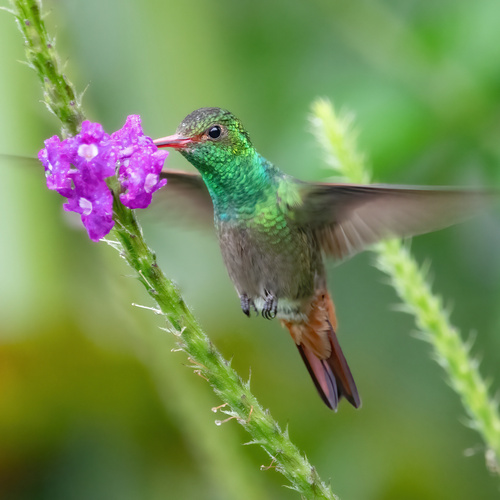
Like most hummingbirds, the broad-billed hummingbird feeds on a wide variety of flowering plants as well as small arthropods.
Documented Foraging Behavior
The turquoise-crowned hummingbird has specifically been recorded engaging in trap-lining for nectar in gallery forest.