About Ctenotus regius Storr, 1971
Common Name and Size Category
Ctenotus regius, also known as the pale-rumped ctenotus, is a medium-sized skink.
Dorsal and Lateral Markings
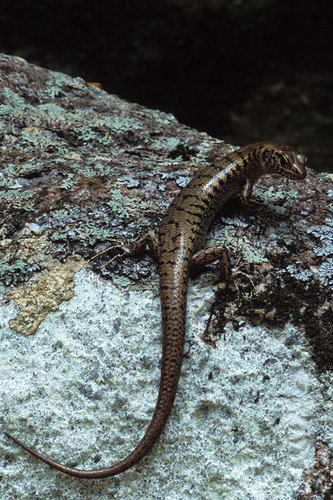
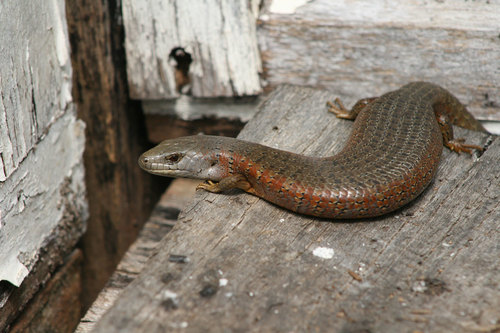
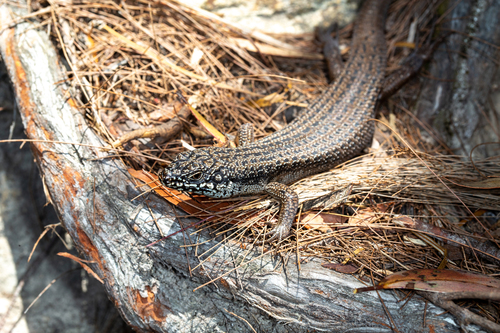
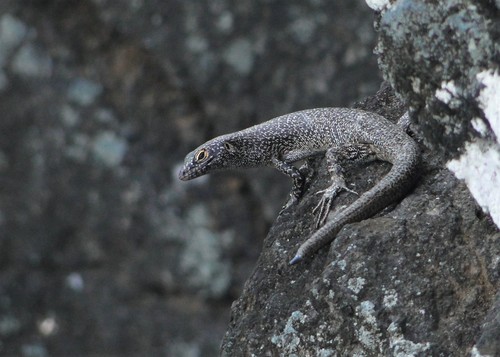
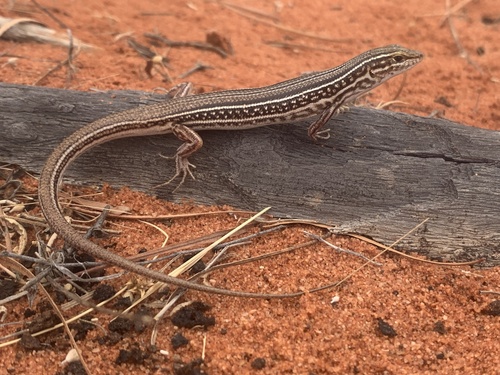
It is characterized by a longitudinally striped back, white-spotted sides, and a reddish-brown tail.
Body Coloration and Striping Details
Its body is primarily blackish brown; a white-cream lateral stripe runs from above the ear to below the eye, and white side spots sit between the longitudinal lines that span the full length of its body.
Snout-to-Vent Length and Sexual Dimorphism
On average, this species has a snout-to-vent length of 7.2 cm, and females are slightly larger than males on average.
Endemic Range
This species is endemic to Australia, with an isolated distribution covering north-western New South Wales, south-western Queensland, south-eastern Northern Territory, north-eastern South Australia, and north-western Victoria.
Occurrence Records
The Atlas of Living Australia currently holds 7,697 records of the species across Australia, though some of these records may be misidentifications.
Protected Area Records in New South Wales
Records of Ctenotus regius exist in a number of New South Wales national parks and nature reserves, including Mallee Cliffs National Park, Tarawi Nature Reserve, Mungo National Park, Sturt National Park, Kinchega National Park, Nocoleche Nature Reserve, and Yathong Nature Reserve.
Habitat and Refuge Vegetation
The pale-rumped ctenotus inhabits sandy and loamy deserts in central Australia, and takes refuge under low shrubs including saltbush (Atriplex spp.), bluebush (Maireana spp.), and nitre bush (Nitraria billardierei).
Documented Predator
While much remains unknown about the species’ relationships with its predators and prey, grey butcherbirds (Cracticus torquatus) have been observed preying on this species in Murray-Sunset National Park, Victoria.
Home Range Size
The species occupies a home range, with estimated sizes ranging from 40 to 60 square metres.
Reproductive Mode
The pale-rumped ctenotus is an oviparous, or egg-laying, species.
Clutch Characteristics
Females, which are on average larger than males, lay a clutch of approximately two eggs in early summer, though reproductive output varies considerably with environmental conditions.
Lifespan
This species has a relatively short lifespan of approximately 3 years, which contrasts with other Ctenotus species such as C. leonhardii, whose recorded individuals can live up to 7 years.