About Ctenophorus decresii (Duméril & Bibron, 1837)
Common Name & Core Trait
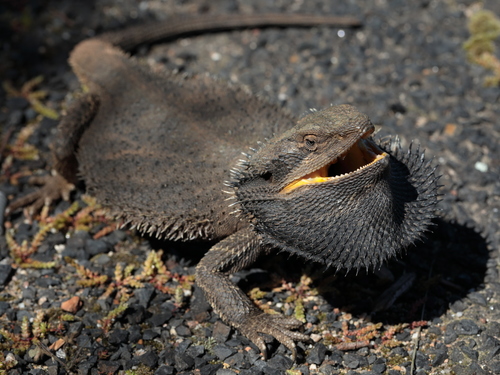
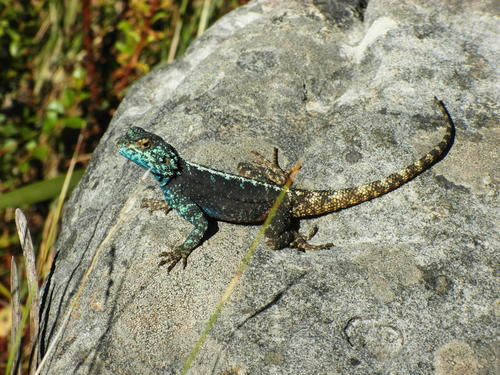
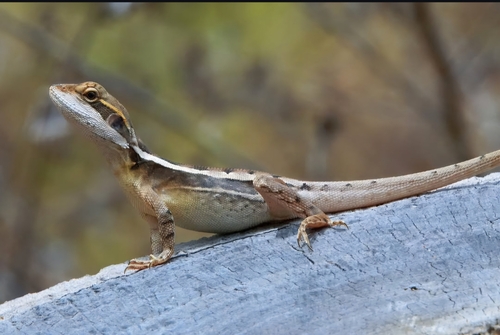
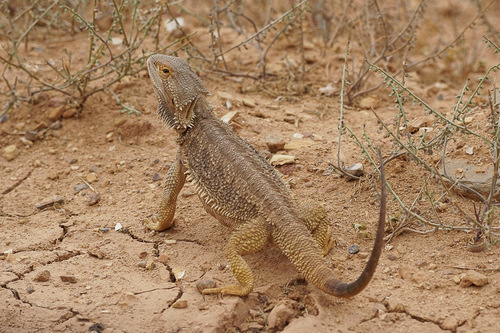
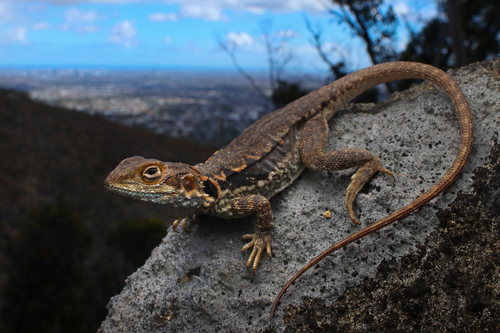
Ctenophorus decresii (Duméril & Bibron, 1837), commonly called the tawny dragon lizard, is most often characterized by variation in the colour of its throat.
Drivers of Throat Colour Variation
Early studies thought these colour differences were tied to different stages of sexual maturity, but current research indicates the variation is most likely caused by environmental factors, including maternal effects, incubation conditions, and post-hatching conditions, and genetics may also be a primary driver of variation.
Male Throat Colour Morphs
Male C. decresii throat colours are polymorphic and generally fall into one of four categories: entirely orange, entirely yellow, orange surrounded by yellow, or entirely grey.
Lineage Separation by Colour
These colour variations also differ in intensity and separate the species into two primary northern and southern lineages.
Aggression Correlate
Orange-throated males tend to be more aggressive when defending their territories.
Female Throat Colouration
It remains unclear how female lineage affects female throat colour expression, as females from both lineages generally share the same colouration.
Polymorphism Summary
Overall, throat colour in this species is polymorphic, with the main phenotypic difference being whether the throat is yellow or orange.
Yellow Morph Influences
While both yellow and orange colouration are polymorphic, yellow throat colour is additionally strongly influenced by environment and circulating testosterone levels.
Research Gaps for Colour Expression
Both polymorphism and environmental factors play major roles in throat colour expression, but it is not possible to determine which factor is more significant without further genomic analysis and linkage mapping.
Species Size Measurements
The average snout-to-vent length (SVL) of the species is 80.76 mm (3.180 in); the largest recorded individuals measure around 89 mm (3.5 in), while the smallest recorded individuals measure around 72 mm (2.8 in).
Brain Research Methods
Magnetic resonance imaging (MRI) has been used to study the brains of tawny dragon lizards; one study identified 224 visible brain structures, and found that the brain's left hemisphere is associated with the optic system.
Neuroscience Research Significance
This research has been foundational for evolutionary neuroscience research on lizards, as mapping lizard neuroanatomy allows scientists to investigate connections between brain structure, behaviour, and cognitive function.
Endemic Range
C. decresii is endemic to Australia.
Habitat Preferences
It occurs in a few distinct locations across the country and is most commonly found in rocky habitats.
Population Lineages
Geographic isolation has separated different populations into three distinct identified lineages: northern, southern, and New South Wales.
New South Wales Distribution
In New South Wales, the species is found in the far west of the state, in locations including the Barrier Ranges near Silverton.
Genus Body Shape
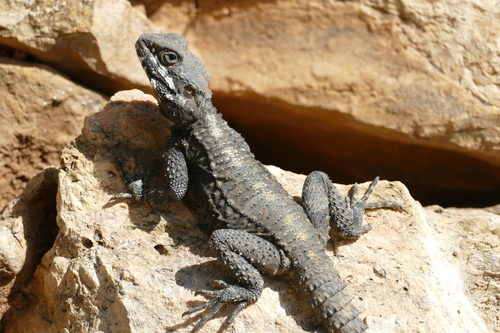
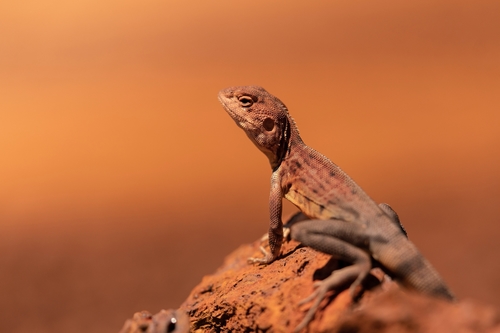
The entire Ctenophorus genus has a generally consistent body shape adapted to the Australian climate.
Climate Change Population Impacts
Climate change and rising temperatures have caused significant population declines for C. decresii.
Thermoregulation Tradeoffs
While the species can effectively regulate its body temperature in high temperatures through behavioural thermoregulation, this adaptation comes at a cost: it leads to a much higher rate of water loss, which causes faster desiccation.
Climate Stress Impacts
The combination of high temperatures and decreased rainfall has severely impacted not only the survival of these lizards, but also their fecundity and growth rate, and these negative impacts are expected to worsen as conditions become more extreme.
Additional Threats
C. decresii is also threatened by habitat fragmentation and bush rock removal.
Habitat Vulnerability
Since the species already has narrow, specific habitat requirements, any habitat loss increases its risk of further population decline.
Population Trend
Population size is currently trending downward, as the species' total habitat range has become very small in some areas.
Threat Sources
Most threats to the species are human-driven, but grazing animals also negatively impact populations.
Grazing Habitat Impacts
Constant grazing by domestic sheep, cattle, and feral goats reduces the area of habitat available for the lizards to hide and live.
Predation Risk
Fewer hiding places make the lizards more vulnerable to predation.
Genetic Variation Impacts
When combined with human-driven land clearing, this habitat loss also leads to reduced genetic variation within the species.
Reproductive & Lifespan Traits
C. decresii can produce multiple clutches of eggs per year, and has a short lifespan.
Egg Laying Period
Egg laying typically occurs between September and October, with most clutches laid early in this window.
Incubation Temperature Effects
Incubation temperature affects hatchling tail length and sex determination.
Temperature-Dependent Sex Determination
At intermediate incubation temperatures, the proportion of male hatchlings is much higher than at very high or very low extreme incubation temperatures, where only female hatchlings are produced.
Laying Season Predictive Value
This pattern of temperature-dependent sex determination means that the season when a female lays her eggs is a good predictor of the sex and body size of resulting hatchlings.
Low Temperature Hatchling Outcomes
Very low incubation temperatures tend to produce slower, less developed hatchlings.
Optimal Incubation Benefits
When incubated at a suitable temperature, hatchlings have higher body mass, which correlates with a higher probability of reproductive success, particularly in terms of clutch size and the body mass of the resulting offspring.
Incubation Length Effects
Incubation length also influences hatchling body mass.
Laying Timing Body Mass Impacts
Eggs laid earlier in the laying season have more time to develop, which gives them a greater opportunity to gain more body mass, while eggs laid later do not get this same opportunity.
Body Size Fitness Advantages
Larger body size provides fitness advantages for both males and females: larger males are better able to defend territories, and larger females have higher fecundity.
Territory & Body Mass Correlation
Males that hold more territory also tend to have larger body masses.