About Cryptoblepharus pannosus Horner, 2007
Adult Size
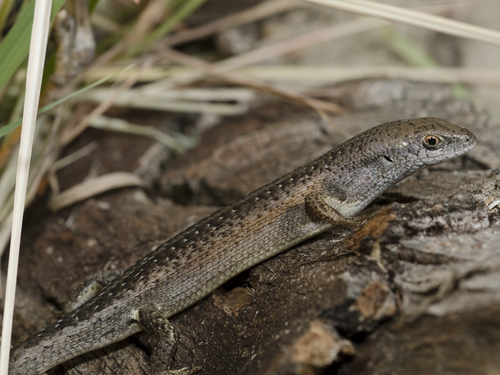
As a medium-sized species within its genus with relatively short limbs, adult Cryptoblepharus pannosus have a snout-to-vent length (SVL) of 4.0–4.4 cm (1.6–1.7 in).
Scale Characteristics
This species has a longitudinally aligned body pattern, typically has 5 supraciliary scales, pale acute plantar scales, strongly keeled subdigital lamellae, 43–56 paravertebral scales (with a mode of 48).
Body Coloration and Pattern
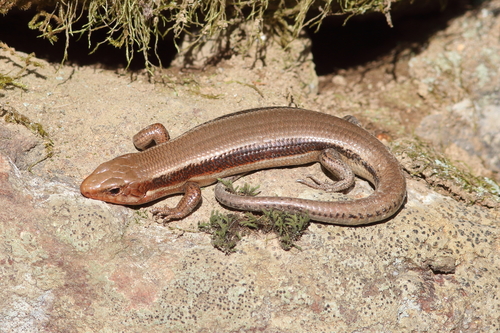
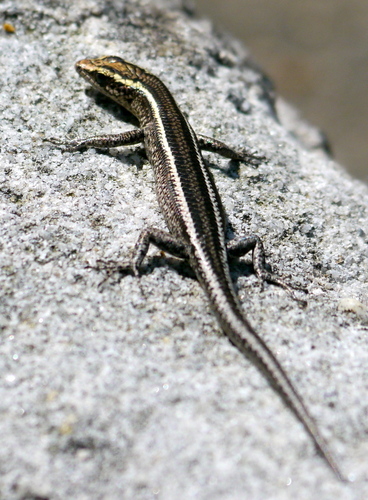
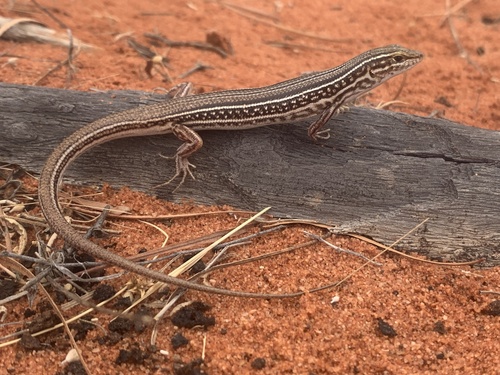
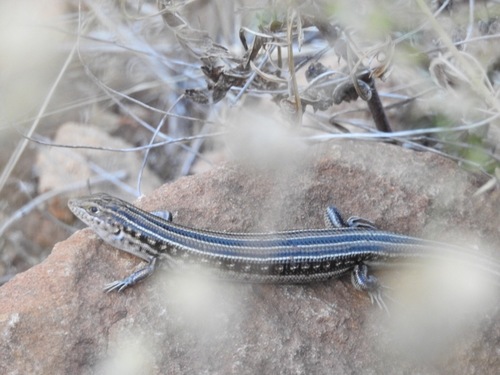
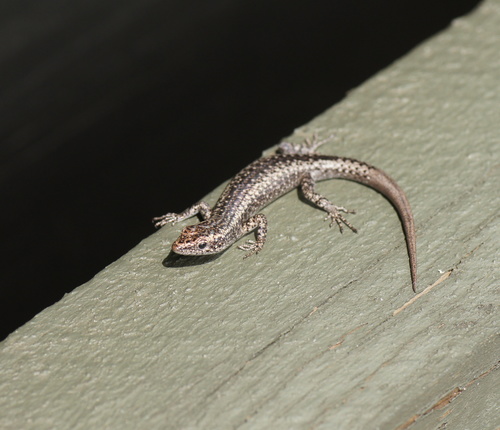
Its base body color ranges from brown and grey to blackish, with a variable, complex ragged pattern: this includes a broad dark vertebral zone 3–4 scales wide, dark flecks that align to form two narrow broken dorsal stripes, and ragged, broad pale grey to cream laterodorsal stripes.
Tail Autotomy and Regeneration
When threatened, C. pannosus can shed its tail, and it is able to regrow the tail within 6–12 months.
Australian Distribution
Within Australia, C. pannosus is distributed across New South Wales, the Northern Territory, Queensland, South Australia, Victoria, and the Australian Capital Territory.
Climbing and Locomotion Traits
C. pannosus are very agile climbers, so they are primarily arboreal, and they are also extremely versatile.
Microhabitat Use
They can be found living under rocks and logs, and may also live in or under human-made structures including fences and walls throughout Eastern Australia.
Habitat Types
This species occurs in a wide range of habitat types, including forest, shrubland, and grassland.
Reproductive Mode and Breeding
C. pannosus is an oviparous species, and breeds year-round.
Sexual Maturity Size
Males reach sexual maturity at an approximate snout-vent length of 30.0 mm (1.18 in), while females reach maturity at approximately 30.4 mm (1.20 in).