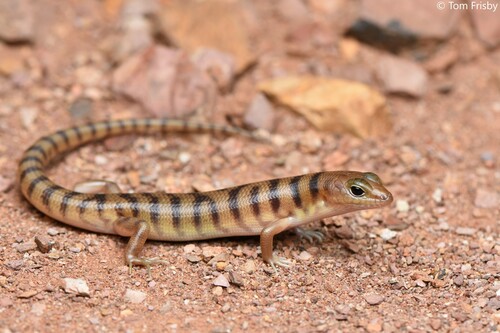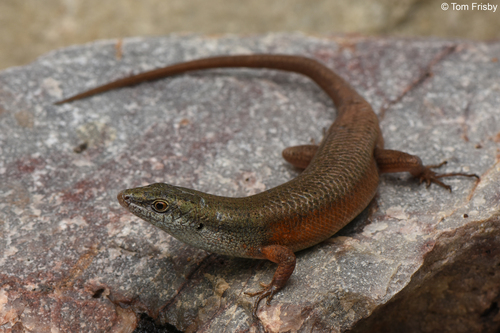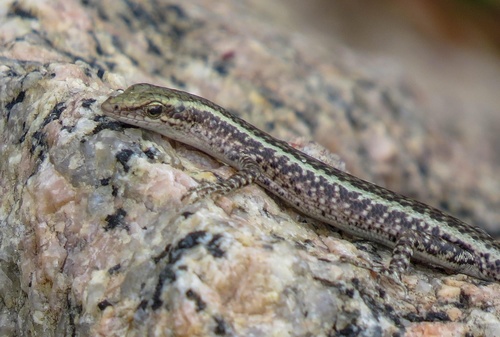
About Cryptoblepharus litoralis (Mertens, 1958)
Nomenclature & Common Names
Cryptoblepharus litoralis, described by Mertens in 1958, is a small skink commonly known by several common names: the coastal snake-eyed skink, supralittoral shinning-skink, and coastal tree skink.
Distribution
This species is found in North Queensland, Australia, and New Guinea.
Habitat & Feeding
It typically inhabits rocky outcrops on beaches and headlands, not far from the water, where it moves quickly to hunt small insects.
Etymology
The genus name Cryptoblepharus means "hidden eyelid", and the specific epithet litoralis means "intertidal".
Size & Dorsal Coloration
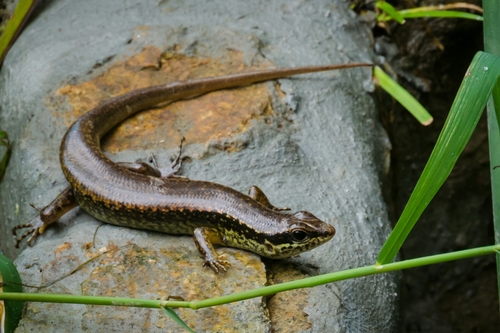
This skink reaches approximately 55 mm in snout-to-vent length, and has a dark-brown to black body marked with white to beige spots.
Foot Characteristics
The lower surfaces of its feet are shiny black.
Similar Species Distinction
It is very similar to the species Cryptoblepharus plagiocephalus, which differs by having brownish lower foot surfaces.