About Crotalus stephensi Klauber, 1930
Taxonomy and Description Naming
Crotalus stephensi, first described by Klauber in 1930, has adult total body lengths (including the tail) ranging from 58 cm to 132 cm (23 to 52 inches), with an average adult length of 60 to 91 cm (24 to 36 inches).
Scale Morphology
Per a 1936 publication by Klauber, this species is defined by the lack of a vertical light stripe along the posterior edge of the prenasal and first supralabial scales. Its supraocular scales are typically pitted, have visible sutures, or have broken outer edges.
Base Body Coloration
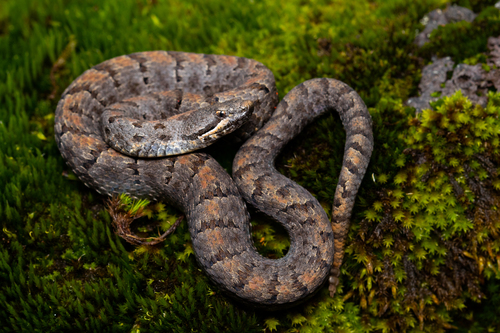
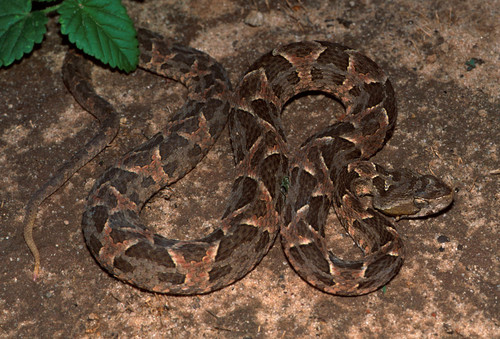
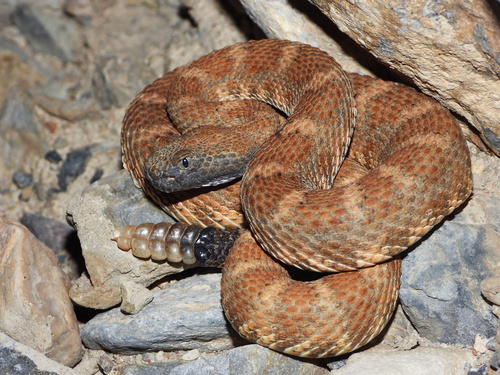
The species' color pattern features a base ground color that can be straw, tan, buff, brown, or gray. This base color is covered by a series of blotches in shades of buff, gray, brown, or deep red-brown.
Marking Details
Gray color suffusion is common across the sides of the body and head, and small black-tipped scales are often scattered across the back, most noticeably along the edges of the larger body blotches.
Geographic Distribution
This rattlesnake is found in desert-mountain habitats on the eastern slopes of the Sierra Nevada, ranging from Mono County, California east to Nye County, Nevada, extending south through southwestern Nevada to Clark County, Nevada in the southeast, and reaching southwest into central San Bernardino County, California.
Altitude Range
This range occurs between 900 and 2,400 m (3,000 to 7,900 ft) in altitude.
Reproduction
Crotalus stephensi is ovoviviparous, with young born in July and August.
Neonate Size
Newborn neonates measure approximately 25 cm in total length.