About Crotalus mitchellii (Cope, 1861)
Common Name and General Size
Crotalus mitchellii, also commonly known as the speckled rattlesnake, generally does not exceed 100 cm (39 in) in total length including the tail. Large adult males typically measure between 90 and 100 cm (35 and 39 in).
Isla Ángel de la Guarda Population Size
The population found on Isla Ángel de la Guarda is known to grow larger, with the maximum recorded total length for a specimen from this location being 136.7 cm (53.8 in).
El Muerto Island Population Size
In contrast, the population on El Muerto Island only reaches a maximum total length of 63.7 cm (25.1 in).
Dorsal Marking Morphology
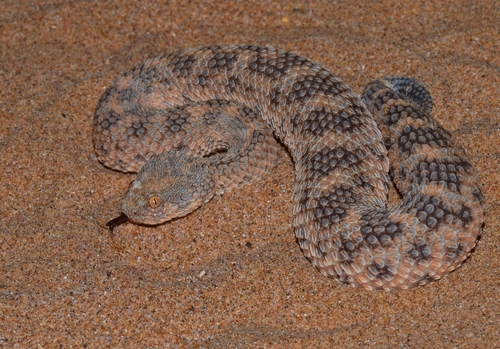
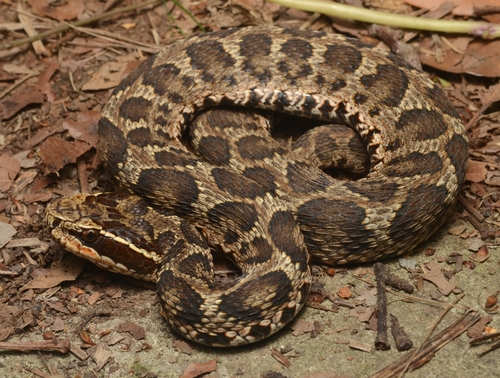
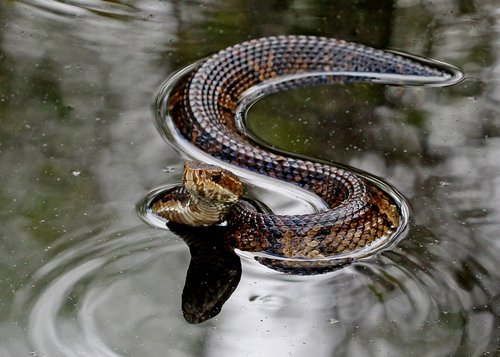
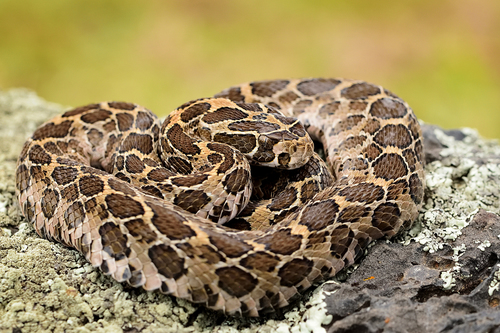
Along the back of this species, there are around thirty markings that are sometimes indistinct and often take the form of crossbars. Due to these markings, the speckled rattlesnake is sometimes incorrectly referred to as the tiger rattlesnake.
Dorsal Marking Shape Variation
In other individuals, the markings are clearly defined geometric shapes, such as diamonds, hexagons, and hourglasses. These markings vary in color between individual snakes, but are always darker than the snake's base body color.
Camouflage Color Pattern
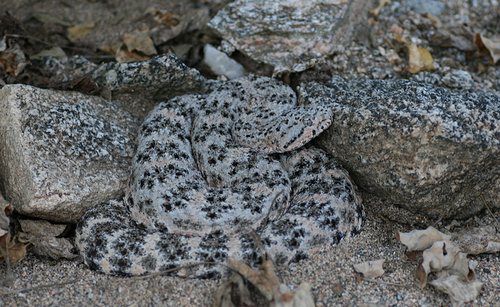
Typically, snakes of this species share a shared color pattern that matches the specific rocky environment they live in. Overall, an individual Crotalus mitchellii often appears as if it is formed from granite.
Camouflage Function and Appearance
This camouflage is very effective for protection, and when examined against a contrasting background, it is as aesthetically pleasing as a work of art.
Overall Distribution Range
Crotalus mitchellii is distributed across the southwestern United States and northwestern Mexico.
United States Range
In the United States, its range covers east-central and southern California, southwestern Nevada, extreme southwestern Utah, and western Arizona.
Mexico Mainland Range
In Mexico, it is native to northwestern Sonora and most of Baja California, including Baja California Sur.
Island Distribution
It also lives on multiple islands in the Gulf of California: Ángel de la Guarda Island, Carmen, Cerralvo, El Muerto, Espíritu Santo, Monserrate, Piojo, Salsipuedes, and San José, as well as on Santa Margarita Island off the Pacific coast of Baja California Sur.
Type Locality
The species' listed type locality is "Cape St. Lucas, Lower California", which corresponds to modern-day Cabo San Lucas, Baja California Sur, Mexico.
Preferred Habitat
The preferred natural habitat of Crotalus mitchellii is rocky desert and shrubland.
Reproduction Mode
This species is ovoviviparous.