About Craugastor talamancae (Dunn, 1931)
Taxonomy and Size
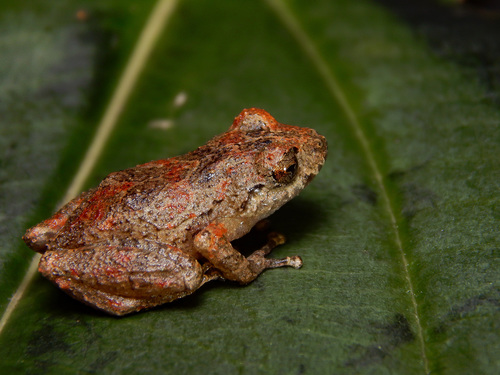
Craugastor talamancae, first formally described by Dunn in 1931, shows sexual size dimorphism in snout–vent length: males reach 30 mm (1.2 in), while females reach 50 mm (2.0 in). This species has long limbs, with moderately webbed toes.
Dorsal Coloration
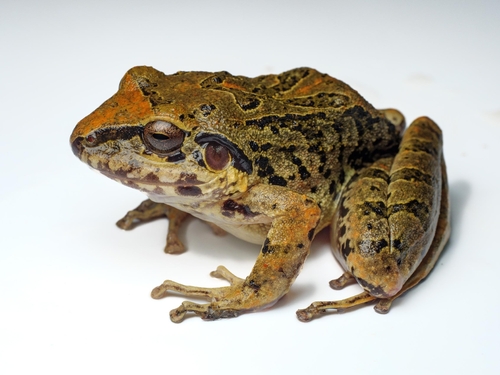
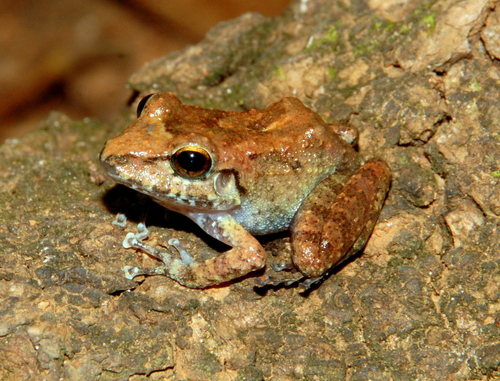
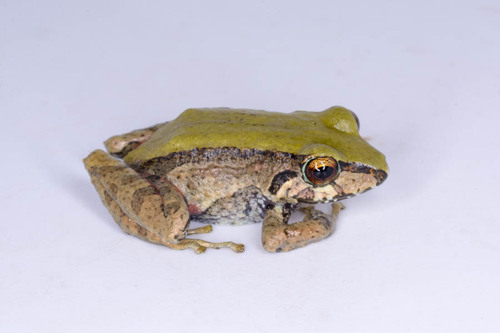
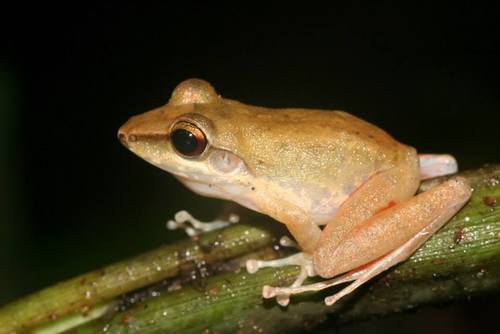
Its dorsal color is most often brown. Key identifying traits include a dark bar that crosses through the eye, and distinct barring on the arms and legs.
Ventral Coloration
The ventral body surfaces are white, with faint yellow coloring on the posterior parts of the body. The throat can show a subtle reddish tint.
Iris and Juvenile Features
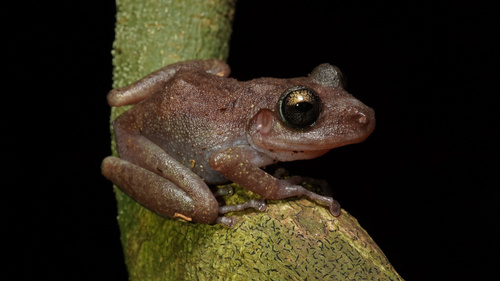
The upper half of the iris is golden, and the lower half is brown. Juveniles have a clearly visible white line along the lip.
Male Advertisement Call
Males produce an advertisement call that sounds like a high-pitched mew.
Habitat and Elevation Range
This frog lives in humid lowland and montane old-growth and secondary forests, at elevations ranging from 15 to 646 m (49 to 2,119 ft) above sea level. It can occasionally be found in modified human-altered habitats.
Activity Pattern
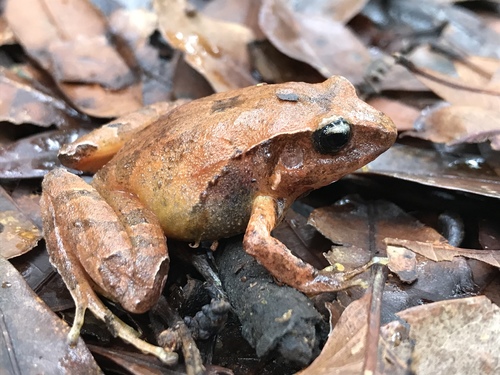
It is a nocturnal species: during the day it hides within leaf litter on the forest floor, and at night it typically moves up to low-lying vegetation.
Diet
Its diet is made up of small arthropods, and it does not eat hemipterans.
Population Status
Craugastor talamancae is common across some parts of its range, but populations have declined and the species is rare in other areas. It has been recorded within multiple protected areas.
Threats
This species faces threats from habitat loss from deforestation driven by agricultural expansion and logging. Chytrid fungus has been detected in this species, and it is also threatened by climate-driven decreases in the amount of intact standing leaf litter in its habitat.