About Cottus asper Richardson, 1836
Species Identification
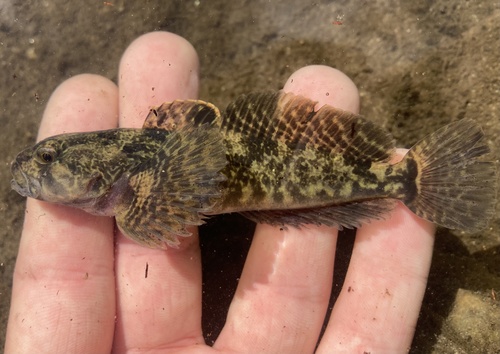
This fish, the prickly sculpin (Cottus asper Richardson, 1836), can reach a maximum length of around 30 centimeters, but most individuals are smaller, typically between 4 and 10 centimeters long. Individuals in California can grow up to 20 centimeters.
Body and Fin Morphology
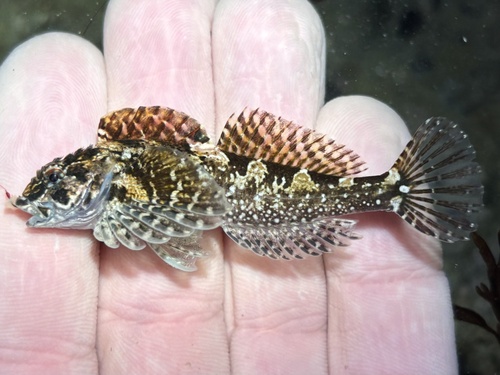
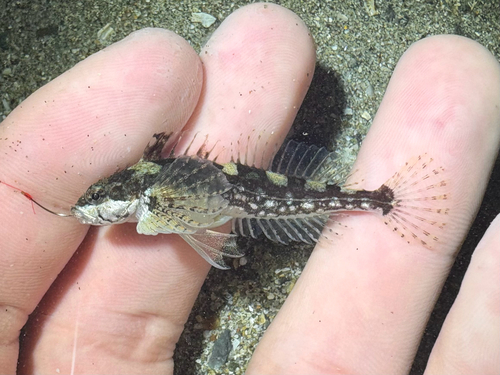
It has a large head and wide, fan-shaped pectoral fins.
Maturity and Lifespan
This species reaches sexual maturity at 2 to 4 years of age, and has a maximum lifespan of around 7 years.
Base Body Coloration
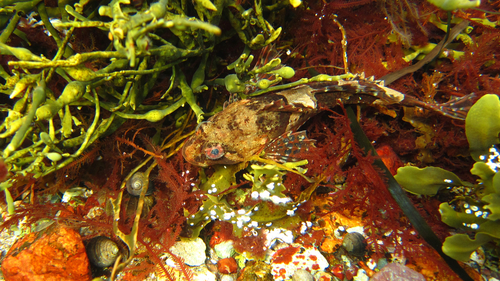
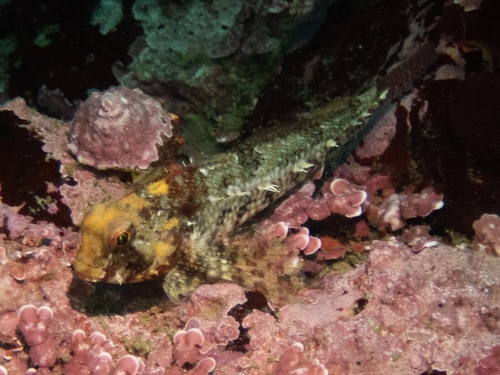
Prickly sculpins have camouflaged muted coloration: their upper bodies are brown, gray, or olive green, while their ventral (underside) surfaces are white or yellowish. Dark spots or bars mark the back, and most fins have dark bars.
Breeding Coloration
Breeding males are darker in color than females and non-breeding males. During the breeding season, both sexes develop orange coloration along the edge of the first dorsal fin.
Body Spines
The body is covered in prickly spines that can pierce bare skin; fish that live inland tend to have more pronounced prickliness than coastal populations.
Population Abundance
Across most of its range, the prickly sculpin is common. It becomes notably abundant in summer, when new young fish recruit to the population and the previous season's juveniles join the adult population.
Native Habitat Range
Prickly sculpins live in cold water streams, and are found in Pacific Northwest streams. They are native to many California waterways, with their native range extending north all the way to Alaska.
Introduced Range Locations
The species is an introduced invader in some Southern California lakes, rivers, and tributaries, including the Santa Clara River, the Santa Ana River, Irvine Lake, and Big Bear Lake. It also occurs in reservoirs such as Pyramid Lake.
Introduction Pathway
It was likely introduced to these southern locations from more northern populations via the California Aqueduct.
Human Uses
For human use, larger prickly sculpins are considered edible. The species is also commonly used as bait fish.