About Coptis aspleniifolia Salisb.
Coptis aspleniifolia, commonly known as fernleaf goldthread or spleenwort-leaf goldthread, is a plant native to the temperate rainforests of its range. It is distributed across the northern two-thirds of British Columbia, Alaska, and along the Cascades into Washington. It typically grows in the herb-layer understory of coniferous forests with multilayered canopies, on gleysolic or organic soils. It can also be found in wet woods and bogs. Within its native range, it is common and widespread, it is not invasive, and it is not poisonous.
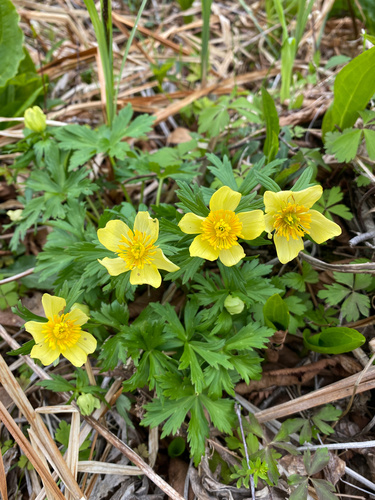
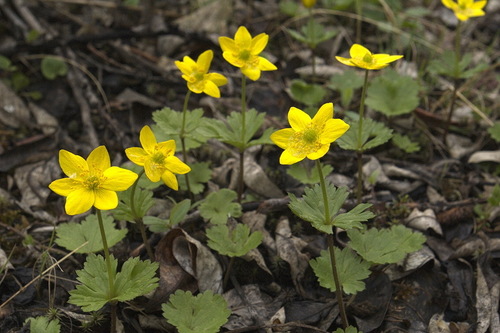
This species is an evergreen perennial member of the buttercup family. It is mostly hairless, and grows 5 to 30 centimeters tall. All of its leaves are basal, dark-green, glossy, divided into five or more segments, and resemble fern leaves. The plant gets its common name from its fern-like leaf structure and its vibrant golden-colored roots when peeled.
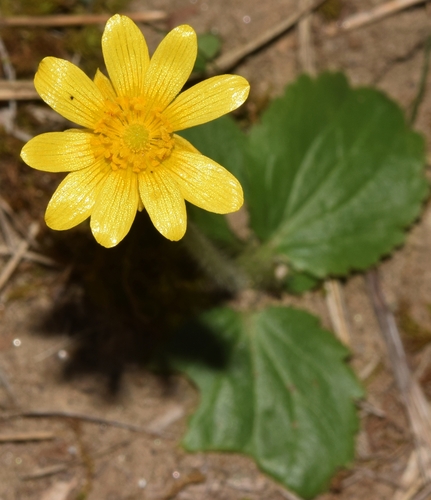
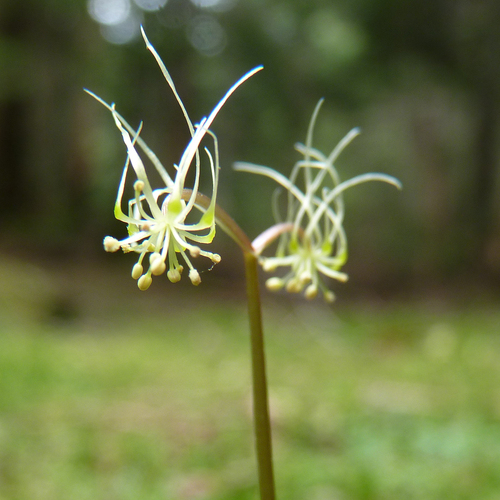
Fernleaf goldthread blooms in mid-spring. Each stalk produces two or three nodding flowers, which are pale greenish white or yellow. Each flower has five to seven sepals and five to seven thin petals. In its ecosystem, it acts as a protective ground cover, retains soil moisture by providing shade, and serves as a food source for deer.