About Anemonastrum richardsonii (Hook.) Mosyakin
Common Name and Flower Identification
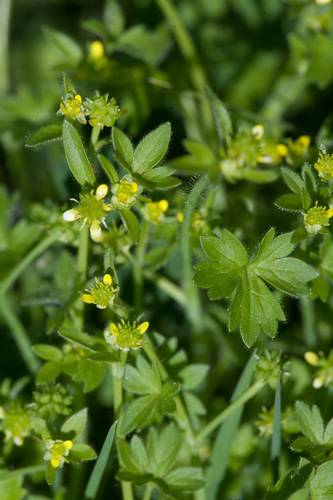
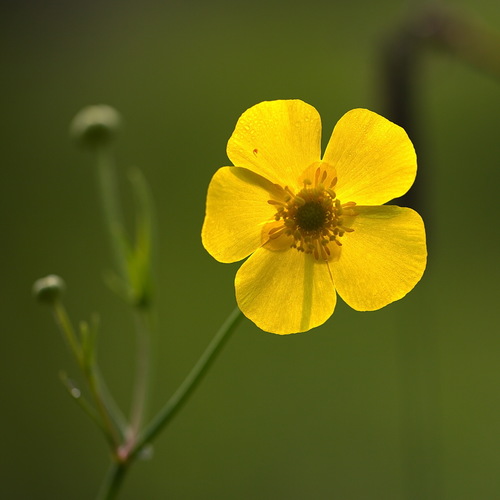
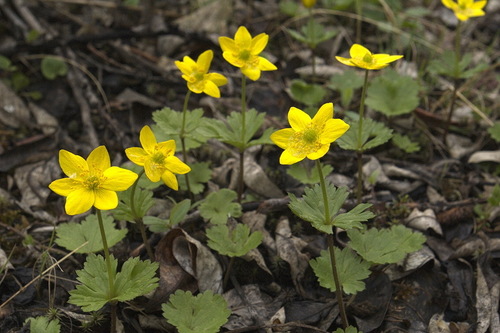
Anemonastrum richardsonii, commonly called yellow thimbleweed, can be identified by its small, single yellow flowers. Each flower is perfect, meaning it holds both male and female reproductive organs.
Flower Morphology
It has no petals, but instead has yellow sepals that function like petals, and it has a superior ovary. The flower grows on a pubescent stem covered in tiny hairs that reaches around 20 centimetres (7.9 in) in height.
Vegetative Structure
This species has thread-like underground rhizomes, along with stalked palmately lobed leaves. It also produces stem leaves arranged in a whorl below the flower; these leaves are 3-parted and have sharp teeth.
Fruit Type
After flowering, the plant develops a dry fruit called an achene. The achene is generally small, measuring 3–4 millimetres (0.12–0.16 in) long.
Achene Characteristics
It is nearly sub-spherical, hairless, and has a hooked tip. The fruit is dispersed by wind, and its style helps it stay aloft during dispersal.
Habitat Preferences
Yellow thimbleweed prefers subarctic climates, and grows in willow thickets, snow patches, along streams, near peat and mosses, and in moist, poorly drained areas. It can grow successfully across a wide range of soil pH levels.
Species Distribution
This species is distributed across most of Canada, including the Northwest Territories, Yukon, northern Quebec, Labrador, the Nunavut Islands, Melville Island, and Victoria Island, as well as west Greenland and Alaska in the United States.
Herbal Uses
Herbalists use this plant to soothe abrasions, toothaches, rheumatism, and depression. Traditionally, boiled roots of the plant were used in attempts to treat paralysis, but this treatment was ineffective.
Traditional Headache Treatment
Smoke from the cotton of the plant's ripe seeds was burned and inhaled to relieve headaches.
Bioactive Compounds
Anemonastrum richardsonii contains the bioactive compounds anemonin and protoanemonin, which have been studied for potential therapeutic uses. Current research indicates anemonin may inhibit the synthesis of pigmentation.