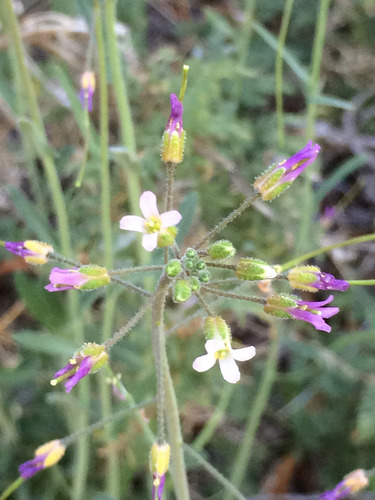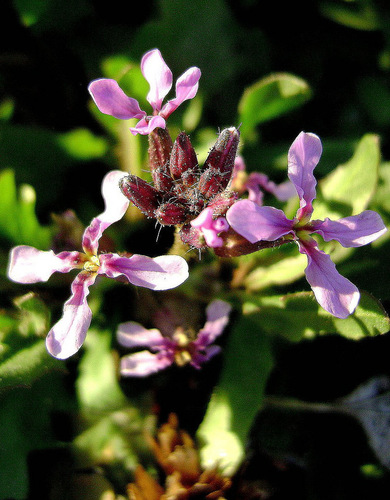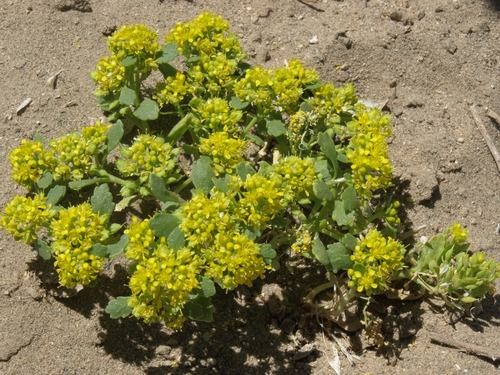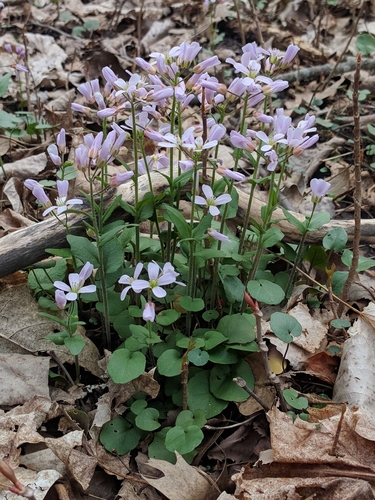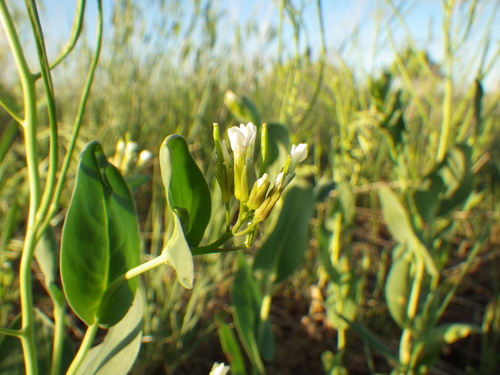
Conringia orientalis (L.) Dumort. is a plant in the Brassicaceae family, order Brassicales, kingdom Plantae. Not known to be toxic.

Photo of Conringia orientalis (L.) Dumort. (Conringia orientalis (L.) Dumort.)
🌿 Plantae

Conringia orientalis (L.) Dumort.

Conringia orientalis (L.) Dumort.

Conringia orientalis, or hare's ear mustard, is an annual mustard-family flowering plant native to Eurasia that is invasive elsewhere and toxic to livestock.

Family
Genus
Conringia
Order
Brassicales
Class
Magnoliopsida

About Conringia orientalis (L.) Dumort.

Conringia orientalis (L.) Dumort. is a species of flowering plant in the mustard family, commonly called hare's ear mustard. It is native to Eurasia, but has been introduced to other regions where it sometimes grows as a noxious weed. It acts as a weed both in its native range and in North America, where it is a widespread invasive species, particularly in central Canada. This plant is an annual herb that grows an unbranched, erect stem that reaches 30 to 70 centimetres (12 to 28 inches) tall. Its thick, waxy leaves are generally oval-shaped, grow up to 9 centimetres (3+1⁄2 inches) long, and clasp the stem at their bases. Each flower is enclosed in pointed sepals, and has yellow, clawed petals that are roughly 1 centimetre (1⁄3 inch) long. The fruit it produces is a beaded silique that can grow up to 13 centimetres (5 inches) long. This plant is known to be toxic to livestock.
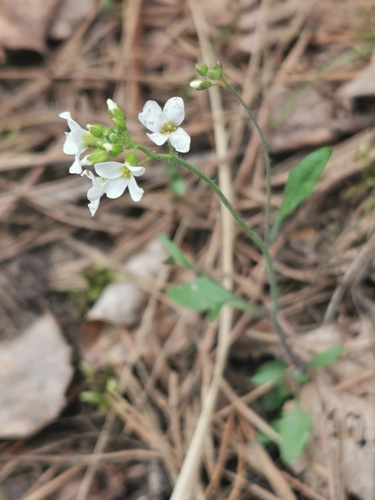
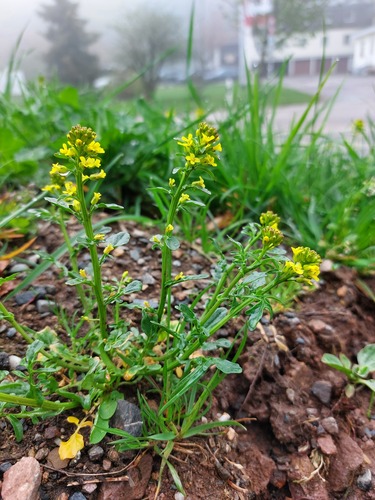
Photo: (c) Matt Lavin, some rights reserved (CC BY-SA) · cc-by-sa

Taxonomy

Plantae Tracheophyta Magnoliopsida Brassicales Brassicaceae Conringia

More from Brassicaceae

Sources: GBIF, iNaturalist, Wikipedia, NCBI Taxonomy · Disclaimer

Identify Conringia orientalis (L.) Dumort. instantly — even offline

iNature uses on-device AI to identify plants, animals, fungi and more. No internet needed.

Download iNature — Free

Start Exploring Nature Today

Download iNature for free. 10 identifications on us. No account needed. No credit card required.

Download Free on App Store