About Combretum imberbe Wawra
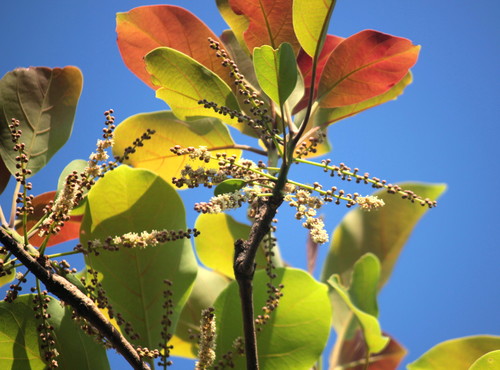
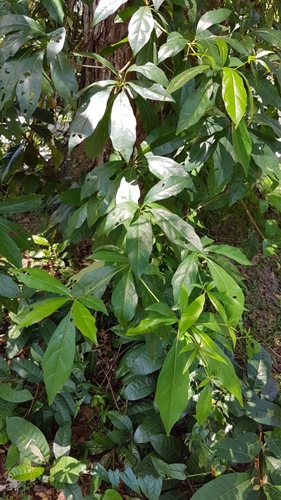
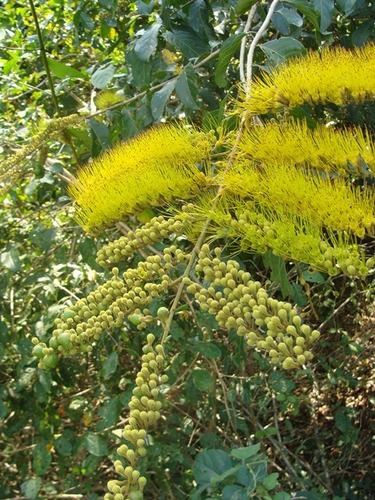
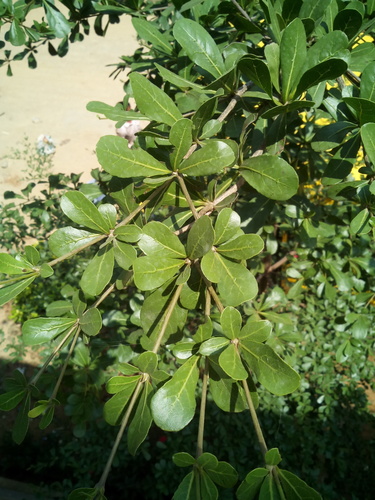
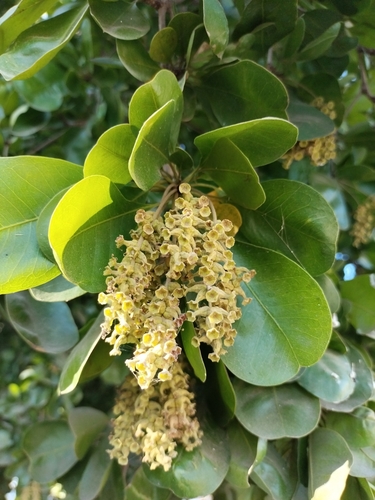
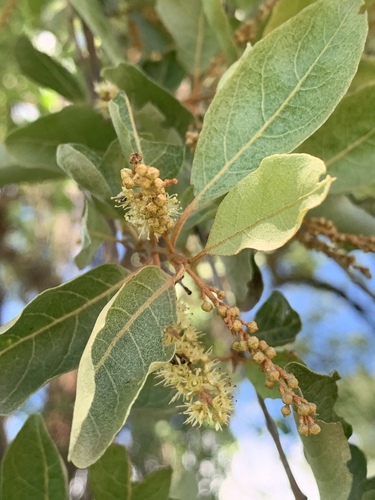
Combretum imberbe Wawra, the largest bushwillow species of southern Africa, has a distinct growth habit and characteristic features. It bears a spreading, fairly sparse crown that is roundish to slightly umbrella-shaped. Its smallish grey-green leaves and small yellowish-green samaras grow on spiny, tapering branchlets. It typically reaches 7 to 15 metres (23 to 49 ft) in height, and may grow as tall as 20 metres (66 ft). When mature, its single solid trunk can reach up to 1.5 metres (4.9 ft) in diameter. Its distinctive bark ranges in colour from pale to dark grey, with deep lengthwise fissures. Irregular horizontal cracks give the bark a fairly regular, coarse-grained appearance. Radiocarbon dating conducted in South Africa has confirmed that leadwood trees can live up to 1070 ± 40 years, and dead trees can remain standing for many years after death. This species is native to mesic savannas across Africa south of the equator, ranging from KwaZulu-Natal province, South Africa in the south to Tanzania in the north. It occurs naturally in South Africa, eSwatini, Botswana, Namibia, Zimbabwe, Mozambique, Angola, Zambia, and Tanzania, and is a protected tree within South Africa. Its dense, very hard wood is difficult to plane, but works well with drilling, sanding, and turning; it is also termite resistant. It was historically used for railway sleepers, and is now valued for ornamental work and furniture. It burns very slowly with intense heat, so it is often used for overnight fires to keep wild animals away, and is sometimes used for barbecues to produce a hot, long-lasting flame. Its ashes are used as whitewash to paint the walls of kraal huts, and can be mixed with water into a paste for use as toothpaste. The ashes can also be kneaded into tamarind paste to make a sweet smoothie, a common practice among the Marembe people of the Nyamapanda area.