About Clinopodium serpyllifolium (M.Bieb.) Kuntze
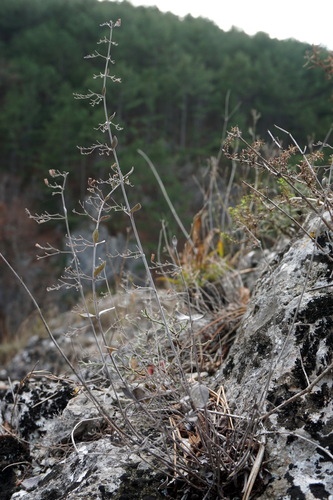
Clinopodium serpyllifolium (M.Bieb.) Kuntze has the synonym Micromeria fruticosa, sometimes listed as Clinopodium serpyllifolium subsp. It is commonly called white micromeria or white-leaved savory, also known as thyme-leaved savory. This is a dwarf evergreen shrub endemic to the eastern Mediterranean. It grows specifically in Turkey, Syria, Lebanon and Israel, while related species occur in the Balkans. It grows mainly on rock surfaces in the low Mediterranean region, and is more common on chalk and calcrete rocks than limestone rocks. In the Levant, its white blossoms appear between July and November. Its aromatic leaves resemble mint and carry a mint flavor. The ideal time to forage this plant is between late January and March. It contains a high concentration of the monoterpene essential oil pulegone, plus isomenthol, and is known to have medicinal properties. For culinary use, mint-flavored leaves can be infused to make herbal tea, also called a decoction. In the Hebron area, Arabic-speaking populations traditionally prepared dried figs (Arabic: قطين, romanized: quṭṭēn) by laying figs out to dry on large stone slabs covered with crushed leaves and stems of this plant to add flavor. This practice is also thought to take advantage of the plant's anti-fungal properties. In folk medicine, this plant is used to treat a wide range of ailments including abdominal pains, diarrhoea, eye infections, heart disorders, high blood pressure, weariness, exhaustion, colds, and open wounds. Common preparations include: making a poultice from boiled leaves to apply to burns and skin infections; drinking a leaf infusion to relieve stomach aches; and gargling with a leaf infusion to treat bad breath and gum infections.