About Ajuga pyramidalis L.
Species Nomenclature
Ajuga pyramidalis L., commonly called pyramidal bugle, is a perennial herbaceous plant that reaches a height of about 5 to 20 cm (2 to 8 in).
Basal Leaf Rosette
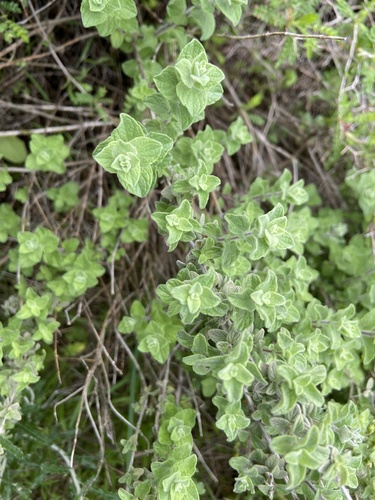
It forms a basal rosette of stalked leaves, which are noticeably larger than the leaves growing along the stem.
Stem Morphology
The stiff, upright, hairy stem is square-shaped, and bears simple leaves arranged in opposite pairs.
Stem Leaf Characteristics
These leaves are ovate, hairy on both their upper and lower surfaces, and have slightly wavy edges.
Inflorescence Structure
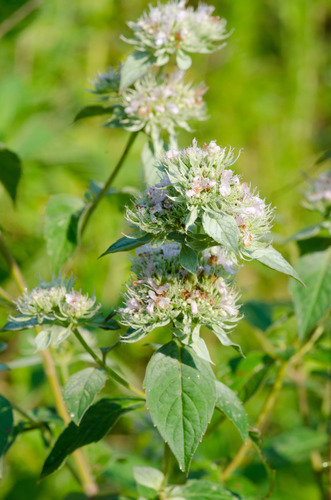
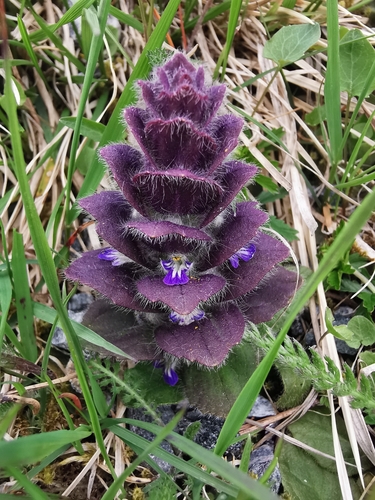
The inflorescence is a terminal pyramid-shaped spike made up of axillary whorls.
Inflorescence Bracts
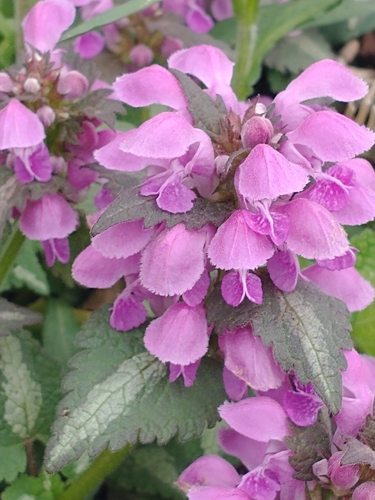
Leaf-like bracts grow beneath each individual flower in the inflorescence; these bracts gradually decrease in size moving toward the tip of the inflorescence, are always longer than the flowers, and the upper bracts are often tinged with purple.
Flower Perianth Structure
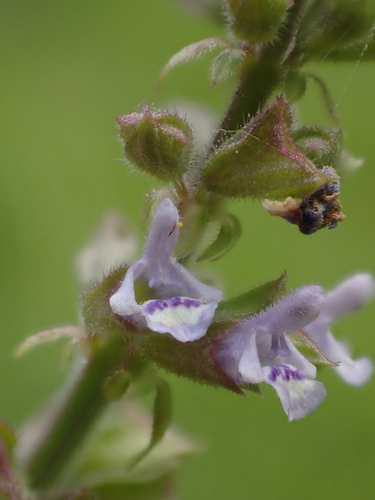
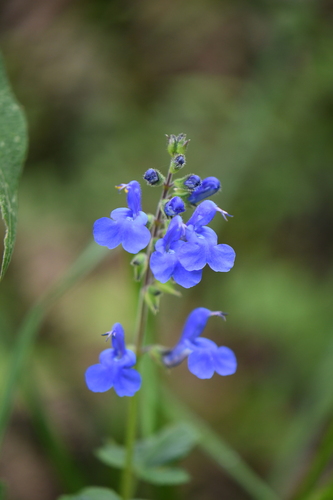
Each flower has a five-lobed calyx and a fused bluish-violet corolla with a long tube and two lips.
Corolla Lip Morphology
The upper lip is very short, while the lower lip is three-lobed.
Stamen Characteristics
There are four stamens, two long and two short.
Gynoecium and Fruit Structure
The gynoecium is made up of two fused carpels, and the fruit is a four-chambered schizocarp.
Pollination Biology
The hermaphrodite flowers are zygomorphic, and produce nectar to attract pollinators, which include bumblebees and butterflies.
Flowering Period and Chromosome Count
Flowering occurs from June to August, and the species has a chromosome number of 2n = 32.
Inflorescence Ecological Functions
In terms of ecology, the inflorescence bracts shelter the flowers from rain, and their violet colouring improves the signal they send to pollinators.
Floral Defense Adaptations
Hairs on the calyx protect flowers from crawling insects, and a stiff, upturned ring of hairs further secures the nectar.
Fruit Elaiosome Characteristics
The fruits contain fleshy, oily elaiosomes.
Human Medicinal Uses
Like many species in the Ajuga genus, pyramidal bugle is claimed to have medicinal properties, and has been used to treat wounds and metabolic disorders.