About Clematis viorna L.
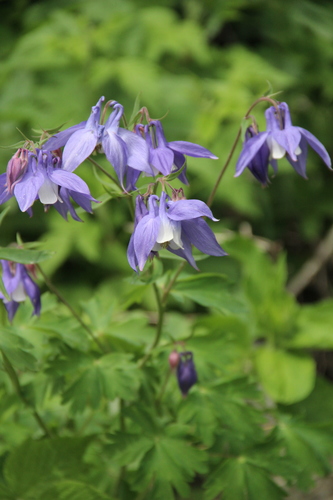
Clematis viorna L., commonly called leatherflower, is a vine that can reach up to four meters in length. Its stems are nearly entirely hairless, or may have long or short soft hairs located below the nodes. Most leaves are divided into four to eight leaflets, with a terminal leaflet that resembles a tendril; some leaves do not split into distinct leaflets. Leaflets are lance-shaped to oval-shaped. They can be unlobed, have two or three lobes, or be further divided into two or three subleaflets, with leaflets at the base of the full leaf showing the deepest division. Mature leaves measure between 2 to 12 centimeters in length and 1 to 5 centimeters in width, and may occasionally reach widths of up to 6 centimeters. The leaves do not have prominent netted veins, and their underside carries a sparse to dense covering of short and long hairs. One to seven flowers grow from the leaf axils, and these flowers range in shape from bell-like to broadly urn-shaped. Like other clematis species, this plant has no true petals; the petal-like structures seen on its flowers are actually colored sepals. Sepals range in color from light purple to reddish-purple, fading to a creamy yellow toward their tips. Naturally, leatherflower occurs from southeastern Pennsylvania and Delaware south to Georgia, and west across the Mississippi Valley to Missouri and Arkansas. It grows in mesic forests and woodlands, which includes wooded cliffs, stream banks, and thickets, and it grows well on mafic substrates. Its flowers bloom during spring and summer.