About Ranunculus hyperboreus Rottb.
Taxonomy and Native Range
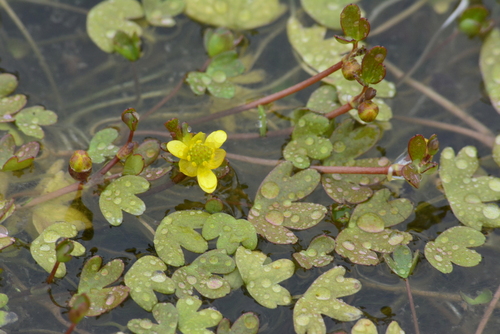
Ranunculus hyperboreus, commonly known as the Arctic buttercup, is a perennial herbaceous plant in the Ranunculaceae family. Native to the Arctic regions of North America and Europe, it thrives in wet meadows, tundra slopes, and rocky areas.
Stem and Foliage Features
This plant features a short stem that can grow up to 10 cm in height, with basal leaves that are deeply lobed.
Flower Characteristics
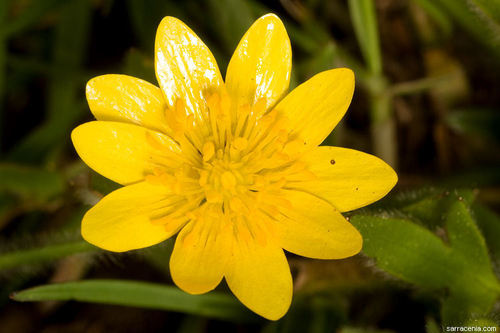
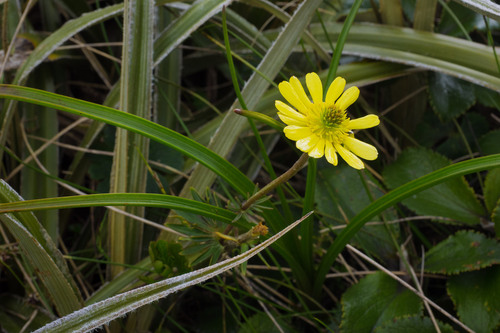
Its bright yellow flowers, each with five petals, can reach up to 3 cm in diameter. The Arctic buttercup blooms from June through August.
Wildlife Food Source
Serving as an important food source, the Arctic buttercup is consumed by various animals, including caribou, muskoxen, lemmings, hares, and ptarmigans.
Traditional Medicinal Uses
Indigenous peoples have also used it for medicinal purposes, such as treating colds and stomach ailments.
Research Relevance
Due to its remarkable ability to adapt to the harsh conditions of the Arctic tundra, Ranunculus hyperboreus has become a subject of interest for botanists studying plant adaptation in extreme environments.
Species Significance
Overall, Ranunculus hyperboreus is a fascinating species with distinctive characteristics that set it apart from other plants in its habitat.