About Clematis morefieldii Kral
Growth Form
Clematis morefieldii grows as woolly-haired vine runners that can reach up to 5 metres (16 ft) in length.
Leaf Structure
Its leaves are compound, with each leaf formed of several leaflets and one or more tendrils that let the plant grab onto surrounding objects. The undersides of the leaflets have a velvety texture.
Inflorescence Arrangement
Inflorescences grow from the axils of the leaves, and each inflorescence holds up to five flowers.
Flower Appearance
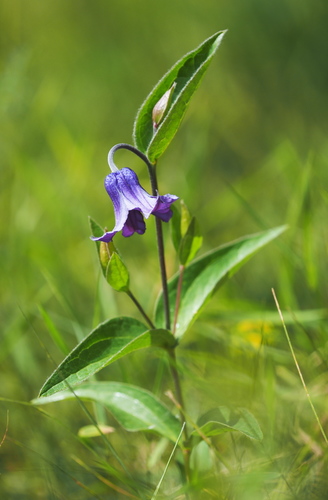
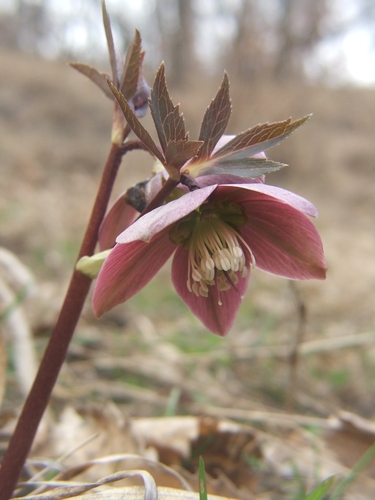
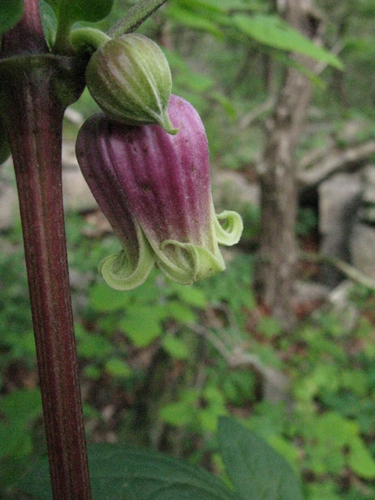
The flowers have no petals, only green-tinged pink sepals arranged in an urn shape with curling tips. The flower has a thick, hairy texture, and can grow up to 2.5 centimetres long.
Fruit Characteristics
After flowering, the plant produces fruits that can reach 3.5 centimetres long when their plume-like tips are included.
Discovery History
This clematis species was first discovered in 1982 on a vacant lot on Round Top Mountain in Madison County, Alabama, by 21-year-old botany student James Morefield. It was formally described as a new species in 1987 and named in his honor.
Initial Distribution Assumption
When the species received endangered status in 1992, it was thought to be endemic only to Alabama. Later, new populations were collected in adjacent southern Tennessee.
Habitat Characteristics
Clematis morefieldii grows in wooded habitats dominated by smoketree (Cotinus obovatus), most often near streams or seeps.
Climbing and Substrate
It is a climbing plant that attaches to shrubs and rocks for support, and grows on very rocky limestone substrate with large boulders.