About Chlorurus sordidus (Forsskål, 1775)
Species Identification
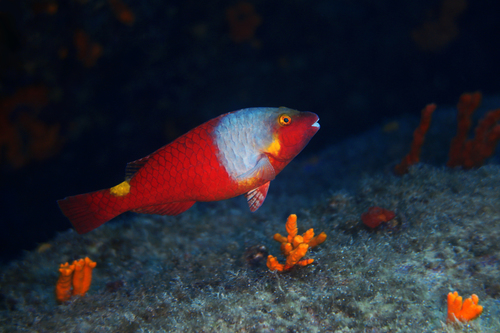
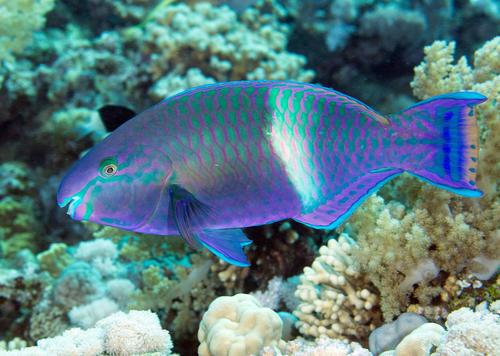
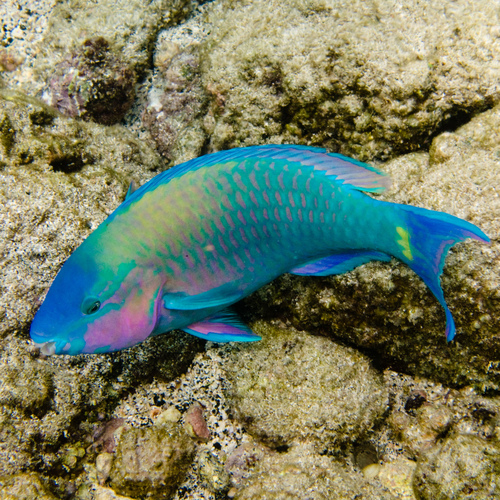
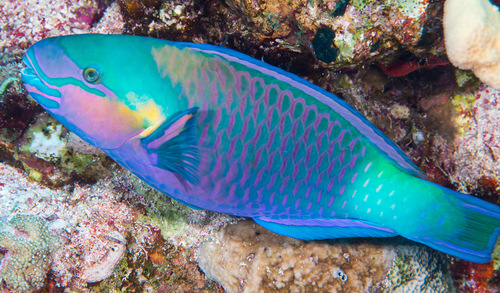
This species, Chlorurus sordidus, shows high variation in coloration across its life phases.
Initial Phase Small Individual Coloration
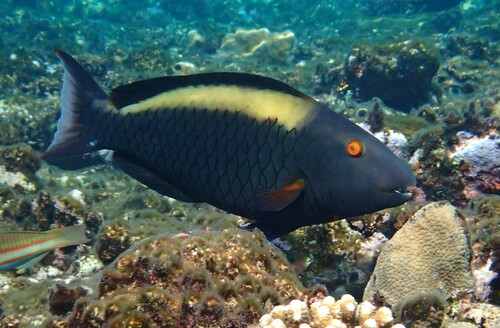
In the initial phase, coloration is very variable. smaller individuals can be uniform dark brown to light gray, and may or may not have a light band surrounding a dark spot on the caudal peduncle.
Initial Phase Large Specimen Coloration
Larger initial-phase specimens can show irregular rows of small, light spots toward the tail, or may have the light band around the dark spot on the caudal peduncle.
Terminal Phase Coloration
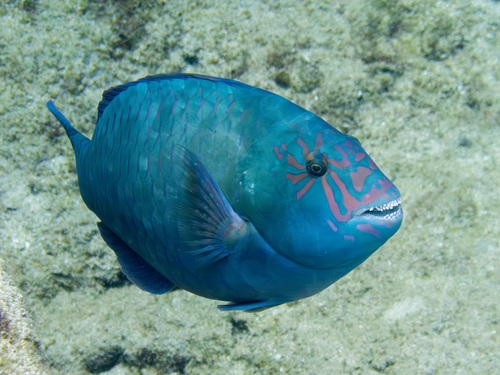
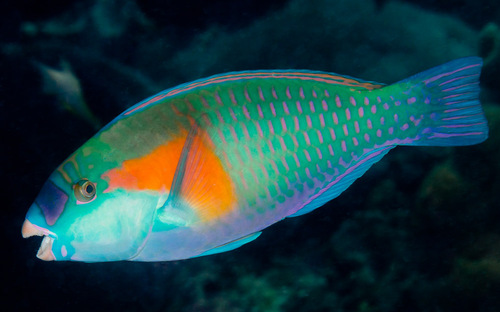
Terminal-phase (male) individuals also have variable coloration, and may have a large tan area on the flanks or caudal peduncle.
Snout Morphology
This species has a rounded snout.
Size
It is a medium-sized parrotfish that reaches a maximum total length of 40 cm (16 in).
Distribution
Chlorurus sordidus is widespread across the tropical waters of the Indo-Pacific region, including the Red Sea.
Adult Habitat
It lives in shallow reef flats with high coral cover, open pavement shallow reef flats, lagoon reefs, seaward reefs, and drop-offs.
Juvenile Habitat
Juveniles live in coral rubble areas on reef flats and in lagoons.
Mucus Cocoon Secretion
Before sleeping, Chlorurus sordidus secretes mucus that forms a complete cocoon surrounding its body.
Mucus Cocoon Function Hypothesis
The function of this mucus cocoon is not fully understood, though one hypothesis is that it protects the fish from parasitic gnathiids.
Predators
This species is preyed on by the honeycomb grouper (Epinephelus merra) and the coral trout (Plectropomus leopardus).
Known Parasite
One of its known parasites is the monogenean Benedenia scari.
Schooling Behavior
Chlorurus sordidus is a sociable fish that schools with other parrotfish species such as Scarus psittacus.
Taxonomic Variation
It is one of the most widespread parrotfish species, and is highly variable; some geographically distinct forms are likely at least subspecies.
Group Movement Pattern
Initial-phase juveniles and females form large groups that travel long distances between their daytime feeding grounds and nighttime sleeping areas.
Diet
They feed on benthic algae.
Reproductive Biology
This species is a protogynous hermaphrodite, and individuals change sex when they reach a total length of 35.1–47.2 centimetres (13.8–18.6 in).