About Chenopodiastrum murale (L.) S.Fuentes, Uotila & Borsch
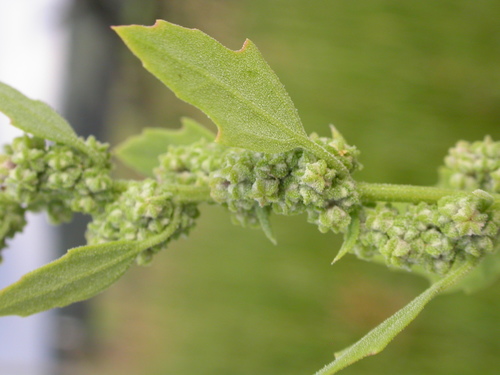
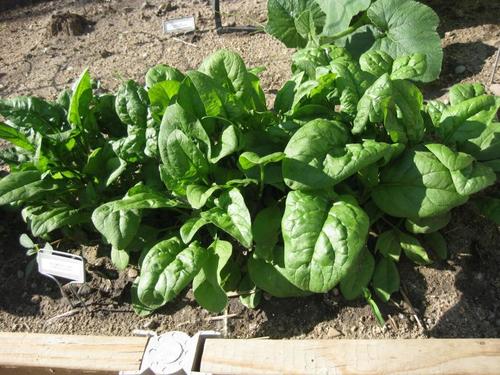
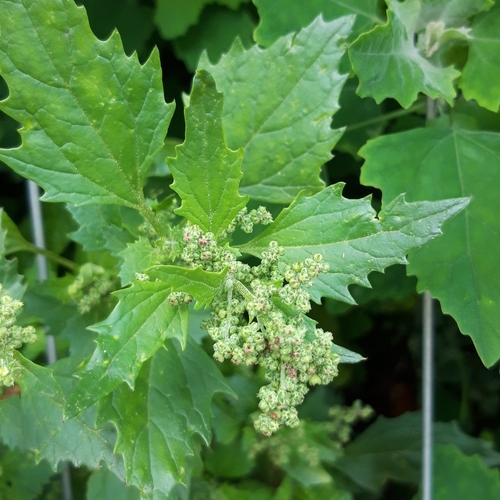
This species, Chenopodiastrum murale, is an annual herb that grows up to 70 centimeters tall. It has an erect stem that is usually red or green streaked with red, and is covered with leafy green foliage. Its leaves are broad, oval to triangular in shape, with toothed edges; they are smooth on the upper surface and powdery on the undersides. Its inflorescences are made up of powdery clusters of spherical buds. These buds do not open into typical blossoms, and remain closed with sepals covering the ovary as the fruit develops. All parts of the plant can be used as food: its seeds are edible, and its shoots, stalks, and leaves can be eaten as greens. The 1889 publication *The Useful Native Plants of Australia* records that this plant has common names including "Australian Spinach" and "Fat-hen", and notes that it is a pot-herb that can be prepared in the same way as spinach. In the Oʼodham language, this plant is called oñk i:waki, which translates to 'salt greens'. Although it is an introduced species, it has become a commonly collected wild summer green in one of the hottest and most arid regions of North America. Care should be taken to avoid confusing this species with young black nightshades, which look very similar to it when young. Chenopodium murale leaves have a white mealy texture, and its leaf axils show a red streak.