About Chelonoidis niger (Quoy & Gaimard, 1824)
Scientific Name
This species has the scientific name Chelonoidis niger (Quoy & Gaimard, 1824).
Shell Base Appearance
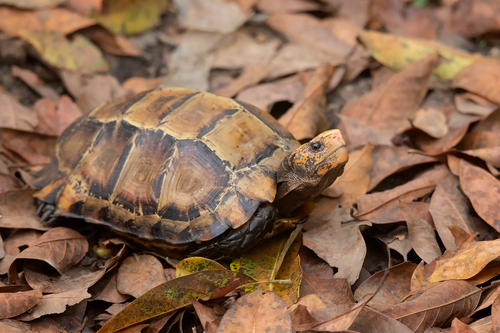
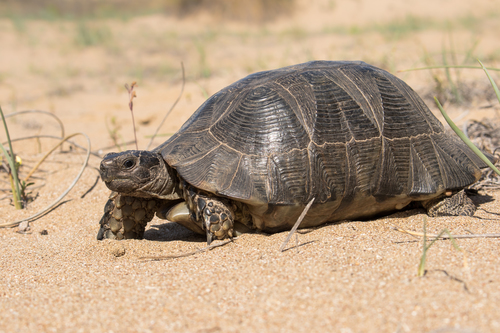
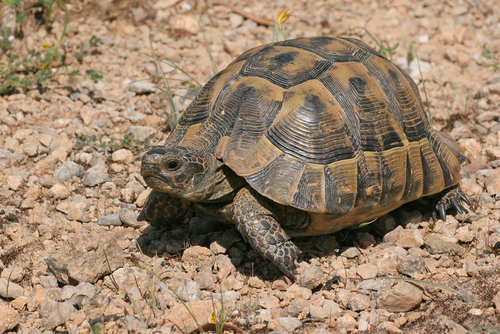
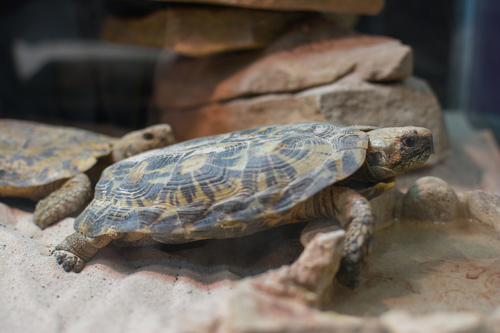
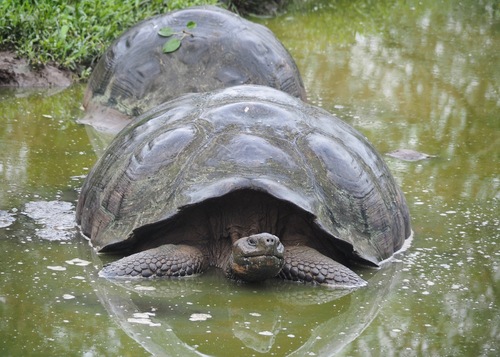
These tortoises have a large, dull brown or grey bony shell.
Shell Skeletal Structure
The shell’s plates are fused to the ribs, forming a rigid protective structure that is an integrated part of the skeleton.
Shell Epibionts
Lichens can grow on the shells of these slow-moving animals.
Shell Scute Pattern
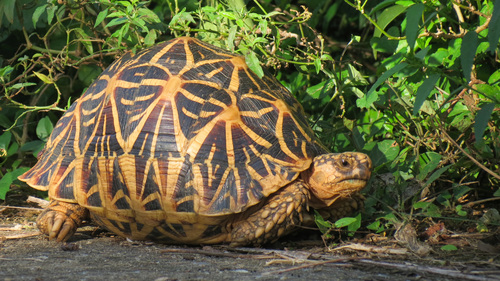
Tortoises retain a characteristic scute (shell segment) pattern on their shells for their entire lives.
Shell Age Determination Limitation
Annual growth bands on the shell cannot be used to determine the tortoise’s age, because outer shell layers wear away over time.
Shell Protective Function
A tortoise can withdraw its head, neck, and forelimbs into its shell for protection.
Leg Appearance
Their legs are large and stumpy, covered in dry, scaly skin with hard scales.
Leg Claw Count
Their front legs have five claws each, while their back legs have four claws each.