About Chamaecytisus albus (Hacq.) Rothm.
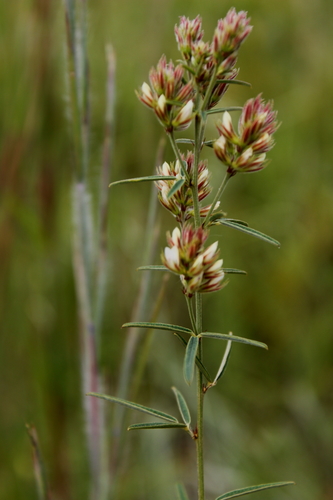
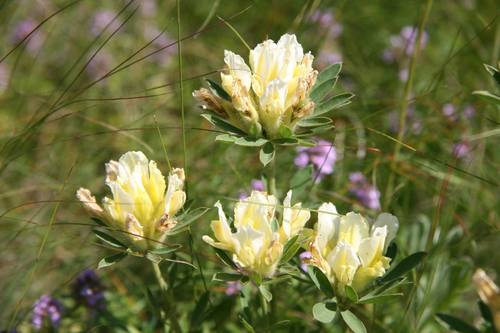
Chamaecytisus albus (Hacq.) Rothm. is a small leguminous shrub that typically reaches a height of 20 to 80 centimeters. It blooms between June and July. Its leaves are trifoliate, with oblong-obovate leaflets that generally have a length-to-width ratio of roughly 3:1, and sometimes 4:1. Slender, erect stems are typically covered in silver-gray to white hairs. For its flowers, the calyx measures 11 to 13 millimeters long, and the corolla measures roughly 20 millimeters long. Flower corollas are white, white-yellow or sulphur-yellow, with color varying between individual specimens. Each terminal flower cluster holds 6 to 10 flowers. As a broom species, it uses nitrogen fixation to colonize disturbed land and control soil erosion by providing essential nutrients to the soil. Like other plants in the Fabaceae family, such as Cytisus scoparius and Laburnum anagyroides, this species contains alkaloids, most notably cytisine. Ingesting significant amounts of this plant causes respiratory issues, nausea, vomiting, and abdominal pain. It may also trigger allergic reactions or skin irritation in some people.