About Chaerophyllum temulum L.
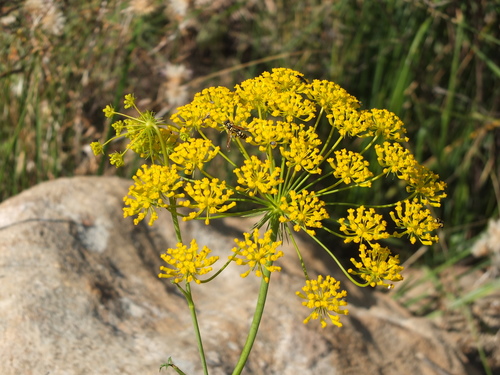
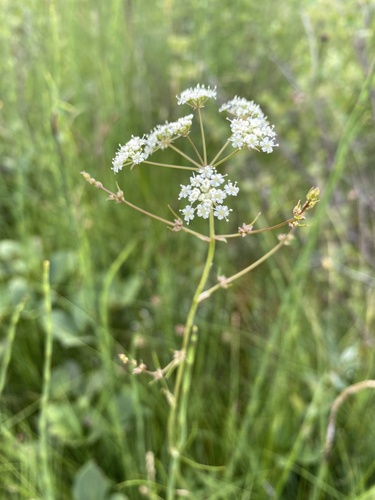
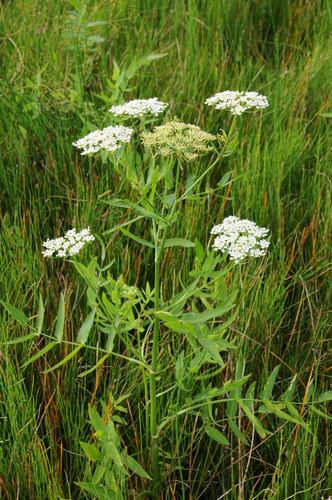
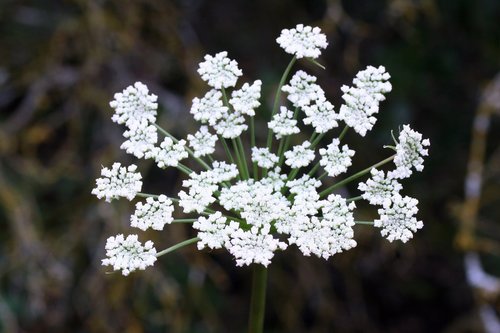
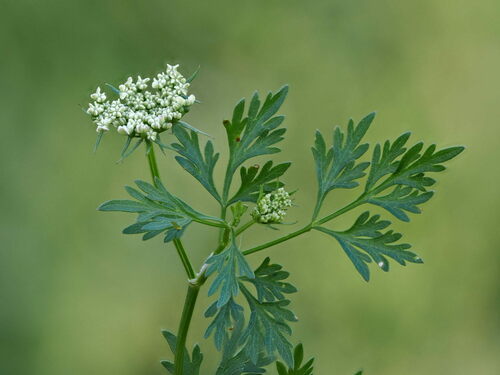
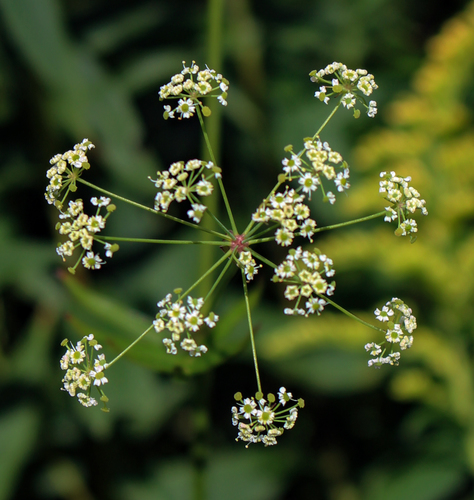
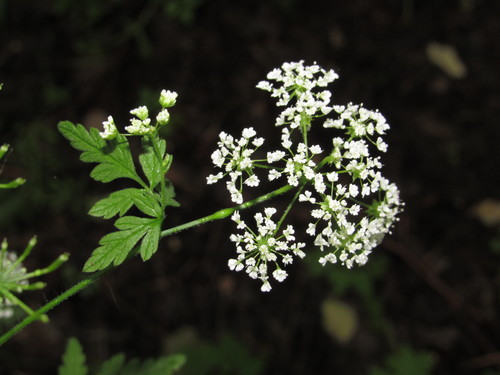
Chaerophyllum temulum L. is a somewhat hispid biennial herb. Its stems grow up to 100 centimetres (39 in), are solid, swollen below nodes, and are either purple-spotted or entirely purple. Leaves are bi- to tri-pinnate, dark green, with appressed hairs on both surfaces, and borne on long petioles. Leaf lobes are mostly 10–20 millimetres (0.39–0.79 in), ovate in outline, deeply toothed, with teeth that narrow abruptly at the apex. It produces compound umbels that usually bear 6 to 12 (occasionally as few as 4 or as many as 15) hairy rays, which are typically 1.5–5 centimetres (0.59–1.97 in) long. The hairy peduncle is longer than the rays. The terminal umbel holds mostly hermaphrodite flowers, and is overtopped by lateral umbels that hold mostly male flowers. Bracts are absent, or rarely 1 to 2 are present; there are 5–8 bracteoles, which are shorter than the pedicels, ciliate, and eventually become deflexed. Flowers are white; sepals are absent; outer petals do not radiate; styles have an enlarged base that forms a stylopodium. Fruit is usually 5–6 millimetres (0.20–0.24 in), slightly compressed laterally, oblong but narrowing toward the apex, and constricted at the commissure. Mericarps have broad, rounded ridges; a carpophore is present; vittae are solitary and conspicuous. Pedicels do not have a ring of hairs at the apex; styles are roughly as long as the stylopodium, recurved, and bear capitate stigmas. Cotyledons taper gradually at the base and do not have a distinct petiole. In the United Kingdom, its flowering period runs from late May to early July. Chaerophyllum temulum is found throughout most of Europe, though it is rare in the Mediterranean region. Its range extends into the Maghreb and Western Asia, including Turkey and the Caucasus. Within the United Kingdom, it is common across most of England and Wales, but has a local distribution that is mainly limited to eastern Scotland. In Ireland, the species is local and restricted mainly to the eastern half of the country. Across much of England, it can be distinguished from other members of the Umbelliferae family because it is the first common roadside umbellifer to flower after Anthriscus sylvestris. Additional distinguishing features include its hairy, purple-spotted stems and swollen stem sections above internodes. Chaerophyllum temulum is a ruderal or pioneer species that grows in a variety of habitats, ranging from damp areas such as waterside thickets, to open woodland, woodland edges, waste places, and areas by walls and fences, occurring in both lowland and hilly terrain. Pollen of this species is collected by solitary bees. Chaerophyllum temulum contains a volatile alkaloid called chaerophylline, mainly concentrated in its upper parts and fruits, along with other toxins that are probably bound glycosidally. The chemistry and pharmacology of these compounds remain little studied. External contact with the plant's sap can cause skin inflammation and persistent rashes. If ingested, the plant causes gastrointestinal inflammation, drowsiness, vertigo, and cardiac weakness. Human poisonings are rarely recorded, because the plant lacks aromatic essential oils, so it is rarely mistaken for edible umbellifers used to flavour food. Even so, it is occasionally used in folk medicine. Poisoning in animals is more common than in humans. Intoxicated pigs and cattle display a staggering gait, unsteady stance, apathy, and severe, exhausting colic that can sometimes end in death. These symptoms resemble those caused by the toxic grass Lolium temulentum, the common darnel. Chaerophyllum bulbosum and Chaerophyllum hirsutum have also been reported to be toxic. Chaerophyllum temulum has been reported to contain the polyyne falcarinol and the compound falcarinone. In folk medicine, Chaerophyllum temulum has been used in small doses to treat arthritis, dropsy, and chronic skin complaints, and used as a spring tonic. Early modern physician Boerhaave (1668–1738) once successfully used a decoction of this herb combined with Sarsaparilla to treat a woman with leprosy; during the course of this treatment, temporary blindness was a severe side effect that occurred after each dose.