About Chaerophyllum procumbens (L.) Crantz
Growth Height
Chaerophyllum procumbens grows between 15 and 50 centimeters tall.
Stem Structure
Several slender branching stems grow from the base of the plant. The stems have a shiny surface, with a single line of fine hairs running upward along their length.
Leaf Characteristics
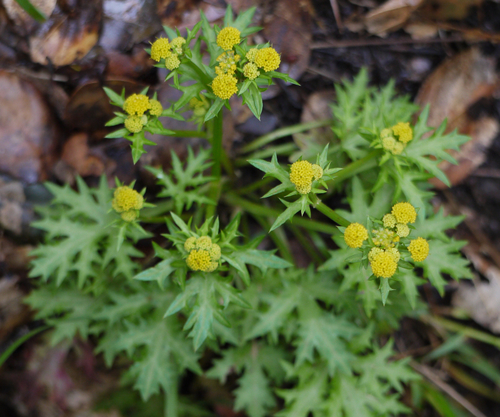
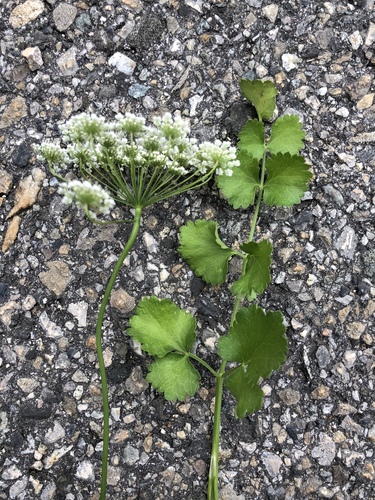
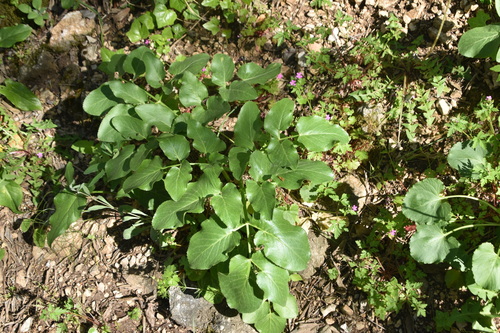
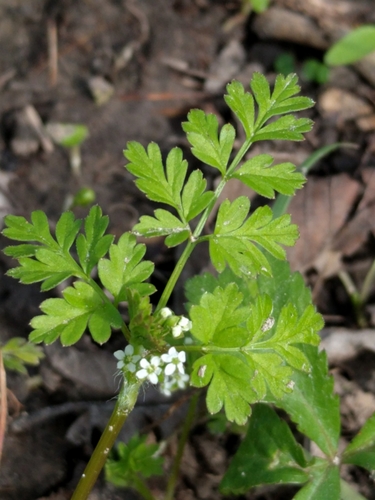
Its mostly hairless leaves are triangular, compound, and doubly pinnate, with leaflets that are themselves pinnatifid. Lower leaves grow on petioles, while upper leaves are smaller and nearly sessile.
Inflorescence Structure
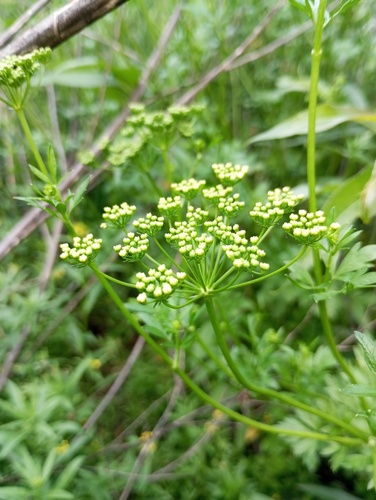
The tips of upper stems hold compound umbels, which are made up of around 2 to 6 umbellets. Each umbellet holds 1 to 7 small white flowers, each with 5 petals.
Flowering Behavior
Flowers often open before the umbels have finished expanding.
Fruit Description
The fruit is an oblong capsule 4 to 6 millimeters long, marked with longitudinal ridges.
General Distribution
Chaerophyllum procumbens is widely distributed across the eastern United States, though local populations can be scattered.
United States Range
It has been recorded in Alabama, Arkansas, Washington, D.C., Delaware, Florida, Georgia, Iowa, Illinois, Indiana, Kansas, Kentucky, Maryland, Michigan, Missouri, Mississippi, North Carolina, Nebraska, New Jersey, New York, Ohio, Oklahoma, Pennsylvania, South Carolina, Tennessee, Virginia, Wisconsin, and West Virginia.
Canadian Range
It has also been recorded in the Canadian province of Ontario.
Conservation Status
The state of New York lists Chaerophyllum procumbens as an endangered species.
Virginia Habitat
In Virginia, it grows in habitats that include floodplain forests and alluvial clearings.
Threats
This species relies on having suitable habitat to persist, and can be removed from an area by development, changes in land use, or competition with invasive species.