About Cervus elaphus canadensis Erxleben, 1777
Scientific Classification and Size Ranking
Red deer, scientifically named Cervus elaphus canadensis Erxleben, 1777, are the fourth-largest species of deer still existing today; only moose, elk, and sambar deer are larger.
Biological Traits
Red deer are ruminants that process food in two stages, and they have an even number of toes on each hoof, sharing this trait with camels, goats, and cattle.
Geographic Variation in Tail Length
European red deer have noticeably longer tails than their Asian and North American relatives.
Subspecies Appearance Differences
There are subtle differences in appearance between the various red deer subspecies, mostly related to body size and antlers.
Extremes of Subspecies Size and Range
The smallest subspecies is the Corsican red deer, native to the islands of Corsica and Sardinia, while the largest is the Caspian red deer, also called maral, which lives in Asia Minor and the Caucasus Region west of the Caspian Sea.
European Red Deer Size Variation
Red deer in central and western Europe vary widely in size; some of the largest red deer individuals are found in the Carpathian Mountains of Central Europe.
Historical Size Drivers in Western Europe
Historically, Western European red deer reached large sizes when they had access to abundant food, including agricultural crops grown by people.
Size of Introduced Red Deer Populations
Descendants of red deer introduced to New Zealand and Argentina have also grown to be quite large in both body size and antler size.
Large Male Red Deer Size Comparison
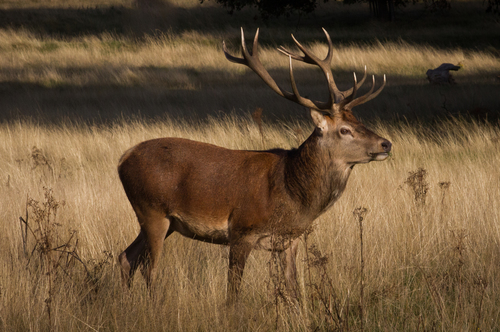
Large male red deer (stags), such as those of the Caspian red deer subspecies or those from the Carpathian Mountains, can reach sizes similar to North American elk.
Sexual Size Dimorphism
Female red deer are much smaller than male red deer.