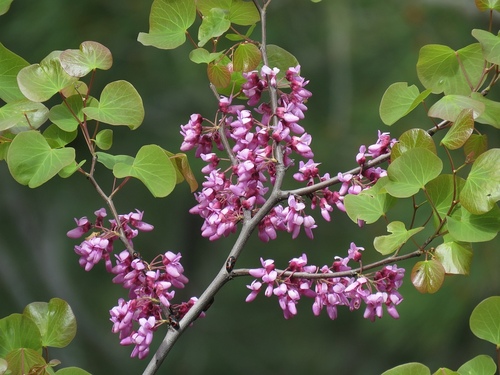
About Cercis siliquastrum L.
Cercis siliquastrum L. is a small tree that can reach up to 12 m (39 ft) in height and 10 m (32 ft) in width. In spring, it produces deep pink flowers on growth that is one year old or older, including directly on the trunk. Its flowers have five separate petals and fused sepals, a structure typical of most members of the pea family (Fabaceae). Leaves emerge shortly after the first flowers appear; they are heart-shaped with a blunt tip, and sometimes have a shallow notch at the apex. The tree produces long, flat pods that hang vertically. Its flowers are edible, and are reported to have a sweet and tart taste. For ecological aspects, the flowers are pollinated by bees, which are drawn to them by nectar. Pollen from the protruding stamens attaches to the bee's body and is carried to the stigma of another flower. This species is a protected plant in Israel. In April 1909, British journalist Francis McCullagh reported seeing countless flowering specimens of this tree in Istanbul's Yildiz Park. In cultivation, this species prefers deep, well-drained soil and a location in full sun or partial shade. Recognized cultivars include 'Afghan Deep Purple', 'Alba' (with white flowers), 'Bodnant', 'Carnea', 'Fructa Rubra', 'Penduliflora', 'Rubra' (with dark pink-purple flowers), 'Sterilis', 'Variegata', and 'White Swan'. The cultivar 'Bodnant' has earned the Royal Horticultural Society's Award of Garden Merit, a confirmation that was reaffirmed in 2017. The tree can be affected by leafhoppers, scale insects, and psyllids (specifically Cacopsylla pulchella), and is also susceptible to diseases such as canker, coral spot, and verticillium wilt. It can be propagated by seed, cuttings, or budding. This species produces hard wood with an attractive grain; it works well for veneers and takes a good polish. In the Middle East, the Judas tree is known as a traditional medicinal plant.