About Ceratophora stoddartii Gray, 1834
Head Morphology
Ceratophora stoddartii has an oval head that is longer than it is wide.
Rostral Appendage
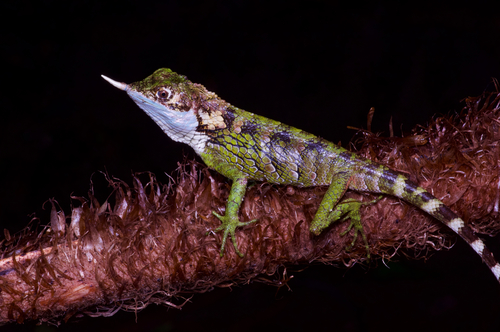
Males have a long, horn-like rostral appendage that measures roughly two-thirds the length of the snout, while this appendage is reduced or even entirely absent in females.
Toe Lamellae Count
There are 23 to 27 lamellae under the fourth toe.
Coloration and Markings
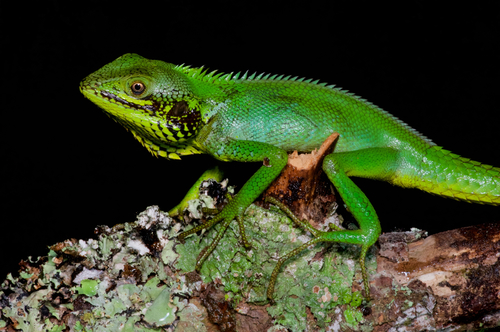
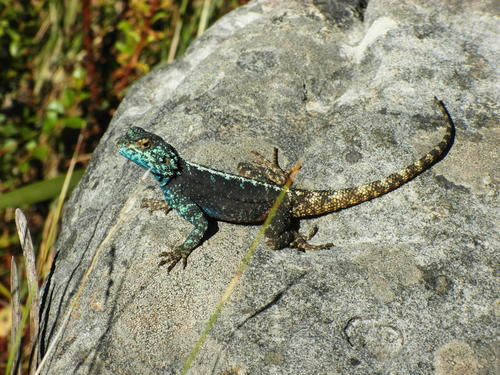
The dorsum is brownish green or yellowish brown, the tail has 10 to 16 dark brown crossbands, and the venter is light brownish gray.
Distribution Range
This species is widely distributed across the montane forests of central Sri Lanka, with recorded localities including Nuwara Eliya, Hakgala, Pattipola, Ohiya, Horton Plains, Hewaheta, Dimbula, Agarapathana, and Adam's Peak.
Locomotion and Habit
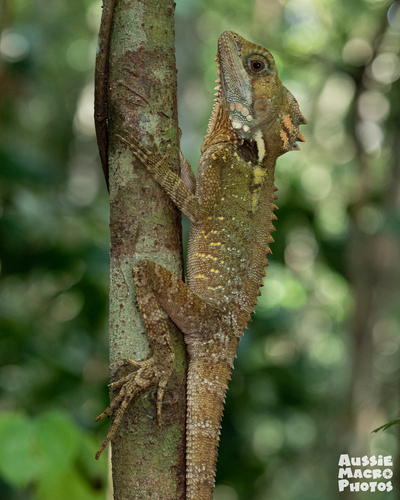
C. stoddartii is a slow-moving, arboreal species that typically occurs on trees between 1 and 2 meters (3.3 to 6.6 feet) above the ground.
Threat Response
When threatened, it opens its mouth wide to show the bright orange lining of its oral cavity.
Habitat Requirements
The presence of relatively large trees alongside plants with low to medium diameter at breast height is an important habitat requirement for this species, which spends most of its time resting vertically on tree trunks or branches.
Weather Refuge
During harsh weather, it takes refuge inside abundant mosses in cloud forests.
Camouflage Adaptations
Tree bark in shades of gray and brown, along with mixed patches of lichens and mosses, provides ideal camouflage for C. stoddartii to blend into its surroundings.
Male Perching Behavior
Adult males often perch at greater heights, a trait thought to support territorial defense and attracting females.
Ground Use Rationale
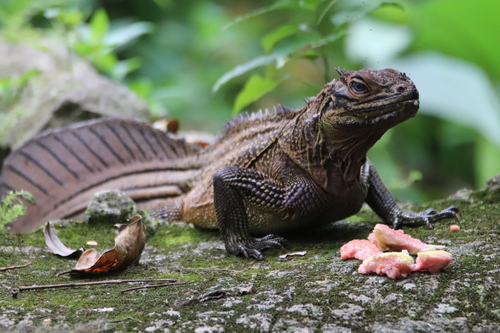
Adult C. stoddartii rarely use the ground, only descending for occasional short hunting chases after escaping prey.
Ground Diet
They have been observed feeding on caterpillars and the earthworm Pheretima taprobenia while on the ground.
Ground Color Shift
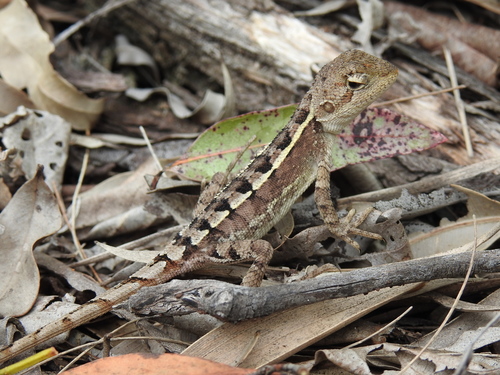
When descending to the ground, it shifts its existing green and brown coloration to darker brown shades, allowing it to camouflage well against leaf litter.
Reproductive Mode
C. stoddartii is oviparous.
Egg Laying Details
Egg laying occurs in July, with clutches containing 2 to 5 eggs.
Egg Measurements
Each egg measures 7.6-8.1 mm by 13.5–14.5 mm (0.31 inches by 0.55 inches).
Incubation and Hatching
Eggs are laid in a hole and hatch after 81 to 90 days, though hatchlings have also been found in the wild during colder months such as December and January.
Hatchling Habitat
Hatchlings that emerge from eggs laid in humus or leaf litter are frequently found on the ground, where dead branches, twigs, and leaf litter provide effective camouflage from potential predators.