About Centrosema virginianum (L.) Benth.
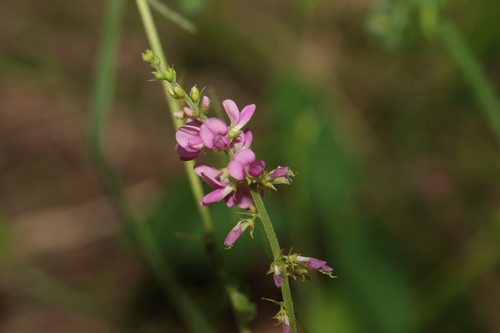
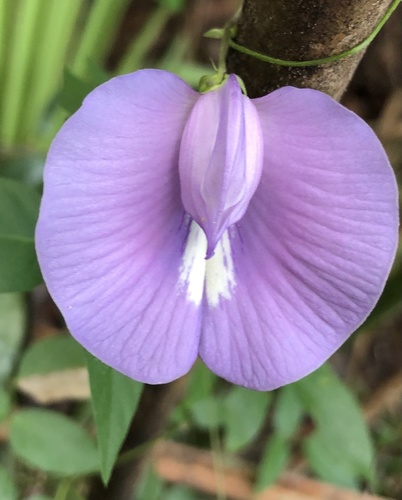
Centrosema virginianum (L.) Benth. is a perennial herbaceous vine that grows either procumbently or twining, reaching up to two meters in height. It bears alternate, pinnately divided leaves that measure 3 to 10 centimeters long. Leaflets are typically 1 to 4 centimeters long, and can be lanceolate or ovate; leaflet form varies widely, ranging from linear to ovate, oblong, or lanceolate-oblong, with an acute or acuminate apex. Stipules are most often setaceous, and frequently deciduous. Flowering takes place in spring and summer. Flowers are highly specialized, with an inverted (resupinate) banner adapted to accommodate bee pollinators. The inflorescence holds 1 to 4 bisexual flowers on an axillary peduncle. The calyx is deeply five-lobed, with acute lobes that are longer than the calyx tube. Corolla color ranges from purplish or lavender-blue to nearly white. Its fruit holds 4 to 10 dark brown seeds. Variation in leaflet shape, corolla size, and corolla color can cause confusion between this species and Centrosema pubescens. The roots of C. virginianum are capable of nitrogen fixation. This species is a legume with a high nitrogen-fixing potential. It tolerates overstory canopies that reduce light to around half of ambient levels, and can grow in partial shade without significant impacts to its nitrogen-fixing ability. C. virginianum can spread clonally through the production of rhizomes. Thanks to their hard seed coats, its seeds can remain viable in the soil seed bank for up to two years. As a legume, C. virginianum has high protein and mineral content, which makes it appealing to a wide variety of herbivorous animals including reptiles, mammals, and birds. It thrives under a regular fire regime, and seasonal burning does not negatively impact its nitrogen fixing capabilities. Its flowers are highly specialized for pollination by large hymenopteran insects, and require bees to "trip" the pollen delivery mechanism. The distribution of Centrosema virginianum extends more or less continuously from Uruguay and northern Argentina to the eastern United States and Bermuda, across tropical and subtropical regions. It is widely distributed throughout the West Indies, and has become naturalized in tropical West Africa.