About Centrolabrus exoletus (Linnaeus, 1758)
Common Name and Species Classification
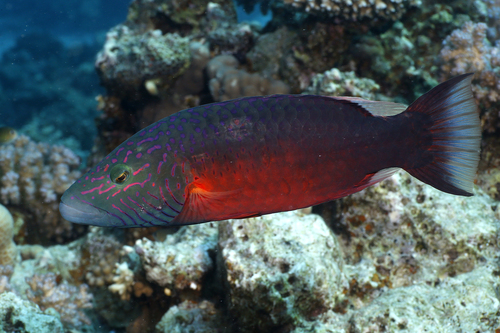
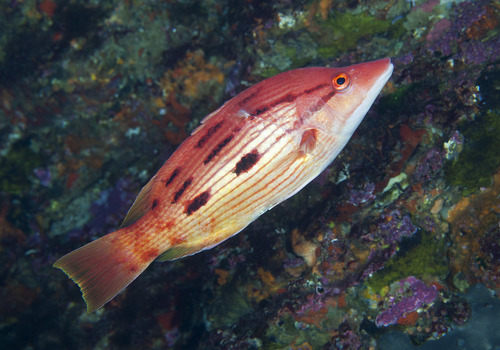
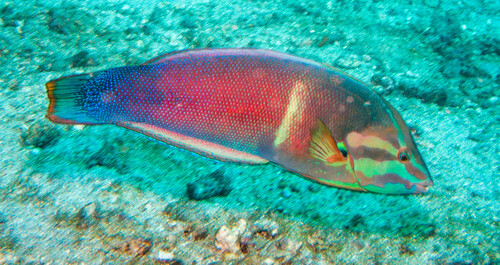
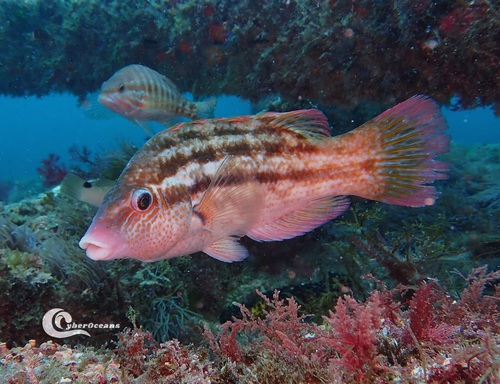
Centrolabrus exoletus, commonly called the rock cook, is a small species of wrasse.
Adult Length Range
Adult rock cooks range in length from 10 to 15 centimetres (3.9 to 5.9 inches).
Mouth and Tooth Structure
They have a relatively small mouth with thick, fleshy lips, and a single row of small teeth in each jaw.
General Body Coloration
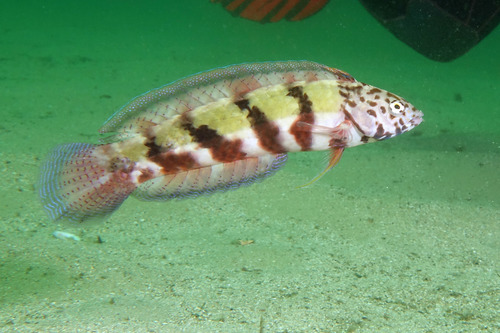
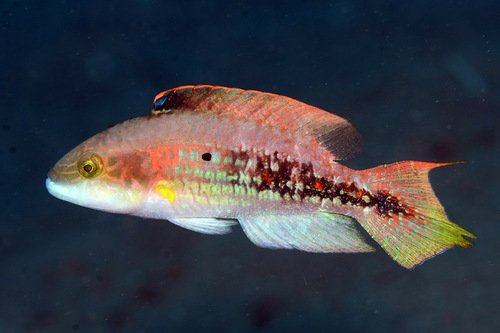
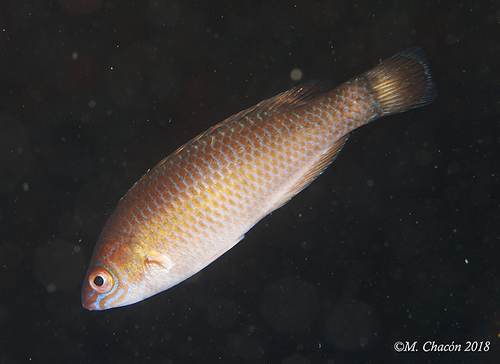
This species is typically reddish-brown on its upper body, fading to yellowish-silver on the flanks and pale silvery-white on the belly.
Male Coloration
Males have iridescent blue streaks on their heads, as well as their dorsal, anal, and caudal fins.
Caudal Fin Marking
The caudal fin also features a dark vertical bar.
Core Geographic Range
The rock cook is endemic to European waters in the eastern Atlantic Ocean, ranging from Norway to Portugal.
Greenland Record Status
Records of this species off eastern Greenland are considered doubtful.
Occurrence in Baltic and Mediterranean Seas
It is absent from the Baltic Sea, and has only been observed once in the Mediterranean Sea, off Málaga in 1981.
Distribution Around Britain and Ireland
Around Britain and Ireland, it is not found in the eastern English Channel or along the eastern coast of England.
Habitat Preferences
Rock cooks live mainly among seaweed and seagrass beds on or near rocks and boulders.
Depth Range
They are most commonly found at depths of less than 25 metres (82 feet), though there are unconfirmed reports of individuals found at 35 metres (115 feet) off the United Kingdom.
Spawning and Nesting
In summer, females build nests from fine seaweed to lay their eggs.
Diet Composition
The diet of the rock cook consists of small benthic invertebrates, especially crustaceans.
Growth Rate by Sex
Males grow faster than females: by 5 years of age, males reach an average length of 13 centimetres (5.1 inches), while females have an average length of 12 centimetres (4.7 inches).
Cleaner Fish Role
The rock cook also acts as a cleaner fish.
Algarve Cleaner Fish Importance
A study off the coast of Algarve, Portugal found this to be the most important cleaner fish species in that area.
Facultative Cleaning Behavior
It is a facultative cleaner fish: instead of maintaining a fixed territory where client fish come to seek cleaning, small groups of rock cooks actively search for client fish.
Primary Client Species in Algarve
In the Algarve study, the primary client was the brown wrasse.
Consumed Parasite Type
Rock cooks clean and consume crustacean ectoparasites from the family Gnathiidae off the bodies of their client fish.
Human Use in Aquaculture
Humans use the rock cook as a cleaner fish in Atlantic salmon aquaculture.