About Centaurea benedicta (L.) L.
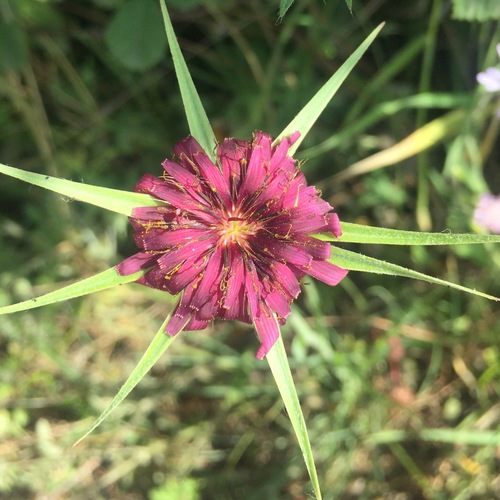
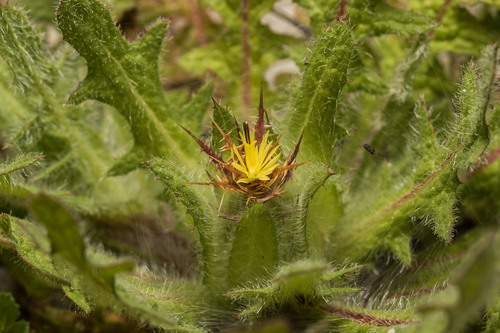
Centaurea benedicta (L.) L. is commonly known as St. Benedict's thistle, blessed thistle, holy thistle, spotted thistle, or blessed knapweed. It is an annual thistle-like plant belonging to the family Asteraceae. This species is native to Mediterranean Europe, and western and Central Asia, with a native range extending from Portugal and Spain to southeastern Europe, Ukraine, southern European Russia, Saudi Arabia, Xinjiang, and Pakistan. It has been introduced to other parts of the world, including parts of North America, where it is often classified as a noxious weed.
In folk medicine, blessed thistle is used combined with other herbs as a galactagogue to increase breast milk supply, but there is no scientific evidence supporting that this use is effective. While its leaves are unpalatable due to a bitter taste, blessed thistle is used as a flavoring in alcoholic beverages, and is recognized as a safe ingredient for food uses. As a member of the ragweed family, blessed thistle may trigger allergic reactions in people who are susceptible to it. Consuming large amounts of the plant may also cause stomach cramps, nausea, and vomiting.