About Cebuella niveiventris Lönnberg, 1940
Taxonomy and Common Name
Cebuella niveiventris Lönnberg, 1940, commonly called the eastern pygmy marmoset, is one of the smallest New World monkeys.
Weight
Overall, the species weighs around 119 grams, with fully grown wild adult males averaging approximately 110 grams and adult females averaging around 120 grams.
Head Size
Head size ranges from 33.7 to 38.9 millimeters.
Shared Pygmy Marmoset Traits
Like all pygmy marmosets, the eastern pygmy marmoset has a mane of fur that covers its ears, arms longer than its hind legs, and no protocone on its first upper premolar tooth.
Feeding Adaptations
Adapted to its specialized diet, the eastern pygmy marmoset has large lower incisors and a strong V-shaped lower jaw.
Claw-like Nails
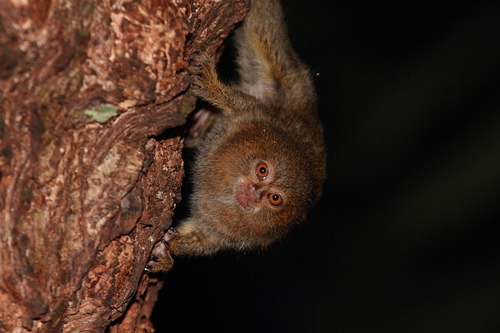
It also has claw-like nails, which help it poke holes in tree bark to access food and cling vertically to tree trunks.
Overall Coloration
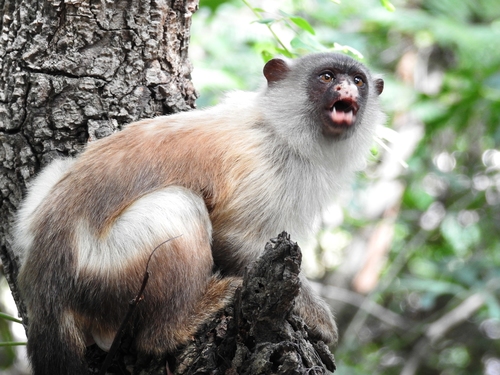
Compared to other pygmy marmoset subspecies, which have distinct coloration patterns, the eastern pygmy marmoset has a lighter, more pale white overall coloration.
Body Part Coloration
Its underparts, including its arms and legs, are whitish, while its throat and chest range in color from orange to white.
General Habitat Type
The eastern pygmy marmoset is a small, arboreal nonhuman primate with a large geographic range.
Primary Range
DNA evidence confirms its primary range lies south of the Rio Solimões (Amazon River), spanning parts of Peru, Brazil, Ecuador, and Bolivia.
Range in Brazil and Peru
It occupies the largest parts of its range in Brazil and Peru, where it lives in Amazonian lowlands and Andean foothills.
Bolivian Range Extension
Its home range also extends a short distance into northern Bolivia.