About Castilleja victoriae Fairbarns & J.M.Egger
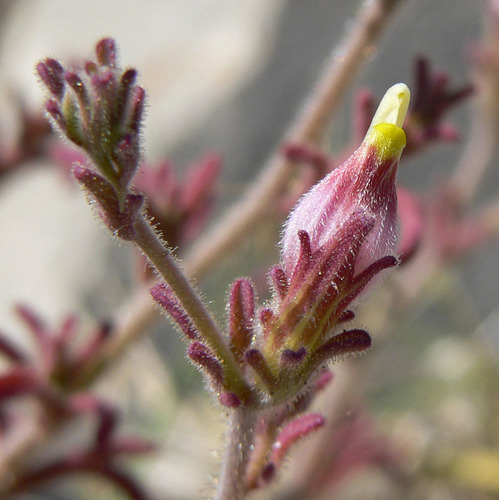
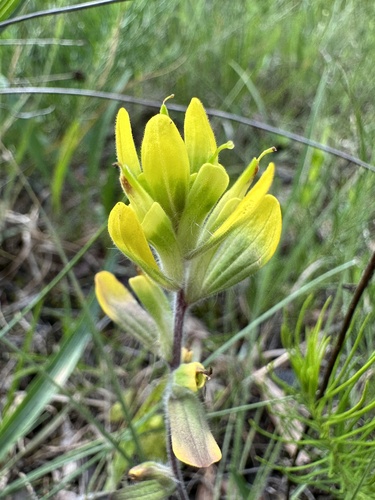
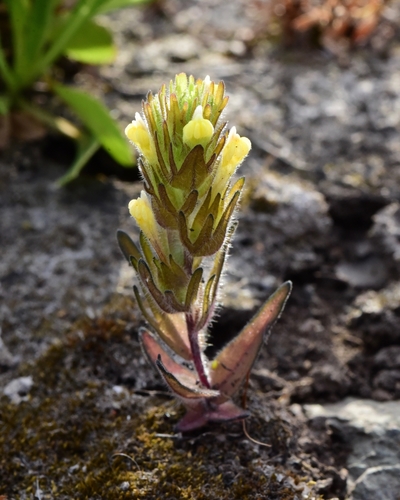
Castilleja victoriae Fairbarns & J.M.Egger has alternate, lobed, hairy stem leaves, and it does not form a basal rosette. Its upper leaves are deeply lobed, and they become purple-tipped floral bracts. The sepals form a five-lobed calyx, and the petals form two-lipped flowers 10 to 18 millimeters in length. The lower lips of the calyx are yellow with white tips, while the upper lips are creamy white. The fruit is a two-celled brown capsule that splits when ripe, releasing 30 to 70 seeds. This species is endemic to a small area of southeastern Vancouver Island, British Columbia near the city of Victoria it is named for, plus one single site in the San Juan Islands of Washington State. Four or fewer of its populations are still currently in existence. It grows only in vernal pools and seeps linked to Garry oak ecosystems, located within 50 meters of the coast. Four of the species' historical occurrences have been extirpated since the start of the 20th century, due to habitat loss and degradation.