About Carpobrotus muirii (L.Bolus) L.Bolus
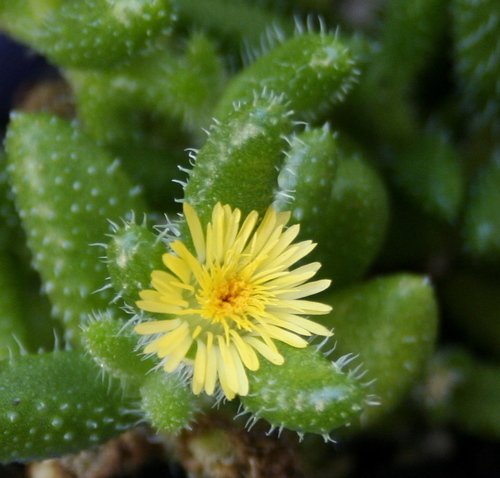
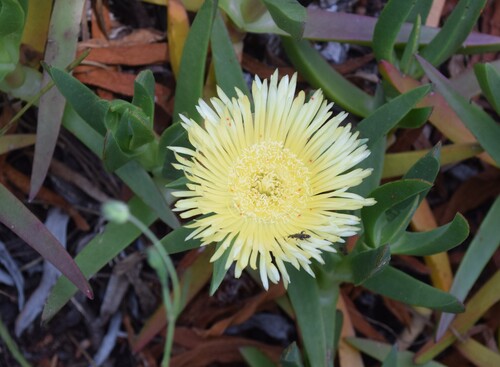
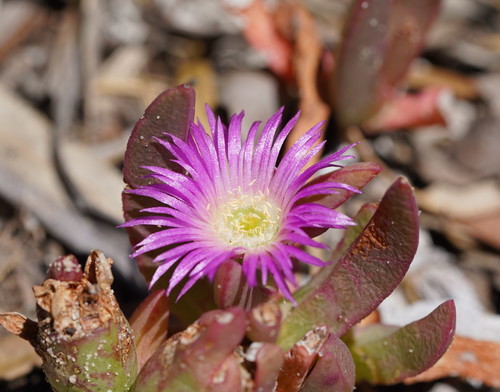
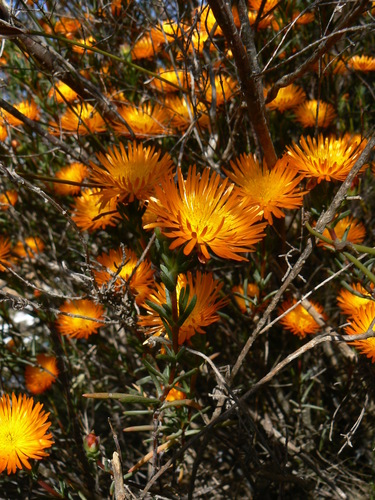
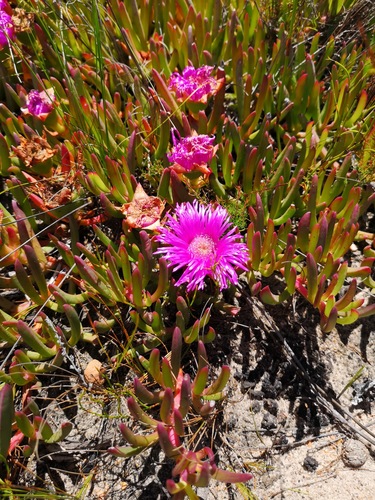
This species of Carpobrotus has distinctively slender leaves that measure 40–80 mm by 5–6 mm, which are incurved and glaucous-green. Its receptacle ranges from subglobose to ovate, with a base that narrows rather abruptly at the point where it connects to the stalk. The top of its ovary is usually flat to depressed in the centre. This species has a small native distribution range, restricted to the Overberg region in the Western Cape, South Africa. It grows on coastal limestones near the towns of Heidelberg and Riversdale. Along the coast, it can be found from Arniston and De Hoop, extending as far east as Stilbaai. Within this area, it occurs in coastal limestone or Strandveld vegetation, typically growing within ten kilometres of the coast. Its sweet, edible fruits are grazed by tortoises and other native southern African animals, and local people also use the fruits to make traditional preserves. The species' natural range is currently declining, driven by the impacts of alien invasive species and wheat farming.